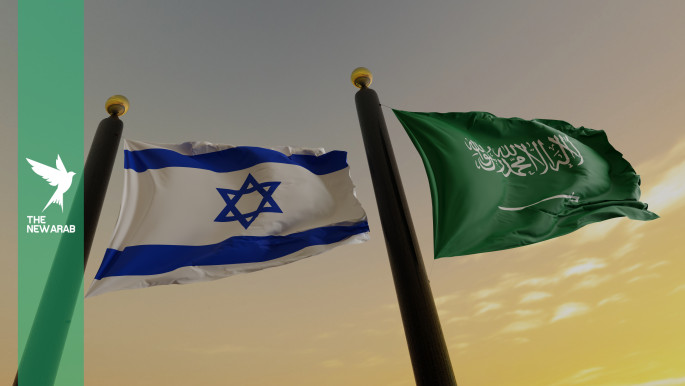
The US’s unwillingness to intervene in Saudi’s war against the Houthis could pave the way for Israel to step in [Getty]
Israel has signalled that it is prepared to play a greater military role against Yemen’s Houthis, although Saudi Arabia is unlikely to embrace Israeli assistance despite Washington’s reluctance to intervene directly.
Israeli Prime Minister Benjamin Netanyahu has offered assistance to countries in the Arabian Peninsula as part of a wider campaign against the Houthis, according to Israeli media reports citing US sources.
The offer comes as Saudi Arabia seeks greater military support against the group while Washington has stopped short of direct intervention, instead offering intelligence-sharing and targeting assistance.
It follows major Houthi advances along Yemen’s Red Sea coast, including the capture of Perim, or Mayyun, the strategically important island sitting in the Bab al-Mandab Strait between Yemen and Djibouti. Pro-Saudi Yemeni government forces on the Red Sea are said to have “collapsed” in the face of Houthi offensives.
Dr Andreas Krieg, a Middle East security expert at King’s College London, told The New Arab that US reluctance did create an opening for Israel “in a narrow military sense”, but warned against interpreting this as the beginning of a new Saudi-Israeli security alignment.
“Riyadh does not want to move from dependence on Washington to dependence on an Israeli security architecture,” Krieg said.
“The Saudis increasingly regard Israel itself as one of the actors generating regional instability. They may see tactical convergence against Iran or the Houthis, but that is very different from trusting Israel with the defence of the Kingdom.”
Israel has a direct interest in preventing the Houthis from consolidating their position around Bab al-Mandab.
The strait, just under 30 kilometres wide at its narrowest point, connects the Red Sea with the Gulf of Aden and Indian Ocean and is one of the world’s most important shipping chokepoints.
For Israel, it is also the maritime gateway connecting the southern port of Eilat with the Indian Ocean.
Houthi attacks on commercial shipping following the outbreak of Israel’s war on Gaza had already severely disrupted Red Sea traffic, while Israel has repeatedly struck Yemen in response to Houthi missile and drone attacks.
Krieg said Israel could potentially offer sophisticated intelligence, surveillance and reconnaissance, electronic warfare, cyber and targeting capabilities, as well as its experience attacking Houthi missile, drone and command infrastructure.
But the fundamental Saudi problem, he said, was not a shortage of military firepower.
“The Saudi problem is therefore not primarily a lack of aircraft or bombs. It is political and strategic,” Krieg said.
“Air strikes can destroy launchers, warehouses and command centres, but they cannot permanently remove the Houthis from Bab al-Mandab or govern territory in Yemen. Saudi Arabia discovered this painfully during its previous intervention.”
Saudi Arabia led a military intervention against the Houthis beginning in 2015, but years of airstrikes and fighting failed to defeat the Houthis, who consolidated control over much of northern Yemen while developing increasingly sophisticated missile and drone capabilities.
Renewed Houthi advances now confront Riyadh with a difficult strategic problem as insecurity affects both of the principal maritime routes connecting Gulf energy exports with international markets.
Iran threatens shipping through the Strait of Hormuz, while Houthi control around Bab al-Mandab puts additional pressure on the Red Sea route. Saudi Arabia’s East-West pipeline, designed to bypass Hormuz by carrying oil to the Red Sea coast, has also demonstrated its vulnerability after coming under drone attack.
Yet direct Israeli involvement could potentially worsen Saudi Arabia’s predicament.
Krieg said overt Israeli assistance could bolster the Houthi claim that Riyadh was fighting as part of an Israeli-American coalition, while increasing the domestic and regional political costs for Saudi Arabia.
It could also make Saudi infrastructure appear an increasingly legitimate target to Iran and its regional allies.
Some indirect cooperation remains conceivable, particularly intelligence passed through American channels, Krieg said, while Saudi and Israeli forces could separately operate against the same threat.
But he cautioned that parallel operations “should not automatically be interpreted as an alliance or even close coordination”.
Instead, Riyadh appears to be seeking a more diversified security architecture as doubts grow about Washington’s willingness to bear the costs of defending its Gulf partners.
Krieg pointed to Pakistan, Turkey and Egypt, alongside European maritime partners and greater Gulf and Arab-Islamic security cooperation, as more likely components of Saudi Arabia’s attempt to reduce its dependence on Washington.
“The lesson Riyadh appears to be drawing is not that Israel should replace the United States,” he said.
“The lesson is that Saudi Arabia needs a much more diversified security system in which it has greater agency.”
Israel’s willingness to intervene against the Houthis therefore exposes a convergence of Israeli and Saudi interests, particularly around Red Sea security, without necessarily bringing the two countries strategically closer.
“Replacing American dependency with Israeli dependency would not represent strategic autonomy,” Krieg said.
“From the Saudi perspective, it would simply exchange one vulnerability for another, and potentially for a much more politically dangerous one.”