
Ukraine will only halt attacks on Russian energy targets if the enemy does likewise and the US guarantees it, Volodymyr Zelenskyy said. The announcement came after Donald Trump’s uncorroborated claim that both sides have agreed to such a ceasefire. Neither Ukraine nor Russia had said so at time of writing. The US president regularly claims to have brokered what turn out to be nonexistent or extremely shortlived deals between foreign adversaries or with his own overseas enemies, such as Iran.
Ukraine’s president said: “So far, no one has seen any genuine willingness on Russia’s part to bring the war to an end. But if our American partners can secure Russia’s genuine readiness to end the war aimed at destroying lives, and to do so honestly and on a long-term basis, Ukraine will take its own de-escalatory steps.” Russia would need to stop attacking Ukraine’s critical infrastructure for its intentions to be taken seriously, Zelenskyy suggested.
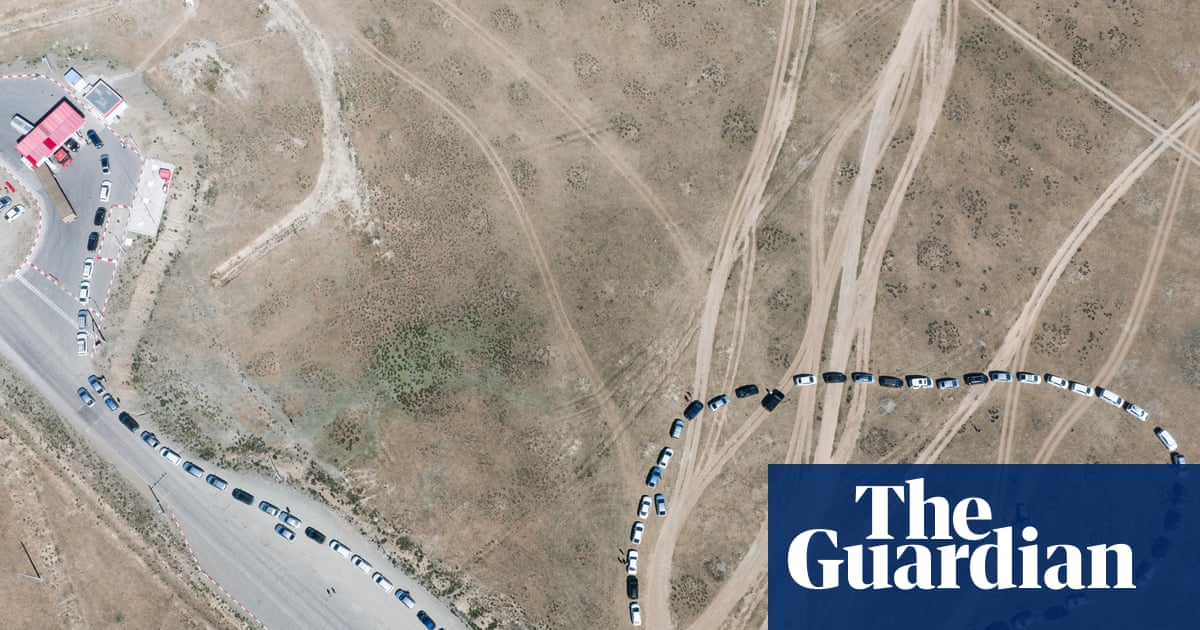
It comes after Trump tried to blame diesel shortages and high prices on Ukraine’s strikes on Russian oil refineries. The main cause is Trump’s own war on Iran – the retaliation for which has crippled the trade in Middle East oil. Russia has banned diesel exports to address dire shortages at home caused by Ukraine’s attacks. But those exports comprise only a fraction of global supply, and the situation most directly affects neighbouring countries such as those in central Asia like Mongolia that rely heavily on supplies from Russian producers.
A Nato fighter jet shot down a drone in Lithuania shortly after midnight on Tuesday, the national crisis management centre said. The drone, which likely entered from Belarus, was shot down near Pratkunai village in southern Lithuania, near Kaunas, the second-largest city, the centre’s spokesperson said. Its origin was yet to be determined at time of writing. A drone alert was issued earlier in the capital, Vilnius, and surrounding region.
A Russian attack on a farming warehouse killed three people in the town of Pryluky in Ukraine’s northern Chernihiv region, regional police said. Seven others were injured.
Prosecutors in Germany have charged a German-Ukrainian woman with acting on behalf of Russian intelligence. The woman, identified as Ilona W in line with German privacy rules, is accused of being in contact with an intelligence officer at the Russian embassy in Berlin since at least October 2023. The defendant ran a marketing agency in Berlin and chaired a lobbying group, using these networks to get the intelligence officer into high-profile events, and to try to recruit German defence officials and industry figures.
A member of the UK armed forces was killed in a crash in Ukraine on Saturday, Britain’s defence ministry said. It is understood the incident was not a result of hostile action, writes Priya Bharadia. A small number of British personnel in Ukraine provide security to diplomats and support the Ukrainian armed forces.
Volodymyr Zelenskyy has formally dismissed Ukraine’s prosecutor general, Ruslan Kravchenko, whose office is embroiled in a bribery scandal. Zelenskyy announced the sacking in a government decree. Kravchenko – who has denied the allegations, but resigned on 7 September – posted that he is now outside Ukraine and has started legal action against the head of the national anti-corruption bureau, Nabu, accusing him of “falsifying official documents”. Nabu investigators raided the prosecutor general’s offices and said they had uncovered a network that made payments in return for protecting fraudulent call centres that had “laundered fortunes”.