
Nunn, Miller-Meeks break with Trump on Iran vote. What it could mean for Iowa’s midterms
Nunn, Miller-Meeks opposed Iran war limits twice. Now they’re voting for them. What changed?
 WASHINGTON —
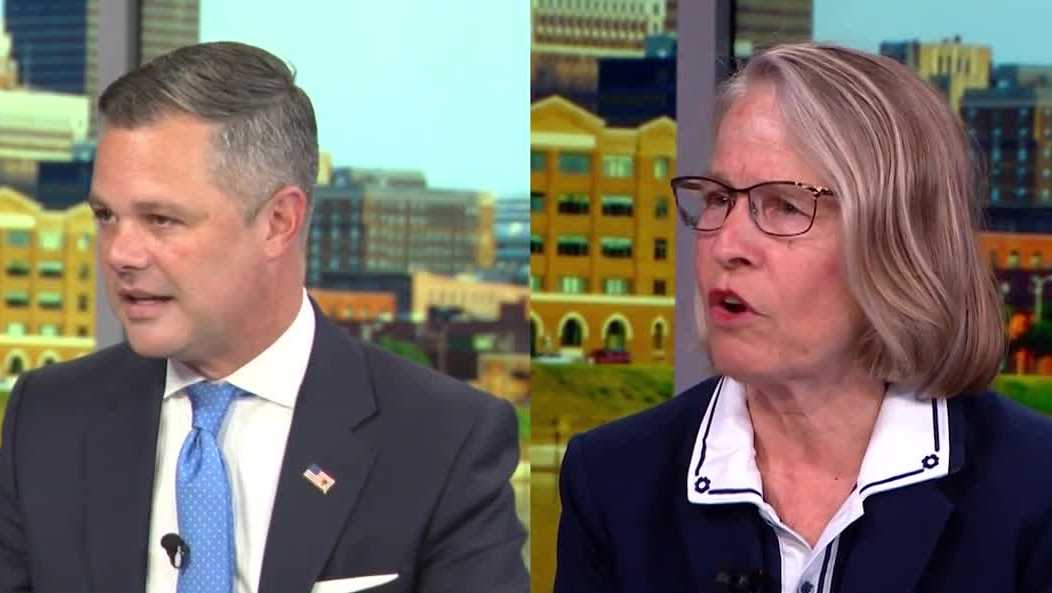
Two Iowa Republicans in some of the country’s closest congressional races changed their votes on the war in Iran this week, breaking with President Donald Trump as the conflict becomes an increasingly important issue for voters heading into November.
U.S. Reps. Zach Nunn and Mariannette Miller-Meeks were among just seven House Republicans who joined Democrats Tuesday in voting to require congressional approval for continued U.S. military action against Iran. Both had opposed similar efforts twice before.
The change comes less than two months before Election Day, with Nunn and Miller-Meeks defending seats considered toss-ups. Both say politics did not drive their decisions. Instead, they say the circumstances surrounding the war have changed.
Why Nunn and Miller-Meeks changed their votes
“I’m not afraid to stand up to the president, the Republican Party, or candidly, Democrats who just want to abandon the situation and run away,” Nunn told KCCI after the vote.
Nunn said his underlying position on Iran has remained consistent. He said he still supports preventing Iran from obtaining a nuclear weapon, protecting U.S. troops and allies and putting pressure on the Iranian government.
But Nunn’s team says two things have changed since his earlier votes.
First, negotiations with Iran have broken down. Nunn’s staff said he opposed earlier efforts to restrict the president’s military authority while those negotiations were underway because he did not want Congress to weaken the United States’ position at the negotiating table.
Second, Nunn’s staff told KCCI the window for the president to conduct the current military operations without congressional authorization has expired. They added that Nunn believes continued combat operations now require a vote from Congress.
The resolution does not prevent the president from using force in response to an imminent threat against U.S. troops or allies.
Nunn said he wants the United States to continue putting pressure on Iran, including through economic sanctions, while avoiding what he described as a prolonged military conflict.
“That includes making sure that China is held at bay and that we are not locked into a protracted conflict with Iran that draws down national security resources, military armaments,” Nunn said.
The vote marks a notable moment for Nunn after Defense Secretary Pete Hegseth traveled to Iowa in August to campaign with him.
During that visit, Hegseth praised Nunn’s military background and support for defense spending. He also specifically pointed to Nunn’s support for the U.S. mission in Iran, arguing that other members of Congress trusted Nunn’s judgment on national security.
“And then they say, well, if Zach Nunn likes it, I’m going to back this mission as well, even though it’s a tough mission, and we’ve lost Americans in the process,” Hegseth said. “That really matters. There’s an amplifying effect to that kind of leadership in Congress. That matters a lot to me.”
Nunn’s staff says that was Hegseth’s characterization. They said Nunn’s principles have not changed since Hegseth’s visit. Instead, Nunn’s office says the legal and diplomatic circumstances surrounding the conflict have changed.
Miller-Meeks, who served 24 years in the Army, gave a similar explanation for her vote.
“I said it in March: the mission had to stay focused and limited, because Americans do not want another forever war,” Miller-Meeks said in a statement. “I will not vote to keep our soldiers in an open-ended war, with Iowans paying too much at the pump.”
Miller-Meeks said she believes Iran’s nuclear ambitions have been “defanged” and called on Trump to present Congress and the public with a plan for ending the conflict.
“The President needs to present a plan to Congress and the American people for how this ends so we can focus on bringing our soldiers home and lowering prices,” Miller-Meeks said.
Their military backgrounds are important to understanding the votes, according to Republican strategist David Oman.
“They know what war is. Zach knows what combat is after 700 hours in the air,” Oman said.
The political stakes weeks before Election Day
But the votes also come at a politically consequential moment.
Nunn is running against Democratic state Sen. Sarah Trone Garriott in Iowa’s 3rd Congressional District. Miller-Meeks faces Democrat Christina Bohannan in a rematch in the 1st District. Both races are considered among the most competitive in the country.
“The truth is, there is a divide within the party, many in the party, and certainly among the voting public at large,” Oman said about the war in Iran.
KCCI political analyst Dennis Goldford said Republican candidates are navigating competing pressures. Trump remains popular with many Republican voters, while some voters are questioning a war that has continued for months.
“Even among a lot of Republicans today, while they still want to support Donald Trump, Republican voters will say, wait a minute. What happened to that promise about no more forever wars?” Goldford said.
The war has also had direct consequences in Iowa.
Iowans have been among the U.S. service members killed in the conflict, while rising fuel and fertilizer prices have added costs for families, farmers and businesses.
“Iowa is a state that, just in terms of truck and car traffic, plus agriculture in terms of fertilizers and all the other products that rely upon some sort of basis in oil in some way,” Goldford said. “Costs have shot through the roof.”
Democrats seize on the Iran votes
Democrats are already trying to make the Republican voting records an issue in the midterm campaigns.
Trone Garriott argued Nunn’s latest vote does not erase his previous support for the war.
“He has consistently voted to support this war. And he has spoken in favor of it,” Trone Garriott said. “And every time Iowans have complained about the cost, he has told us that it’s worth it and that we need to grow a spine.”
Bohannan similarly criticized Miller-Meeks’ previous votes.
“Rep. Miller-Meeks voted 5 times for the Iran War, continuing it for over six months, as gas, diesel, and fertilizer prices have skyrocketed for Iowans,” Bohannan said.
Hinson takes a different approach
But Iowa Republicans are not taking the same approach to the war.
U.S. Rep. Ashley Hinson, the Republican nominee for Iowa’s open U.S. Senate seat, voted against Tuesday’s resolution.
Hinson said she also wants the conflict to end but supports Trump bringing it to what she called a “successful end” while continuing economic pressure on Iran.
“We owe it to our troops, their families, and every American being squeezed by high prices to deliver a decisive and immediate victory in this war,” Hinson said.
Her Democratic opponent, state Rep. Josh Turek, is criticizing Hinson over her continued votes on the war and its economic consequences.
“Ashley Hinson is failing Iowans. She should be in Washington doing whatever she can to lower the sky-high fuel prices she caused by voting seven times to continue this war,” Turek said.
Turek said that if elected, he would “do whatever it takes to end this war, lower fuel prices, and bring much-needed relief to the working families just trying to get by.”
The different votes leave an unanswered political question heading into November: What will Iowa voters make of them?
For some voters, the defining issue may be the war itself and its costs. For others, it may be whether their representatives are willing to stand with Trump or break with him on a major foreign policy decision.
Oman said the answer could be particularly important among voters who do not identify with either major party.
“The question really is where will independents fall now?” Oman said. “We’ll let the voters decide in seven weeks whether this vote or that vote was the right vote. Or more importantly, they’ll be questioning and maybe voting on whether this was the right conflict to be in.”