
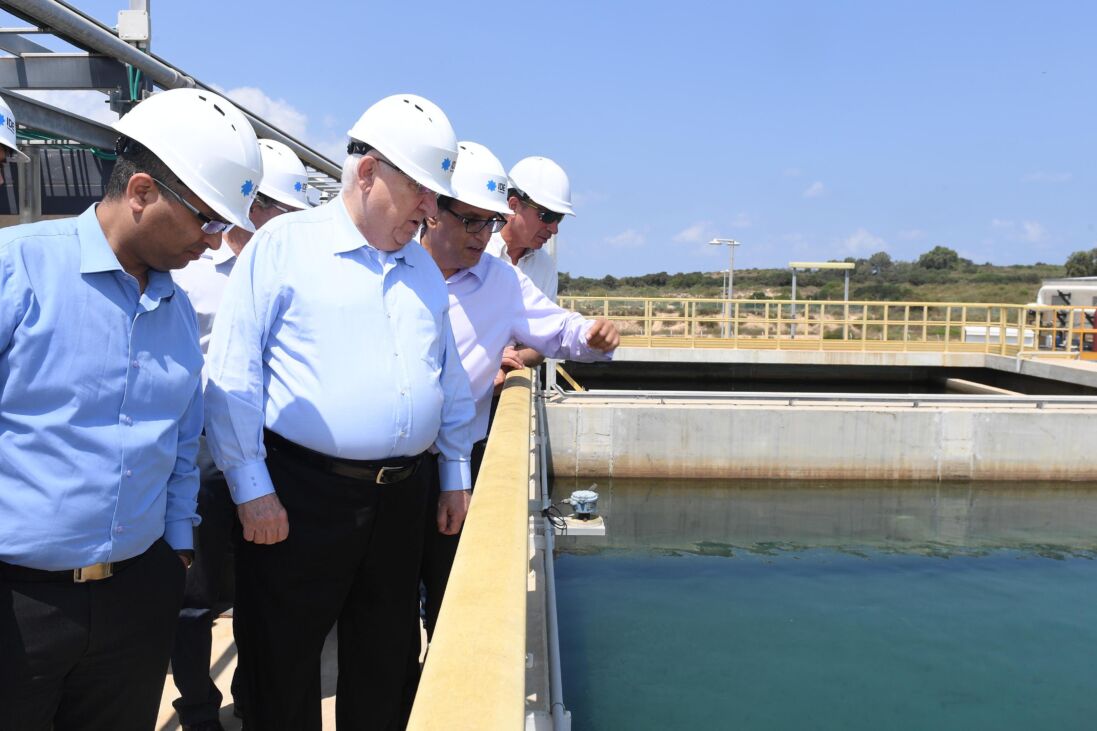
 (wikicommons/Mark Neyman)
Israel has spent decades turning water scarcity into one of its greatest technological success stories. Earlier this month, that success story delivered a warning.
An extraordinary algae bloom in the Mediterranean forced five of Israel’s six major coastal desalination plants to shut down or sharply curtail production. Household taps kept running as authorities drew more heavily from the Sea of Galilee, groundwater wells and emergency reserves. The immediate crisis passed. The warning should not.
Desalination now provides roughly 80% of Israel’s drinking water. That has allowed a dry and rapidly growing country to achieve something once thought nearly impossible: relative water security independent of rainfall.
But dependence creates vulnerability. If a naturally occurring algae bloom can simultaneously cripple most of Israel’s desalination capacity, what happens during a prolonged pollution event, major oil spill, cyberattack or war targeting coastal infrastructure?
This was unusual, but the underlying danger was not unforeseen. The state comptroller found that 14 seawater pollution incidents forced desalination shutdowns between 2007 and 2023 and previously warned that authorities needed to prepare for climate-related changes in seawater. Israel should not need another warning.
The answer is not less desalination. Israel needs more of it as its population grows and natural water supplies decline. New facilities planned for the Western Galilee and Emek Hefer should be accelerated, with geographic diversity and redundancy treated as national security requirements rather than engineering preferences.
But building more desalination plants cannot be the entire answer. Israel must also protect the alternatives that rescued it this time. As of early this year, some 41% of the country’s 1,702 water drill holes were inactive because of pollution, declining water tables, aging infrastructure and other problems. A proposed national plan calls for rehabilitating hundreds of them. That work should move quickly.
The same applies to the Kinneret and Israel’s aquifers. Desalination has reduced dependence on natural water sources, but that should make them strategic reserves to be protected, replenished and maintained — not resources permitted to deteriorate because they are no longer needed every day.
Technology can help as well. Pretreatment systems used elsewhere can remove algae before seawater reaches vulnerable desalination membranes. Israeli authorities are now examining whether such systems can be adapted to existing plants. That examination should proceed urgently.
And Israel must treat Mediterranean water quality itself as a security concern. Untreated sewage, industrial pollution and other contaminants do not respect political borders. That includes wastewater entering the sea from Gaza. Whatever its source, pollution that can threaten Israel’s water infrastructure demands prevention and regional solutions where possible.
There is a larger lesson here. Israel brilliantly solved the problem of not having enough water. It has not yet solved the problem of becoming too dependent on the way it solved it.
The system performed impressively under pressure. The taps kept running. But resilience is not demonstrated merely by surviving one emergency.
Israel has been given a wake-up call without suffering a catastrophe. It should use that good fortune to make certain the next warning does not arrive through a dry faucet.