
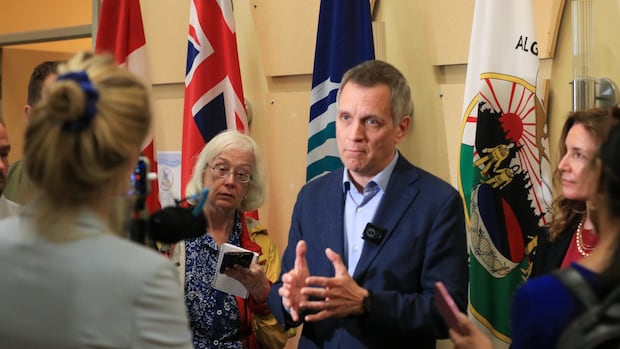
Mark Sutcliffe is pledging to hold Ottawa property tax hikes to an upper limit of 2.5 per cent in the first two budgets of a new mayoral mandate, as two of his rivals promise to keep taxes affordable without committing to a ceiling.
Sutcliffe discussed his tax plan with CBC News in an interview Wednesday, saying residents are worried about the city adding to their financial burden and “need to know what the immediate future holds for them.”
His promise applies to the 2027 and 2028 budgets. He said it isn’t realistic to commit to a specific number beyond those dates.
“My goal is to keep tax increases as low as possible for the full four years. I have a track record of doing that,” he said.
“We have to respect people’s affordability challenges right now, but in good conscience I can’t predict what things are going to be like three years from now or four years from now.”
The promise echoes what Sutcliffe committed to in his successful 2022 campaign, when he promised to hold taxes to 2.5 per cent for 2023 and 2024.
Council did pass budgets in line with that ceiling, though taxes rose to 3.9 per cent and 3.75 per cent for his third and fourth years in the mayor’s office and a fee to pay for garbage rose by far more.
If re-elected, Sutcliffe said he will defer property tax payments for one year, interest-free, for people who’ve lost a job or had a death in the family, as well as for first-time homebuyers and downsizing seniors.
“We have an opportunity to show a bit of compassion and leniency and I don’t think it’ll amount to a huge amount of money,” he said.
His plan also commits to freeze recreation fees for seniors and families for the 2027 budget. Sutcliffe promised to cut those fees last time around, a pledge he didn’t keep overall. While fees did fall for some specific groups, they rose for others and went up on average.
Sutcliffe’s announcement came one day after rival Jeff Leiper said he would add a one per cent infrastructure levy to property tax bills and on the same day Neil Saravanamuttoo told reporters how he would approach taxes should he be elected on Oct. 26.
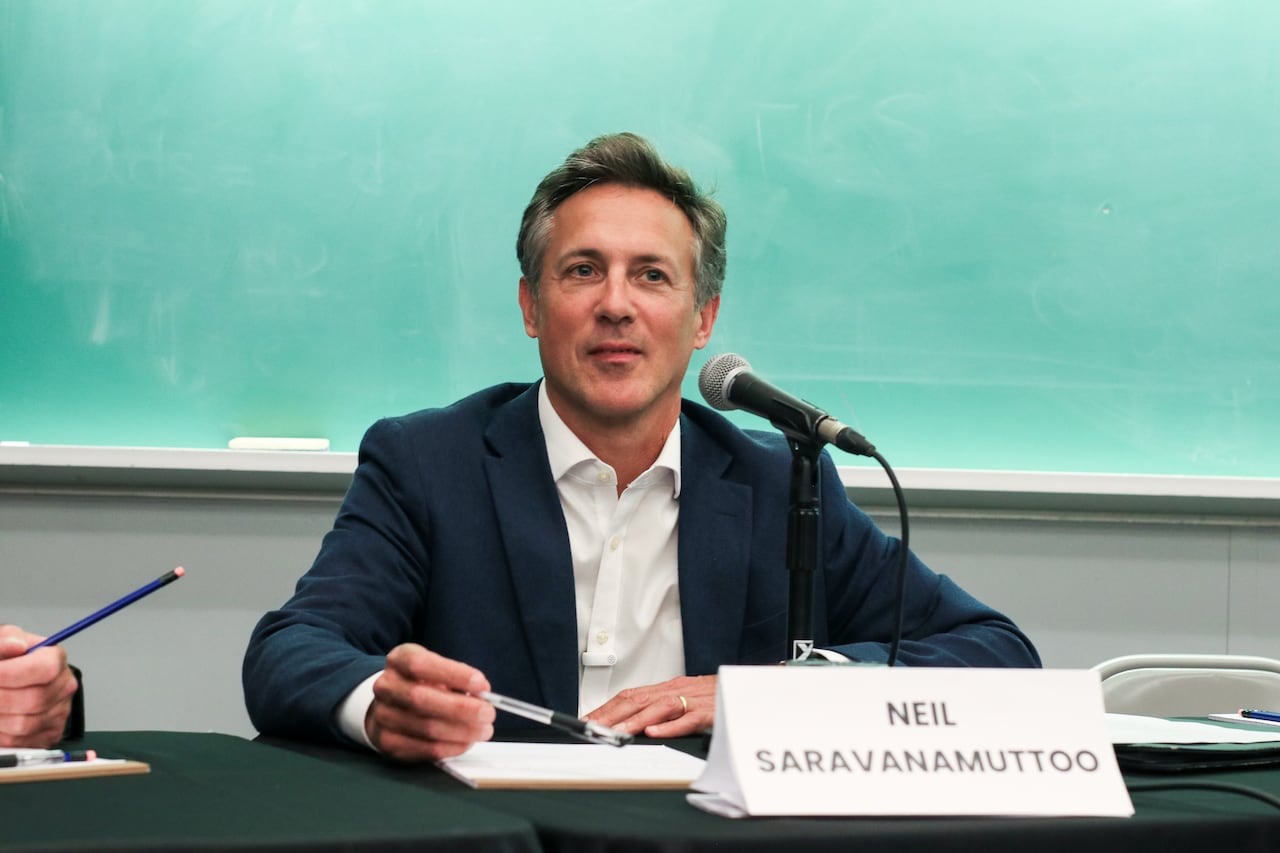 Neil Saravanamuttoo said his tax number will depend on how much he can find in savings and how much the city will have to pay for infrastructure renewal. (Arthur White-Crummey/CBC)
Unlike Sutcliffe, neither rival would name an overall tax ceiling. Saravanamuttoo said there’s just too much uncertainty about the city’s finances.
“Frankly we don’t have the insight into that budget that we need to make informed decisions,” he said. “Anyone that actually comes forward and says, ‘This is what the tax increase will be,’ you shouldn’t believe them.”
He said he’s confident he can find savings at city hall to keep taxes “as low as possible.” On the other side of the ledger, he said he needs to know more about how much the city will have to pay to keep up with crumbling infrastructure.
“Savings on the one hand, infrastructure deficit on the other hand, that is what will determine our rate of taxation,” he said.
WATCH | Ottawa mayoral candidates start rolling out tax plans: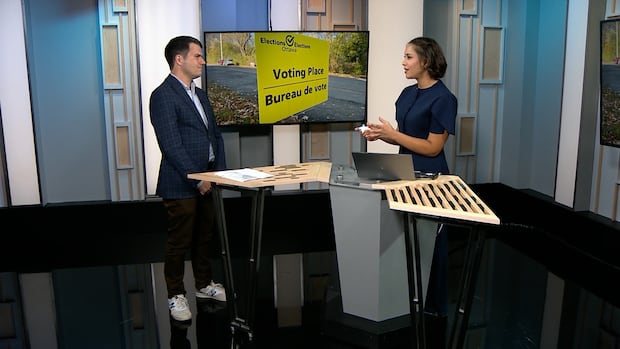
Ottawa mayoral candidates start rolling out tax plans
Three candidates running for mayor of Ottawa are promising affordable tax increases, though most are holding off on making firm promises. The CBC’s Arthur White-Crummey reports.Search for savings at centre of plans
Sutcliffe said he’s already found about $250 million in savings and efficiencies over the past four years — and he’s pledging to match that number over the next four if he’s re-elected.
“I believe there is still work to be done,” he said. “We can find more savings and efficiencies.”
Yet a sizeable chunk of those past savings came from windfalls beyond the city’s control, like the elimination of the federal carbon tax, which saved the city a fortune on fuel.
There’s no guarantee any such break will happen again, and Saravanamuttoo doesn’t think voters should buy what Sutcliffe is selling.
“Those savings that are being listed are not credible,” he said.
Saravanamuttoo said his own exercise will be different from anything Sutcliffe has done. He promised a comprehensive spending review that would go line by line, something he said hasn’t happened since 2004.
He said his background in economics and public finance puts him in a much better position to succeed than other candidates because they simply don’t understand the numbers.
“They are taking the word of senior city staff, and senior city staff have a vested interest in maintaining the status quo,” he said.
“Bureaucracies will want to protect themselves and they have a natural tendency to protect their budgets, and I say this as a former public servant.”
To address that, he said he will create a new independent Office for Financial Responsibility staffed with experts who would work with the public to fight waste.
But Sutcliffe explained how he would hold down costs. He said he would expand his program review using independent experts, keep a hiring freeze for non-frontline positions at city hall and ensure no money from tax hikes goes to spending on general administration and operations.
“Obviously we are going to hire more police officers and paramedics and firefighters,” he said. “This is more about administrative positions and overhead and we need to keep a lid on that.”
Inflation is currently running at about three per cent, but Sutcliffe denied holding taxes below that level amounts to a cut.
“My intent is not to cut any programs and services,” he said.
Saravanamuttoo said his intention is precisely the same.
Leiper is promising what he calls affordable and predictable tax increases, and says his infrastructure levy would cost the average urban homeowner about $28 per year.
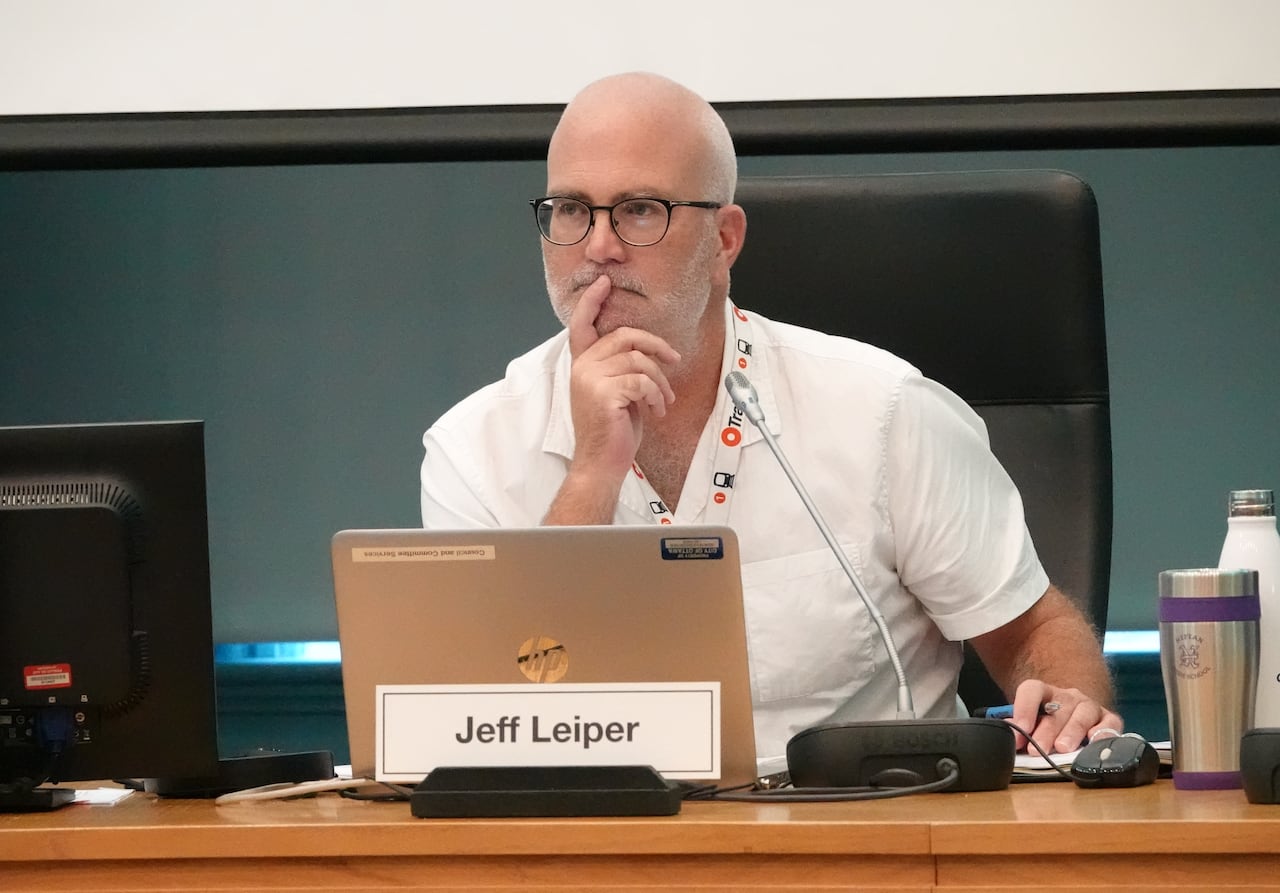 Jeff Leiper, a mayoral candidate and city councillor, chairs a committee meeting earlier this term. (Giacomo Panico/CBC)
He said it would raise more than $25 million annually to help fill a multibillion-dollar funding gap to keep up with aging infrastructure like roads and city buildings — the same gap that’s troubling Saravanamuttoo.
Candidate aims to use tech to solve traffic
A fourth candidate, Alex Lawson, has not yet made any tax commitments, but he did release his plan to fight traffic congestion on Wednesday.
He said the city’s traffic signals rely on 1970s technology, and he would have Ottawa sign up for Google’s Project Green Light program to bring it into the 21st century.
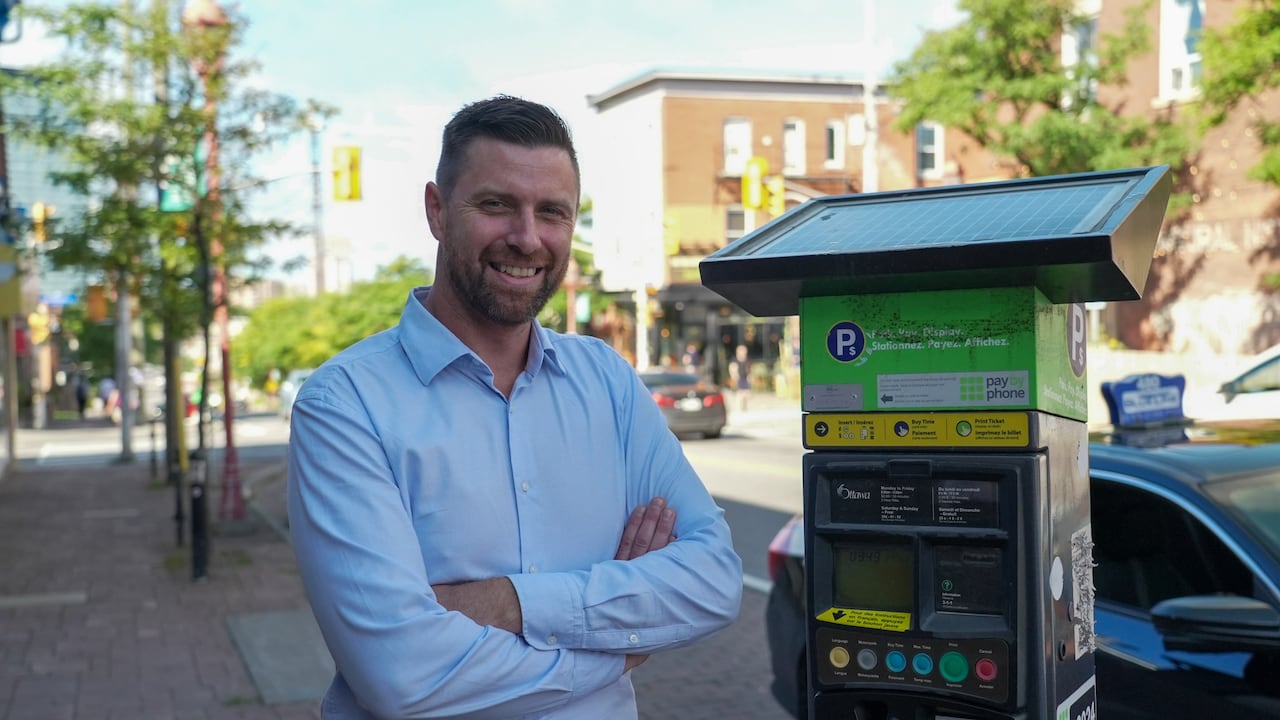 Alex Lawson says he would use technology to help solve traffic congestion. (Antoine Allain/CBC)
According to Google’s website describing the program, the program uses AI and Google Maps driving trends to optimize traffic light timing. The AI doesn’t take over control of the traffic system or change signals automatically, but makes recommendations to city traffic engineers, who can act accordingly.
Lawson said the program is free during the research phase, so there won’t be any cost to taxpayers.
He also wants a pilot program that would use “smart signals” to change timing on the spot. He said it would cover Ottawa’s 100 worst intersections at $50,000 a piece, or $5 million total.