
RICHMOND, Va. — Virginia Gov. Abigail Spanberger unveiled a sweeping new “Data Center Accountability Framework” Friday, calling it the most comprehensive and aggressive data center accountability effort in the country.
Spanberger said the framework focuses on increasing transparency, strengthening environmental protections, lowering energy costs, advancing clean energy, and investing in Virginia’s workforce.
“Starting today, this industry won’t have carte blanche to play by their own rules in Virginia,” Spanberger said at a Friday morning press conference in Richmond.
Spanberger’s plan comes as she said the industry is expanding rapidly across the Commonwealth without adequate controls and as some Virginians have grown increasingly frustrated with data center impacts on energy bills, their quality of life, and the environment.
“I want everyone who is feeling, or anyone who is feeling this way, to know that I hear your concerns, I understand them, and frankly, I share them,” Spanberger said.
Watch: Gov. Spanberger unveils data center plan
Virginia Governor Unveils Sweeping Data Center Crackdown and AI Oversight Plan
Meanwhile, reaction to Spanberger’s proposals has been mixed, with some state leaders saying they don’t go far enough to hold the industry accountable and others saying aspects of the plan don’t appear realistic.
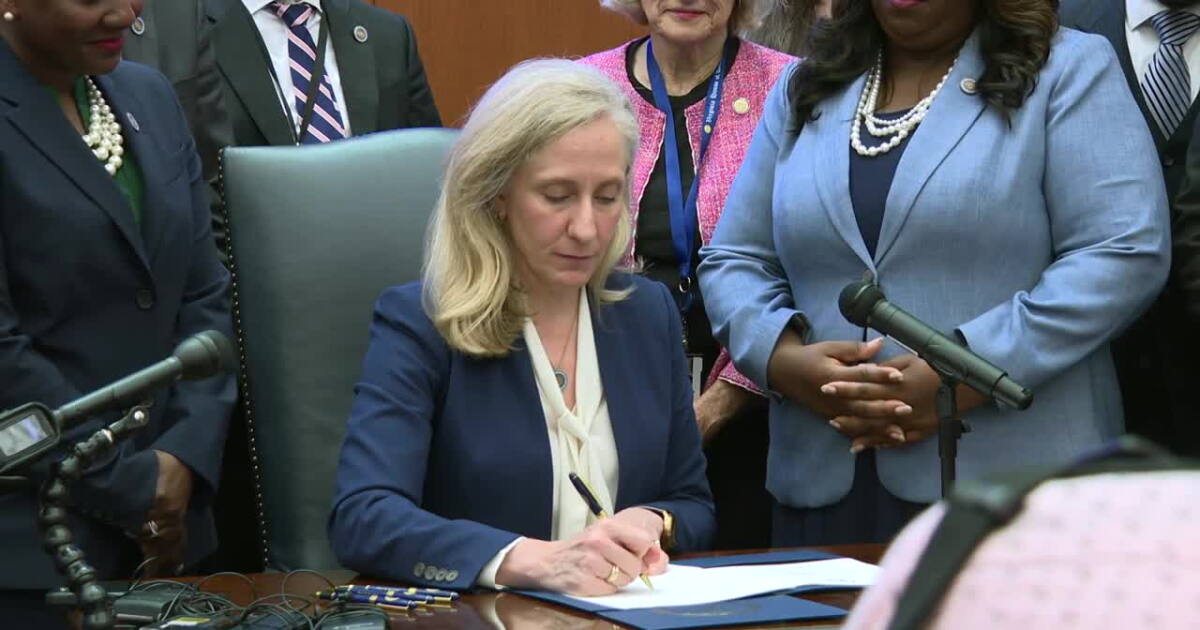
Many items in the framework will require action from the General Assembly, but some steps were immediately put into action Friday when Spanberger signed Executive Order 22.
The executive order will includes directives that ban state agencies from entering into non-disclosure agreements for data center projects, fast-tracks the development of data center noise regulations, and creates a toolkit for localities to help them negotiate better deals with data centers to score community benefits.
Other efforts Spanberger is pushing for include:
Stronger standards for energy efficiency, water use, land impacts, and backup generationRequirements for utilities to equitably allocate electric transmission and generation costs to data centersEnding by-right approval and requiring local approval of data center projectsLimiting data centers’ use of gas for power generation
“Virginia is leading the way because this framework will result in more clean energy, more direct benefits for communities, less noise pollution, less air pollution, less water use, good local jobs, and more local engagement,” Spanberger said.
When asked whether the proposed policies will apply to only new data centers and not the hundreds that already exist in Virginia, Spanberger said, “We are raising the standards for new folks to the game and ensuring that over time the others join in those highest of standards.”
Absent from the plan is a call to pause all new data center development as the new standards are implemented, which some localities have supported.
Sen. Glen Sturtevant (R-Chesterfield), who is pushing for such a moratorium, said on social media Spanberger’s proposal “is a Big Tech-friendly plan for more data center growth in Virginia.”
Governor Spanberger sided with the Data Center industry today.
Her announcement is a Big Tech-friendly plan for more data center growth in Virginia.
It’s not a moratorium.
There’s no cap on new data center electric load.
Nothing on the massive tax exemption loophole.
And it… https://t.co/S33Tdvuu6x
— Glen Sturtevant (@GlenSturtevant) September 18, 2026
Also absent is a proposal to end a controversial tax break for the industry, which Spanberger acknowledged is made up of some of the “wealthiest corporations in the world.”
Sen. Louise Lucas (D-Portsmouth), a strong proponent of repealing that tax break, said in a statement, “The Governor is finally feeling the heat but still ignoring the fire. Her proposal does not end the $2 billion in sales tax exemptions provided to data centers.”
“Is it really accurate to call this the most aggressive accountability effort on data centers in the country if this plan is not calling for a moratorium and is not addressing the sales tax exemption?” reporter Tyler Layne asked Spanberger at Friday’s press conference.
“Yes, and you don’t have to take my word for it. You can listen to others who might be in our press release giving quotes to that degree. But I will refer to my notes on this one so I don’t miss something. We are the first in the nation to limit behind-the-meter gas generation. We are the first in the nation to conduct a cumulative impacts analysis and require moving towards tier four or better clean alternatives for backup diesel generators for existing and new facilities. We’re the first in the nation to prioritize grid access for data centers that bring on zero carbon energy even faster than required by Virginia’s existing clean energy requirements,” Spanberger responded.
Watch: Gov. Spanberger answers questions about her data center plan
Gov. Spanberger answers questions about her data center rules for Virginia
The Data Center Coalition said in a statement that it shared Spanberger’s goals.
However, it warned that “significant and abrupt policy changes without meaningful stakeholder engagement could prove unworkable and jeopardize the real tangible benefits this industry can create.”
The group added, “We hope the implementation of this process will be based in fact and evidence, and account for the tens of thousands of jobs and billions of dollars of economic activity connected to digital infrastructure.”
Increasing transparency
Executive Order 22 bans executive branch agencies, departments, boards, commissions, authorities, and employees from entering into or requiring non-disclosure agreements (NDAs) for data center projects.
More broadly, the framework calls for eliminating by-right approval and requiring local approval of any data center using over 25 megawatts of power, empowering communities with tools to negotiate stronger agreements, ending state subsidies for data centers in Virginia’s site development programs, and removing future large data centers from the state’s fast-track permitting process.
“If you don’t want to meet these high standards, Virginia may not be the place for you,” Spanberger said.
Environmental protections
The framework directs the state to establish standards for data center energy efficiency, water use, and land impacts that Spanberger says will be the strongest in the nation.
Executive Order 22 also expedites the development of data center noise regulations and directs review of diesel and other backup-generation operations associated with data centers. The broader framework calls for evaluating the cumulative impacts of diesel backup generators and requiring existing and future facilities to move to cleaner backup power, as well as setting clear water-use standards backed by stronger state agency enforcement.
Energy costs and clean energy
The framework requires all utilities to allocate a more equitable share of electric transmission and generation costs to data centers and other large load customers. It also calls for ensuring that costs from PJM Interconnection processes to address rising energy demand driven by data centers are allocated to those data centers.
The framework also aims to protect grid reliability by requiring data centers to meet standards that prevent sudden changes in electricity demand from destabilizing the grid, and limits the amount of electricity data centers can generate from on-site or behind-the-meter natural gas generation.
It prioritizes grid access for facilities that invest in clean energy and aims to make it easier for data centers to bring their own clean power by reforming utility charges that currently discourage clean energy investment.
Executive Order 22 also directs the state to work toward directing data center investments in local energy projects that improve affordability for Virginians and strengthen the grid.
“Virginia families and small businesses should not foot the bill for the data center industry,” Spanberger said.
The framework also requires stronger upfront financial commitments from developers.
Virginia workers
The framework prioritizes local hiring. It also prioritizes Virginia businesses in procurement and contracting, supports strong labor practices through responsible contractor standards and apprenticeship programs, and supports project labor agreements where possible.
Executive Order 22 directs the state to develop best practices for prioritizing the creation of quality jobs and advancing local workforce opportunities.
AI task force
Executive Order 22 also creates Virginia’s new Artificial Intelligence Task Force. The task force will focus on addressing risks posed by the rapid development of artificial intelligence, including workforce displacement, data privacy, and cybersecurity. Spanberger said the task force comes as the federal government has failed to act on those concerns.
Email your thoughts to the CBS 6 Newsroom.
Every day CBS 6 News’ award-winning journalists search for diverse voices and perspectives from communities across Central Virginia. We listen, give a voice to the voiceless and amplify the voices that make our home special.
Connect with CBS 6: Email newstips@wtvr.com, submit a news tip, contact a reporter or call our newsroom at 804-254-3684.
This story was initially reported by a journalist and has been converted to this platform with the assistance of AI. Our editorial team verifies all reporting on all platforms for fairness and accuracy. To learn more about how we use AI in our newsroom, click here.