
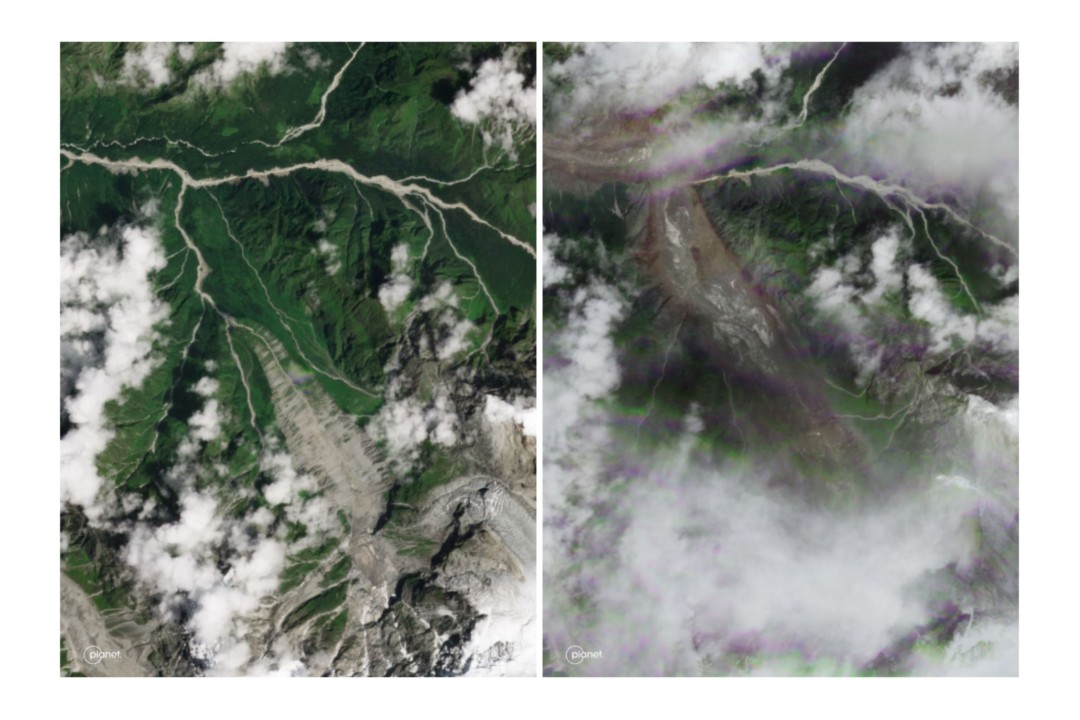
A first-of-its-kind study into the Himalayan disaster that killed more than 1,300 people concludes that decades of warming likely weakened the ice and rock that suddenly broke loose, triggering a devastating series of events. The August 26 glacier collapse on Nepal’s Langtang Lirung mountain sent more than 2 million square feet of rock wall and glacial ice some 4,660 feet onto the valley floor, where it resulted in a roaring debris flood. “Rock avalanches of this size are rare, with annual frequency estimates of approximately one event this size every 1,000–10,000 years,” the study by World Weather Attribution researchers said, per the Guardian. “This event shows that limits to adaptation are already being reached.”
The researchers stop short of calling climate change the sole cause, instead describing it as a “destabilizing factor acting on a pre-existing geological predisposition.” Their study delves into “known and potential drivers, while also investigating how these drivers have changed in a warming climate.” The BBC reports on some of their findings: that July and August local temperatures were about 1.5C warmer and “attributable to human-caused climate change”; that area glaciers have been thinning by about 1.6 feet annually; and that there was “exceptionally high precipitation during October 2025, which combined with subsequent warmth may have been a source for meltwater during the following spring and monsoon seasons.”