
He added: “One by one, we will cut off the supply lines of the enemies of the people and the homeland, who feed off the terror industry. We are determined to do so and, God willing, we will succeed.”
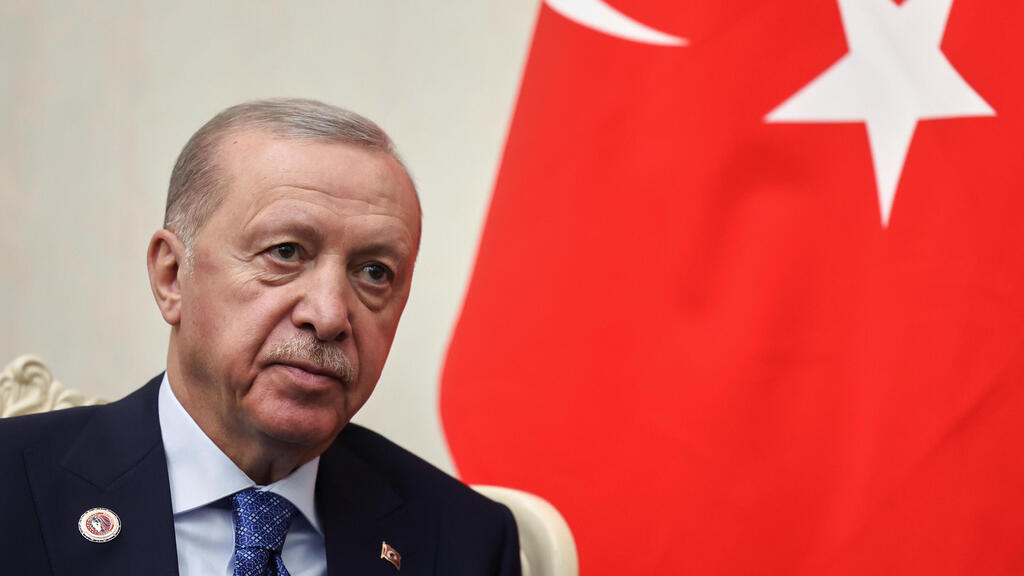
Turkish Presiden Recep Tayyip Erdogan blames the ‘Zionist massacre network’
(Photo: Vyacheslav Prokofyev, Sputnik, Kremlin Pool Photo via AP)
According to a statement issued by Turkish authorities Friday, the Istanbul Chief Public Prosecutor’s Office, together with Turkey’s National Intelligence Organization, or MIT, police and Interpol, raided hundreds of addresses in Istanbul and Mugla province and arrested more than 201 suspects out of about 240 who were indicted.
According to prosecutors, the network operated under the cover of dozens of ostensibly “legitimate” companies in the forex and cryptocurrency sectors, ran call centers and extracted more than $3 billion from victims around the world.
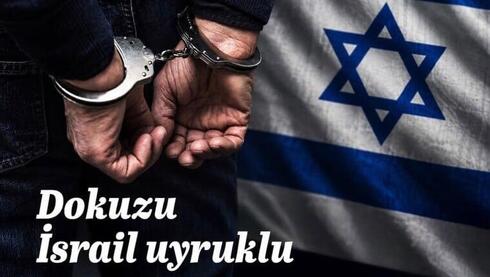
Arrest of suspects in the fraud case in Turkey
(Photo: Section 27A of the Copyright Law)


Turkish Justice Minister Akin Gurlek said the network was headed by “Israeli fraud barons,” while the indictment reportedly refers to figures “linked to Israel.” Turkish media published the names of nine Israeli citizens who were arrested and were allegedly employed at the network’s customer service centers.
It is no secret that in today’s Turkey, the moment Israel’s name is linked to any affair, it automatically becomes a major headline. Anyone with a political agenda uses Israel to gain public support, and sometimes also the personal favor of President Erdogan. In that sense, there is nothing surprising about the scale of the coverage the affair has received.
Turkish law requires forex companies to register with the local Capital Markets Board and subjects them to various restrictions, including a leverage cap. According to reports, the companies involved exceeded the permitted leverage limit, which would ostensibly constitute a regulatory violation.
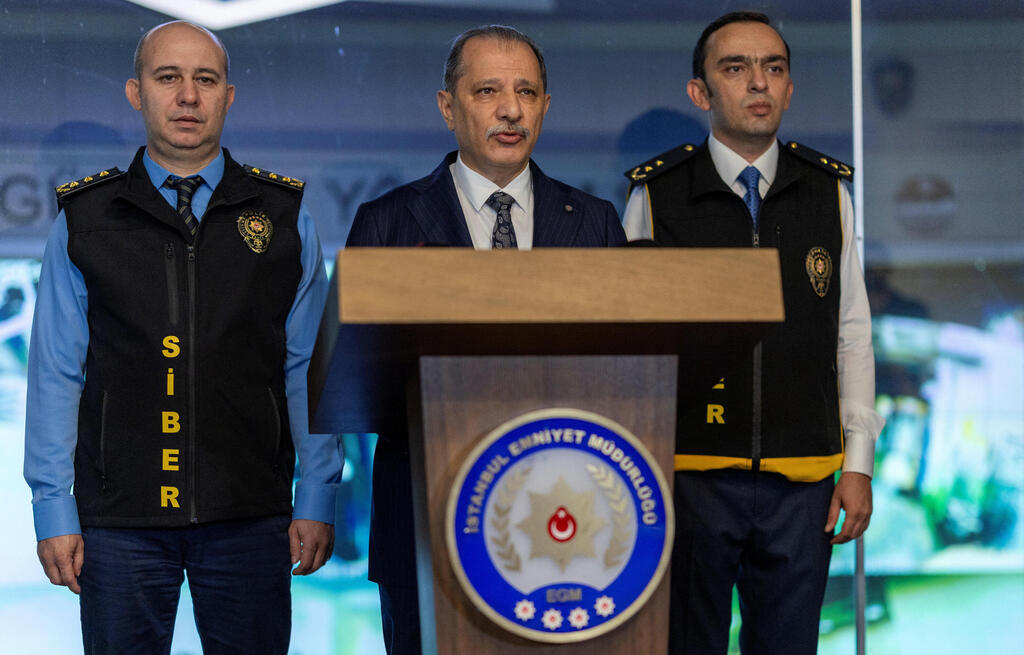
Istanbul police chief announces wave of arrests
(Photo: Umit Bektas/Reuters)
At this stage, however, it is unclear whether the specific companies were registered in the first place or exactly which violations were committed. The conduct may indeed have failed to comply with the law, but that is a long way from “an Israeli gang robbing Turkey,” and there is concern that the affair is being inflated, at least in part, for political reasons.
Once there is an allegation involving an international network, it is almost natural for Turkey’s National Intelligence Organization to become involved in the investigation, since it is also responsible for dealing with serious crimes such as money laundering, and not only terrorism and nationalist offenses.
The central question is whether the Israeli suspects, if and when they are brought to trial, will receive a fair hearing. In the current climate of Israel-Turkey relations, that is difficult to believe.
There appear to be genuine irregularities in the financial activity, but it is impossible not to wonder whether the suspects’ Israeli identity will complicate their legal situation beyond what is warranted.
One point tends to disappear from the headlines: Turkish media published the names of the nine Israeli suspects, and at least some have been identified as Turkish Jews with dual citizenship, or as having no Israeli citizenship at all.
In other words, the “Israeli network” portrayed in the headlines consists, at least in part, of native Turkish citizens who are also Jewish — a fact that casts doubt on the national framing of the affair as “Israelis versus Turks.”
The timing is not coincidental. The affair is being publicized as Turkey itself faces accusations that it is allowing money from Iran to flow to its proxy organizations — Hezbollah, the Houthis and Hamas — through Turkish banks.
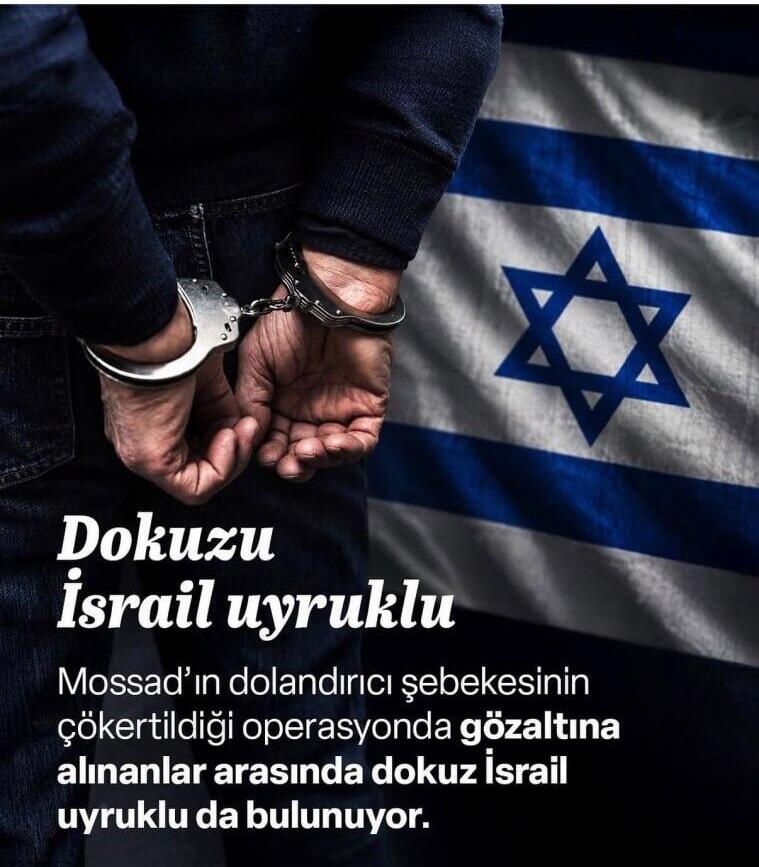
Headline in ‘Yeni Sıfak’,hich is close to Erdogan, about arrest of Israelis in connection with the giant fraud network: ‘Mossad cell’
In that situation, there is a clear political logic to shifting public attention toward “an Israeli gang robbing Turkey,” rather than discussing the more painful question for Ankara: Turkey’s own role in financing terrorist organizations in the region.
Also notable in this context was a report in the pro-Erdogan newspaper Yeni Safak, which claimed that a “Mossad cell” had been arrested.
The claim is completely baseless and only heightens concern that the entire affair — or at least the way it is being presented to the Turkish public — is being inflated for political reasons.
Turkish media published the names of the nine Israeli suspects, and at least some have been identified as Turkish Jews with dual citizenship, or as having no Israeli citizenship at all
The affair also comes against the backdrop of continued hostile rhetoric by the Turkish president toward Israel. In his statement Saturday night, Erdogan emphasized the phrase “terror industry network,” implying that the fraud network was in effect feeding Israel.
By contrast, Jerusalem’s official response was far more measured and restrained than the tone of the Turkish headlines.
According to Israel’s Foreign Ministry: “Yesterday, reports were received regarding the arrest of several Israeli citizens in Turkey on suspicion of involvement in criminal activity, apparently as part of a broader wave of arrests. The Foreign Ministry is handling the matter and is working to ensure that the rights of the Israeli citizens are protected.”
The carefully worded statement neither confirms nor denies the allegations themselves and focuses solely on the rights of those detained — an indication that Jerusalem, too, is aware of the political sensitivity of the moment and is not eager to be drawn into a dispute over “Israeli gangs.”
Most likely, this is a real financial fraud case with real victims around the world. But the way it is being presented in Turkey — as an organized “Israeli network” robbing innocent Turkish citizens — overlooks a more complicated picture: suspects who in some cases are Turkish Jews and not Israeli at all, unresolved questions about the regulatory licensing of the companies involved and timing that is particularly convenient for Ankara amid accusations that Turkey itself is helping finance Iranian terrorism.
In the current public climate in Turkey, it is difficult to believe that the Israeli suspects will receive a fair process that is not prejudiced in advance by their nationality.
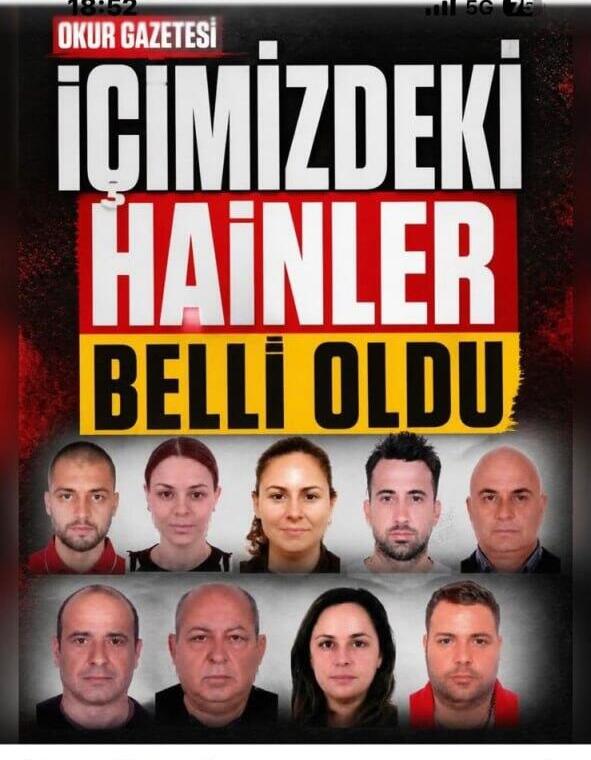
Newspapers in Turkey: ‘These are the nine Israelis who were arrested’
One can only hope that their Israeli identity will not determine their legal fate beyond the evidence itself.
One Turkish website published a list of the Israeli citizens allegedly arrested under the headline: “The traitors among us have been exposed.”
According to reports in Turkey, this is how the alleged fraud network operated: Potential clients were recruited through advertisements on social media and websites promising high returns from investments in foreign currency and cryptocurrencies.
Those who showed interest were passed on to representatives who spoke their native language and persuaded them to transfer small sums at first.
They were later convinced to transfer larger amounts, while being shown fictitious “profits” on trading platforms.
When investors asked to withdraw their money, they were told that their account had been “blocked” and that they had to make additional payments, such as a “tax” or an “unblocking fee,” in order to release the funds.
In practice, according to the allegations, the money was never invested at all but was transferred to bank accounts and cryptocurrency wallets outside Turkey that were controlled by the network.
According to Turkish prosecutors, the “fraud barons” instructed their operatives not to target Israeli or American citizens.
The central question is whether the Israeli suspects, if and when they are brought to trial, will receive a fair hearing. In the current climate of Israel-Turkey relations, that is difficult to believe
According to findings by Turkey’s MIT intelligence organization cited in the indictment, the Israeli figures began shifting their operations to Turkey and other countries after Israel banned binary options businesses in 2017.
Turkish authorities did not provide a precise breakdown of the nationalities involved, but according to reports, those arrested include 156 Turkish citizens, 11 from Pakistan and nine from Israel.
There were also two detainees from each of the following countries: Azerbaijan, Syria, Jordan, Ukraine, Thailand, Indonesia and Morocco.
In addition, one detainee was reported from each of the following: Kazakhstan, the Philippines, Iran, China, Lebanon, the Palestinian Authority, Mexico, Egypt, Mozambique, Argentina and Bangladesh.
Overall, the detainees include foreign nationals from 20 countries.
This article includes videos and images under Section 27A of Israel’s Copyright Law