
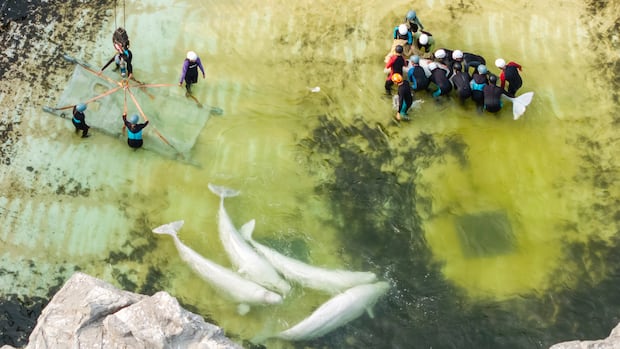
A third beluga whale that was part of the massive relocation of animals from the shuttered Marineland park in Niagara Falls, Ont., has died.
Oceanogràfic de València confirmed in a news release that Jelly Bean died suddenly and unexpectedly overnight Friday, less than a month after arriving at the aquarium in Spain.
Jelly Bean and another beluga, Cleopatra, arrived at the facility on Aug. 27 along with four dolphins as part of international rescue efforts.
“In recent days, Jelly Bean had experienced feeding difficulties, prompting the veterinary team to intensify her monitoring,” the release said. “During this period, she showed signs of improvement and remained responsive to her caregivers, while continuing to receive around-the-clock monitoring.”
Oceanogràfic said its veterinarians will conduct a necropsy with pathologists at CEU Cardenal Herrera University to try to determine cause of death.
Cleopatra and the four dolphins that arrived with Jelly Bean are doing well, according to the aquarium.
Ottawa took ‘reasonable steps,’ minister says
Fisheries Minister Joanne Thompson said she was saddened by Jelly Bean’s death and expressed condolences to the Spanish aquarium’s staff.
“The government of Canada has taken reasonable steps to ensure the safe rescue of the whales, including issuing CITES permits following a review of the transportation plan and issuing Fisheries Act authorizations following individual health assessments for each whale,” Thompson said in an emailed statement to CBC on Friday.
“I continue to be incredibly appreciative of the receiving facilities and their teams for their compassion, dedication and commitment to giving these belugas the best chance of survival.”
Two other belugas died within weeks of being moved. 23-year-old Peekachu arrived at Shedd Aquarium on Aug. 13 and died on Aug. 25. 20-year-old Rain died Sep. 2.
A resident beluga at Shedd, Beethoven, also died after the arrival of the Marineland whales.
In a Friday blog post, Shedd shared its condolences for Jelly Bean’s death.
“From the outset, teams involved in this rescue understood that many of these whales arrived with complex health needs and that the path ahead would be difficult,” it said. “The rescue offered urgently needed care and a path forward, but it could not guarantee every outcome. That does not make any loss less painful.”
The post also described care routines for rescued belugas Second and Osiris, saying animal handlers are watching Secord especially closely this week because the whale is not eating as much as it should be.
The relocations from Marineland were prompted by the park saying it was running out of money and needed the whales gone or they would be euthanized.
The closed tourist attraction moved all 30 of its belugas and four dolphins to five aquariums, all in the U.S. except the one in Spain.
Animal Justice cites stress of moving animals
Camille Labchuk, executive director of Animal Justice, said Jelly Bean’s death wasn’t surprising.
She said the organization had warned the federal government that moving the belugas could put their health at risk.
“Transporting animals is incredibly stressful,” Labchuk told CBC News on Friday. “That’s exacerbated when you’re dealing with a beluga whale who belongs in an aquatic environment.”
She said the animals may also experience stress from being separated from whales and caregivers they had known for years.
“Stress on any creature, including a whale, can contribute to lowered immunity. It can contribute to illness. It can contribute to death.”
WATCH | Final Marineland whales moved to the U.S.: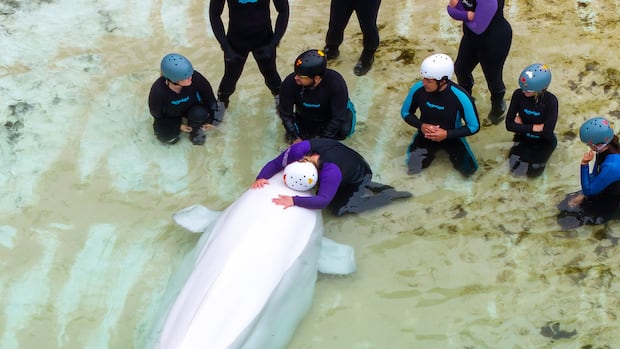
Final Marineland whales moved to the U.S.
Marineland’s last six beluga whales, the last of the mammals in Canadian captivity, were moved from the closed theme park and flown to the U.S. Thirty whales and four dolphins have been relocated since July.
Labchuk said Animal Justice had been calling since 2019 for the federal government to take a more proactive role in planning for Marineland’s eventual closure and the relocation of its whales.
“It’s really frustrating to be in this position and we take no joy in having foreseen the whale deaths.”
She said the organization wanted independent health assessments of the belugas to be made public before the transfers.
“We simply don’t know what their health assessments said,” Labchuk said. “We don’t know who did the health assessments. We don’t know if they were unbiased.”
‘There are going to be some losses’
Marine mammal scientist Naomi Rose told CBC News in July that she was also concerned about the health of the belugas and the stress of transporting them.
“This is unprecedented,” said Rose, a senior scientist for marine mammal biology at the Animal Welfare Institute.
She said the moving the belugas is stressful for the animals.
“To them, it is an alien experience similar to being stranded.”
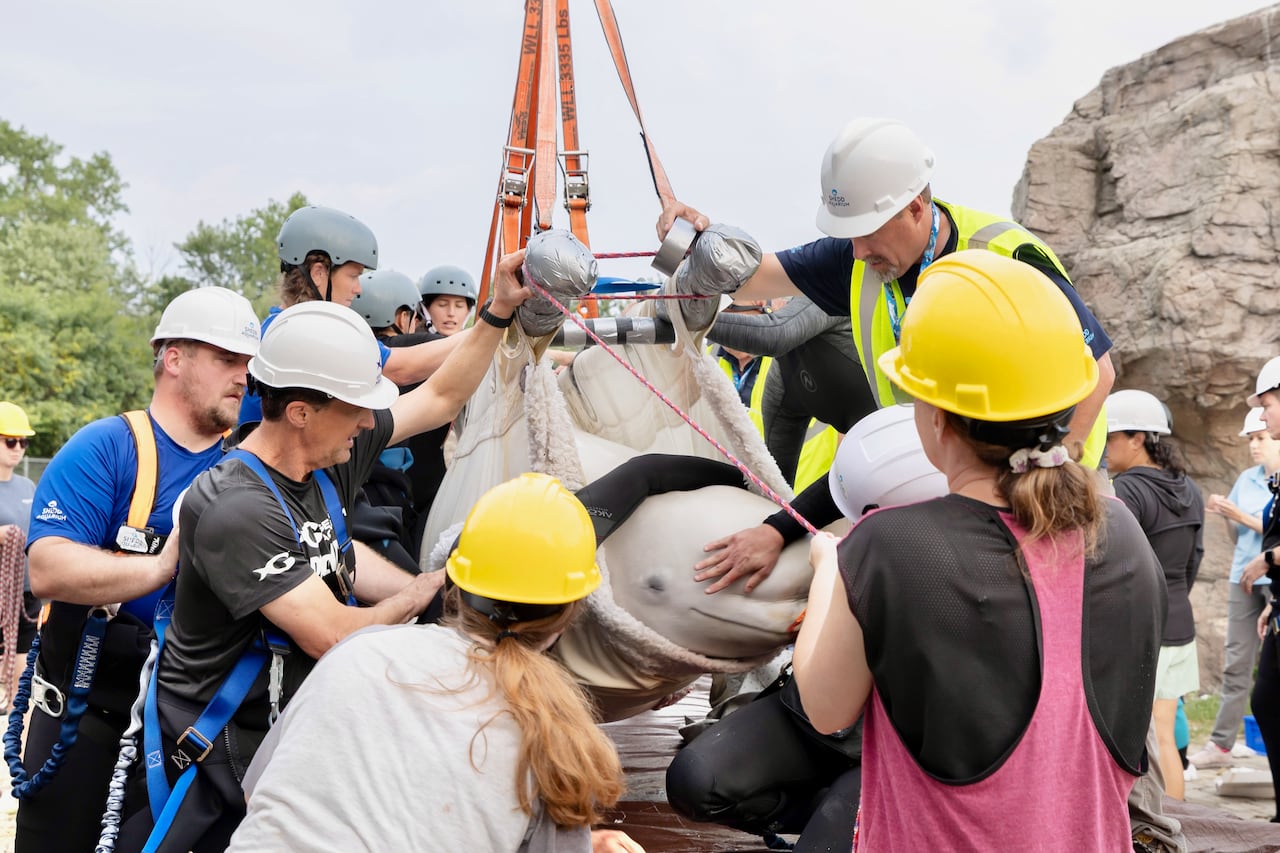 One of four belugas shipped from Marineland in Niagara Falls to the Shedd Aquarium in Chicago. Two belugas and a resident beluga died within weeks of the relocation. (Shedd Aquarium and Brenna Hernandez)
She warned about the dangers of moving the belugas.
“I fear or am worried that … some of these animals could either become extremely ill in an emergency sense or die.”
Rose had advocated for keeping the animals at Marineland temporarily while a whale sanctuary in Port Hilford, N.S., was prepared to receive some of them, but plans to get that site up and running have faced setbacks.
She described the transfers from Marineland as “the best of a bad job” and raised concerns about the possible eventual breeding of the whales.
Oceanogràfic said the teams involved in the rescue were aware from the outset that each animal had its own history and specific needs.
The aquarium said Jelly Bean’s death is a “particularly difficult time” for the team involved in her care.