
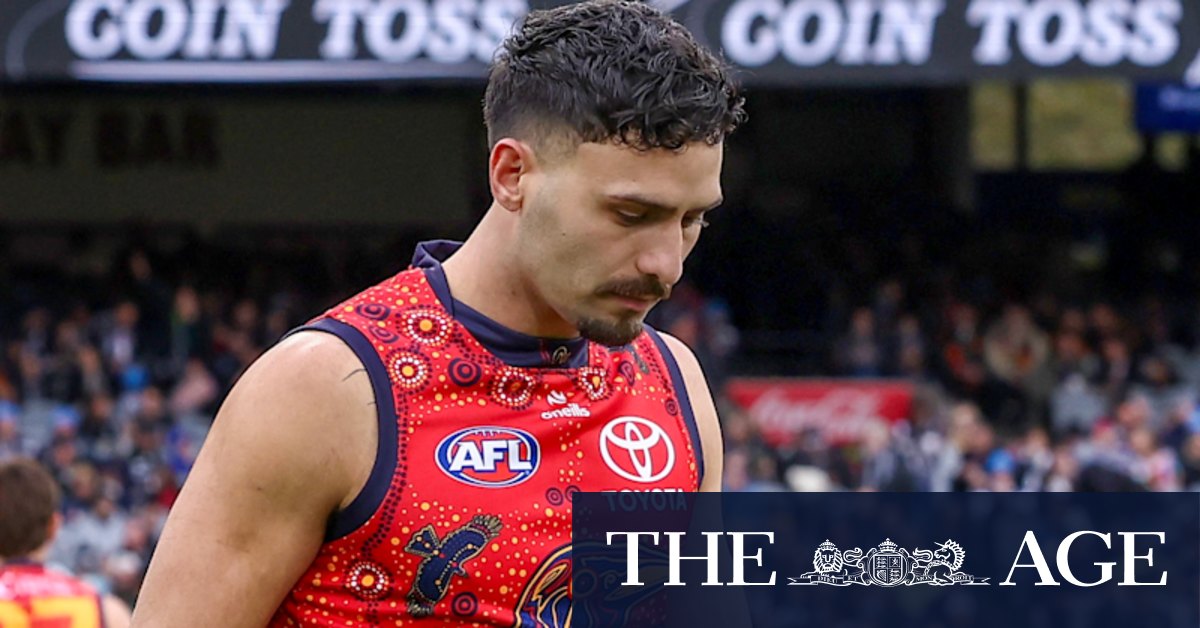
The ban means the Crows will be without their most electrifying match-winner for round 24 and the start of their finals campaign. Should the Crows, who have a double chance, lose their first final but make it through to the grand final, Rankine would be able to play in the decider.
Loading
Adelaide officials indicated that the club was “highly unlikely” to take the Rankine case to a court outside the AFL, such as the Supreme Court, in a bid to reduce or overturn the suspension.
The Crows are mindful of the need to move on from the Rankine saga and for the playing group to remain focused on their premiership campaign.
The Rankine situation was discussed at a scheduled Adelaide board meeting on Wednesday night.
Rankine called the Magpies player a f—-t, according to multiple competition sources familiar with the incident.
The Crows did not contest the essence of what was said by the star midfielder/forward, but mounted defence for a more lenient penalty.
The AFL said it would continue to consider the specific circumstances in each incident in determining appropriate responses.
‘Long bans on their own will not shift behaviour’
Footy fan and South Australian LGBTQ advocate Joshua Bradley said a mixture of education, transparent processes and fair consequences were needed to help stamp out homophobia in the AFL.
“Progress is real, though the core issue is cultural and starts in community footy,” he said. “We will not change a culture overnight. Clear standards and timely action matter, but long bans on their own will not shift behaviour.”
To address homophobia at a grassroots level, Bradley said parents and players needed to be taught why slurs about sexuality, race, or disability could cause harm to teammates, opponents, families, and the wider community.
“Calling someone a f—ing potato is still abuse and not OK, but calling someone a f—-t harms a whole community that may be listening on the sidelines,” Bradley said.
“Use a simple club language standard, a clear way to call it out in the moment, and a ladder of responses that starts with an apology and reflection, then education or community work, fines where needed, and club penalties for patterns.”
“Offer support to anyone affected, track incidents, and share what works. Keep football enjoyable while lifting standards.”
with Hannah Kennelly