
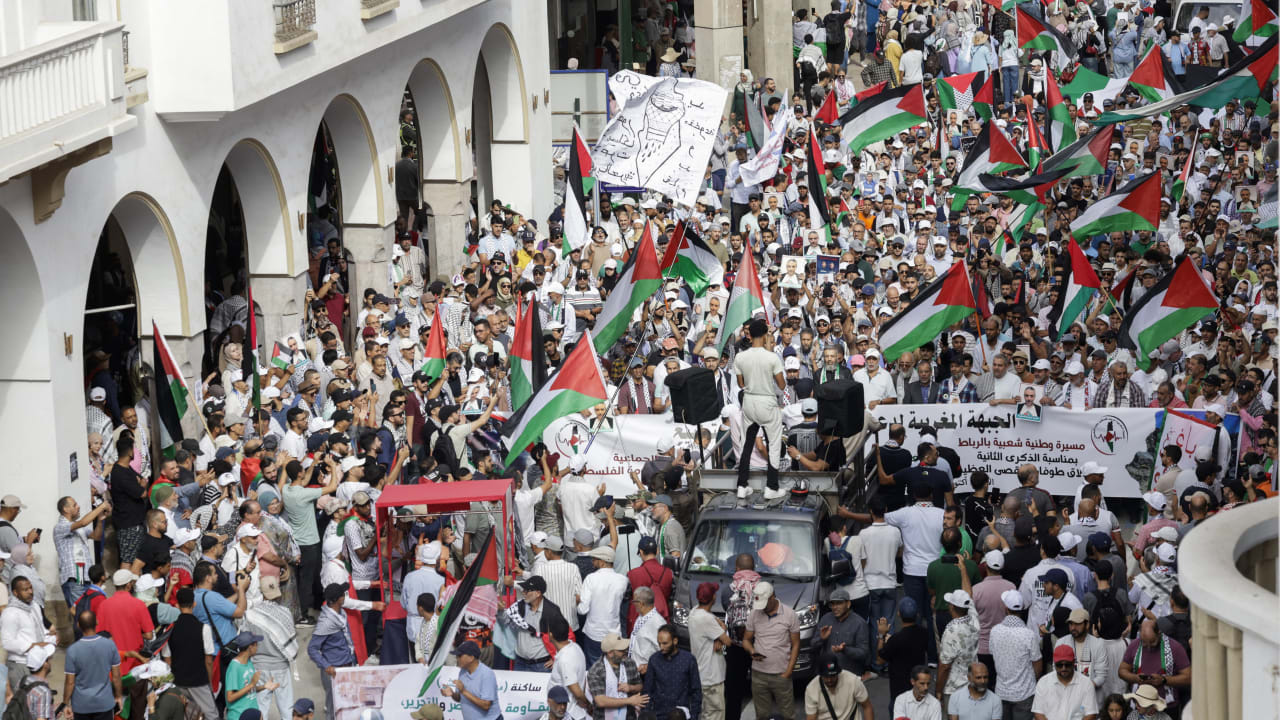
The Moroccan Front for Support of Palestine and Against Normalization (FMSPCN) called for nationwide protests against the government’s “decision to deepen and expand official normalization with the Zionist entity [Israel]” from September 25 to 27, the group posted on its official social media on Friday.
Additionally, on Saturday, FMSPCN posted a flyer calling for stopping normalization and “no to the Zionist embassy in Morocco.”
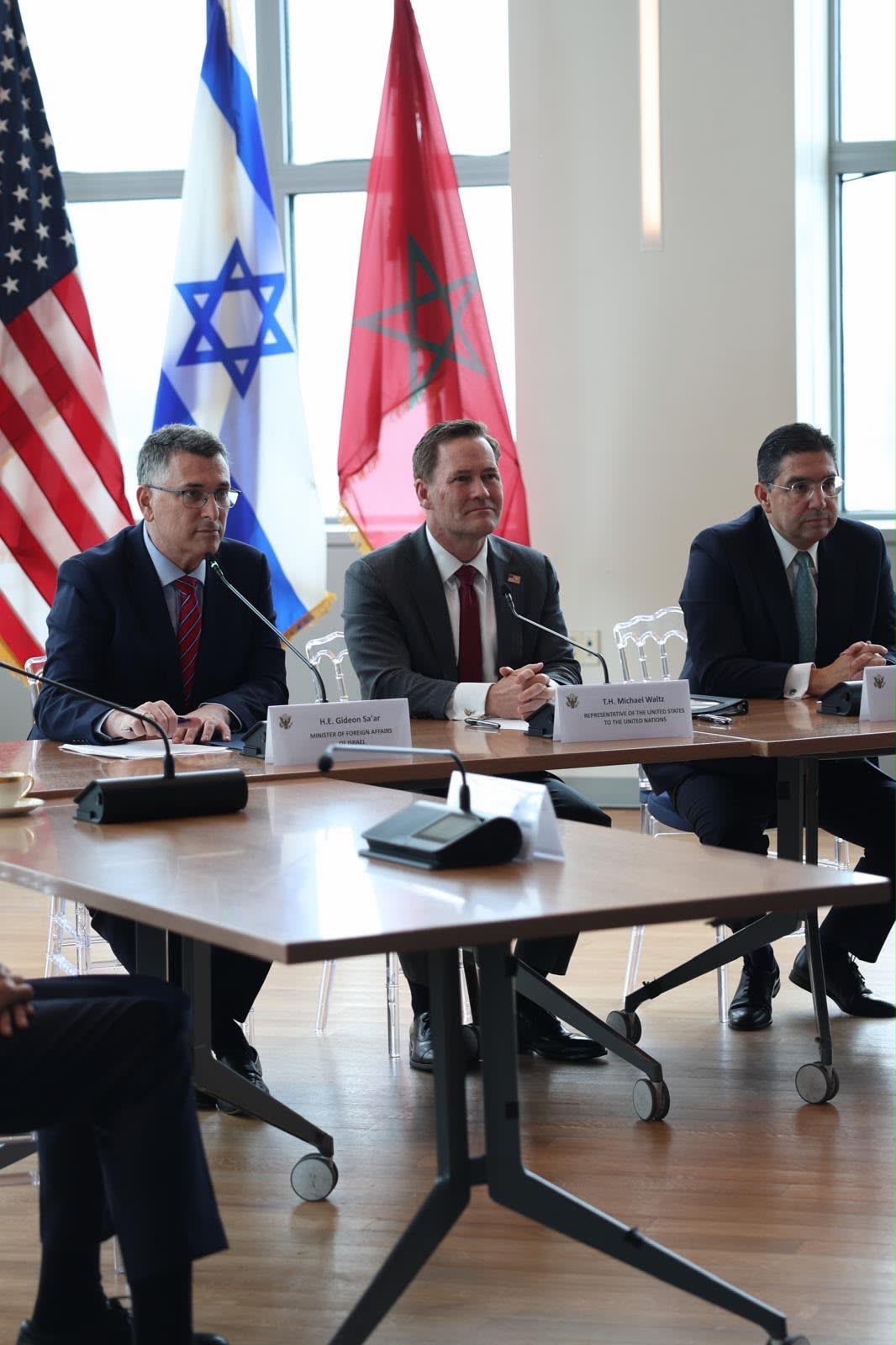
FMSPCN’s call for protests comes after Israeli Foreign Minister Gideon Sa’ar and Moroccan Foreign Minister Nasser Bourita met in the US, accompanied by US Ambassador to the UN Mike Waltz, on September 16 – the day after the sixth anniversary of the signing of the Abraham Accords.
Israeli media reports that Sa’ar and Bourita are slated to hold further meetings in the US again during the time of the slated protests, as both senior diplomats are likely to travel for the UN General Assembly.
“A representative of the Moroccan Foreign Ministry is meeting with the Zionist and American foreign ministers in New York to issue a tripartite statement stipulating the elevation of Moroccan-Israeli relations to the level of embassies and the exchange of ambassadors, alongside expanding flights and strengthening economic, commercial, military, and security agreements,” FMSPCN wrote.
This meeting comes “at a time when the crimes of the Zionist entity against the Palestinian people continue… the occupation continues its policies based on killing, displacement, settlement, and the desecration of the al-Aqsa Mosque,” FMSPCN claimed.
“Normal relations cannot be built with an abnormal entity based on occupation, genocide, ethnic cleansing, and displacement,” FMSPCN said, “without ambiguity.”
‘Palestine not a bargaining chip,’ Moroccan anti-Zionist group argues
“FMSPCN will remain loyal to its principled position [that] Palestine is not a bargaining chip, and it is not a cause that can be normalized,” it said.
“Palestine is a cause of a people, a cause of freedom, and a cause of justice. Normalization will not erase the truth, will not remove the rights of Palestinians, and will not silence the voice of the Moroccan people supporting Palestine,” FMSPCN pledged.
FMSPCN considers this “an escalation in the path of normalization… at a historic moment in which all efforts should have been directed toward stopping the aggression and holding accountable those responsible for the crimes committed against Palestinians.”
It also “considers this move toward raising the level of relations with the Zionists a stain of shame that contradicts the authentic position of the Moroccan people, which calls for canceling the ill-fated normalization agreements, and directing all efforts toward stopping the aggression and holding accountable and punishing those responsible for the ongoing grave violations against the Palestinian people and their courageous resistance.”
“We reject that normalization be presented as an ordinary option or an irreversible path, while Palestinians live under occupation, siege and displacement, and their basic rights violated,” FMSPCN claimed.
Moroccan anti-Zionist group rejects using ’embassies, agreements, economic exchange to whitewash occupation’
FMSPCN also “rejected turning embassies, agreements, and economic exchange into tools for whitewashing the reality of occupation and its crimes.”
The group restated its “adherence to the right of the Palestinian people to freedom, independence, self-determination, and the establishment of their independent state on all Palestinian territory with Jerusalem as its capital,” and “steadfast support for the legitimate Palestinian popular resistance in confronting the occupation.”
FMSPCN also “called on all living forces in Morocco, parties, unions, associations, and human rights organizations, to raise their voices loudly in defense of Palestine and confront all attempts to make normalization a familiar matter in Moroccan society.”