
The American blockade of Iranian oil exports is proving effective. Iranian crude loadings have collapsed and inventories are piling up. Scott Bessent, the US Treasury Secretary, has begun implementing the most punishing set of economic sanctions yet imposed on the Iranian economy.
Most notably, the US has finally begun to sanction Iraqi banks dealing with Iran, something it should have done years ago. The same needs to be done to Turkish banks, though recent threats to do so may prove adequate.
As a result Iran’s currency has crashed to record lows nearing two million rials to the dollar on the free market. That is half of what it was worth a year ago. Massive inflation in the price of food and household goods has followed.
Large public protests have been violently suppressed by the Iran Revolutionary Guard Corps (IRGC) which has now killed far more Iranians than the Shah’s secret police ever did. The force has also increasingly sidelined the clerics who previously controlled Iranian policy.
The revolutionary militants controlling Iran understand that, like Bashar al-Assad’s regime in Syria, they are riding a tiger. Regime change will mean harsh retribution for them and their families. While they cannot hope to defeat the United States any more than George Washington hoped to defeat Great Britain, they can, like Washington, perhaps make the game cost more than the candle.
Tehran’s strategy for increasing the cost of the conflict to unacceptable levels has three prongs. The first is to apply direct pressure on Saudi Arabia and other Gulf Arab states by blocking their oil exports in the hope that they will, in turn, pressure the Trump administration to desist.
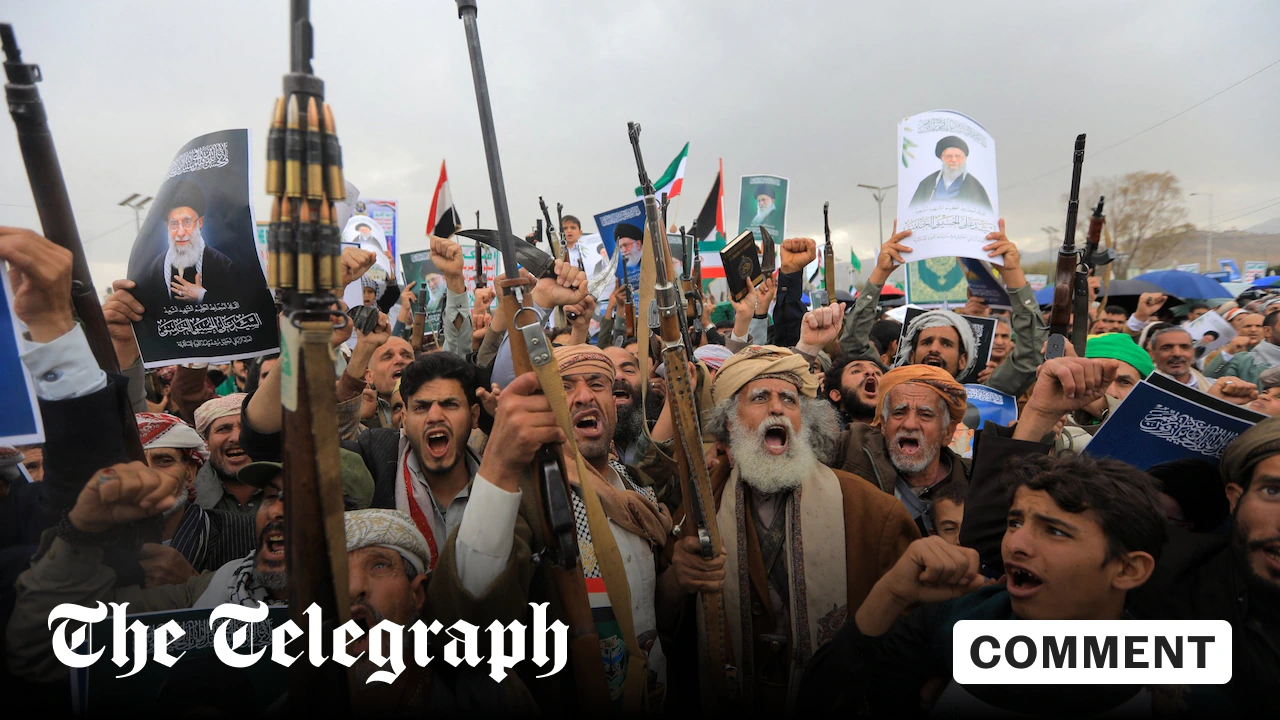
The second is to increase energy costs for America’s European and Asian allies in the hope that they will do likewise. Finally, there is an effort to place direct pressure on Donald Trump by raising the cost of petrol right before the crucial midterm elections. The attacks by Iran’s proxies in Iraq and Yemen serve all three ends. They also demonstrate that Donald Trump’s “art of the deal” approach will not work with an IRGC fanatically committed to its ideology and fighting for its own survival.
The only sure way to remove the danger posed to the global economy by Iranian-backed militias in Iraq and the Houthis in Yemen is to cut off the head of the snake that funds them. Current efforts have already diminished the support Iran can provide to its regional clients. Baghdad’s haste to identify the drone launch site and fire the local military commander confirms that Iraq’s government is no longer as aligned with Tehran as it has often been in the past.