
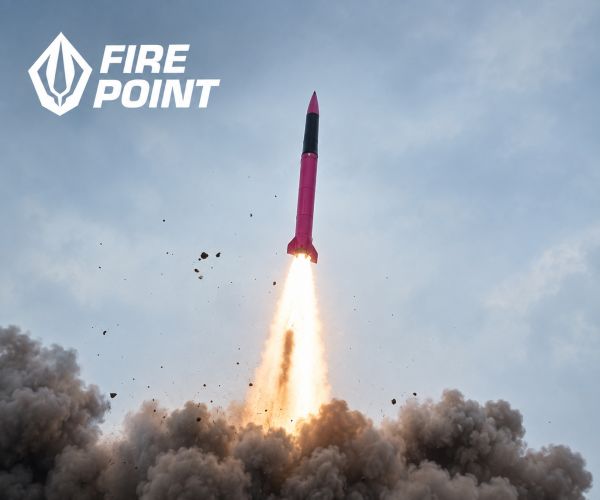

Pelican missile
Ukraine unveiled a new dimension in its long-range strike capabilities this weekend, saying it used its new Pelican ballistic missile for the first time while also firing powerful Flamingo cruise missiles during an unprecedented attack on Moscow and surrounding areas.
The introduction of the Pelican, alongside the long-range Flamingo and a massive wave of drones, represents a significant escalation in Ukraine’s domestically produced strike arsenal.
The combination potentially gives Kyiv a combination of ballistic missiles, heavy cruise missiles, and long-range drones that can attack Russian military, logistical, and energy infrastructure using sharply different flight profiles.
President Volodymyr Zelenskyy said the weapons employed in the overnight operation included the Pelican and Flamingo, along with FP-1, RZ-100, MICH-2000, Palianytsia, Vendetta, Liutyi, Bars, and Sichen systems.
Zelenskyy said a major oil-industry facility and a logistics installation in the Moscow region were hit.
Ukrainian media have linked the Pelican to Fire Point’s FP-7, a new Ukrainian ground-launched ballistic missile.
Reported specifications for the FP-7 include a range of up to 200 kilometers, a 150-kilogram payload, a maximum speed of 1,500 meters per second, and claimed accuracy of about 14 meters.
Other reports have cited possible configurations with ranges of 300 to 350 kilometers, although those figures have not been independently confirmed.
Unlike cruise missiles and drones, which fly through the atmosphere for relatively long periods, ballistic missiles can approach their targets at very high speeds, reducing the time available for air defenses to react.
At its published range, the Pelican could not reach Moscow from Ukrainian-controlled territory.
Zelenskyy did not disclose where it was launched or which target it attacked.
The missile may instead have been employed elsewhere as part of the broader operation.
The FP-5 Flamingo provides the deep-strike component.
The ground-launched cruise missile has a reported range of up to 3,000 kilometers, a top speed of about 950 kilometers per hour, and a warhead weighing about 1,150 kilograms, giving it substantially greater striking power than Ukraine’s long-range attack drones.
The Flamingo is not making its combat debut; Fire Point has previously said it was used against targets inside Russia.
What is notable is its reported use as part of a large assault involving multiple weapons in the Moscow region.
Images circulated online purporting to show Flamingo debris there, although those claims have not been independently verified.
The missiles accompanied what Moscow Mayor Sergei Sobyanin called the largest-ever drone attack on the Russian capital.
Russian officials said 450 drones approaching Moscow were intercepted and 1,110 were destroyed across Russia, occupied Crimea and the Black Sea.
Two people were killed and 20 injured in the Moscow region, according to local authorities.
The Moscow Oil Refinery was damaged, according to Russian authorities.
Ukraine has already demonstrated that relatively inexpensive long-range drones can penetrate far into Russian territory.
The Flamingo adds a much heavier warhead and a claimed range of 3,000 kilometers, while the Pelican introduces a fast ballistic weapon for shorter-range targets.
Used together with drones, those capabilities could force Russia to defend against multiple types of threats simultaneously and potentially disperse valuable air-defense systems across a much larger area.
Whether Ukraine can manufacture the new missiles in sufficient numbers to produce a sustained strategic effect remains uncertain.
The weekend attack demonstrated that Kyiv is attempting to move beyond relying primarily on drones and Western-supplied missiles for long-range strikes.
For Russia, distance from the Ukrainian front is becoming an increasingly uncertain form of protection.
© 2026 Newsmax. All rights reserved.