
Photo-Illustration: Intelligencer; Photo: Instagram/vp46archive
The 2024 election season was particularly tumultuous in Michigan, Senate candidate Abdul El-Sayed recalled on Friday. In his home state, more than 100,000 Democrats voted “uncommitted” in the presidential primary, a rebuke of the Biden administration’s handling of the Israel-Hamas war and the devastation in Gaza. Now, the legacy of that primary is taking center stage for El-Sayed, who supported the “uncommitted” cause but later endorsed Kamala Harris, who will campaign with him on Tuesday. Appearing on Morning Joe, El-Sayed acknowledged “hurt feelings about engagement with the Arab and Muslim community” in 2024 while framing this week’s event as “an opportunity for us to come together.”
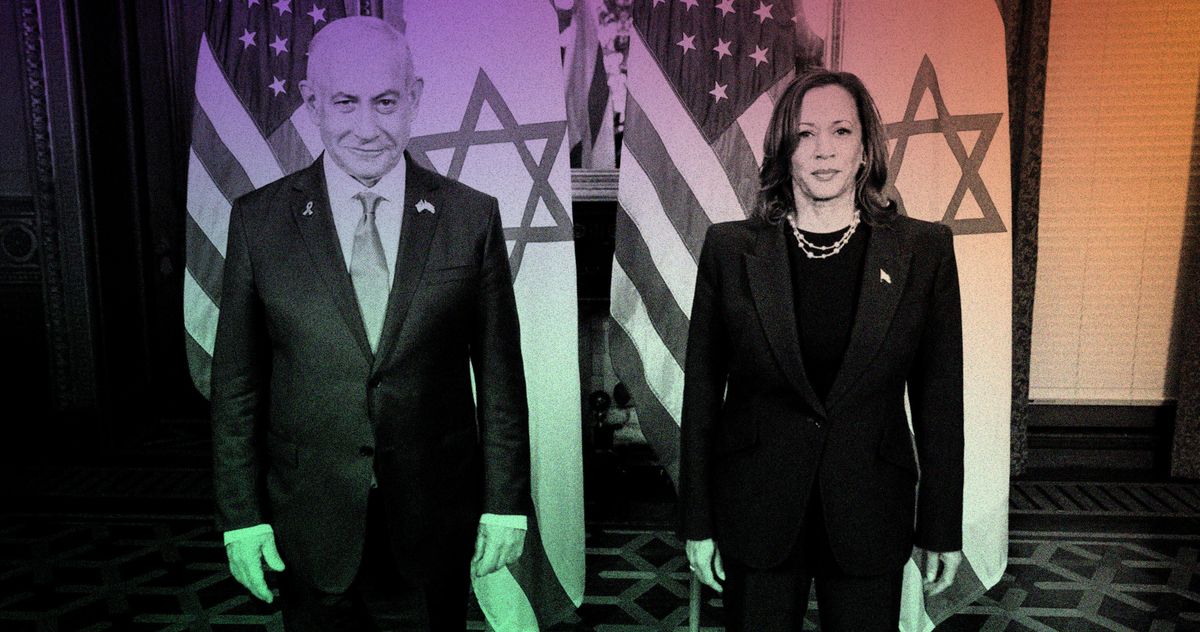
If Harris runs for president again, she’ll surely face questions about her role in the administration during Israel’s offensive in Gaza following Hamas’ October 7, 2023, attacks, a harrowing period chronicled in reporter Akbar Shahid Ahmed’s new book, Crossing the Red Line. Harris “wasn’t a major force” in shaping Israel-Palestine policy, Ahmed told me, but she attended in small meetings with Biden and key officials, and also met with Netanyahu shortly after becoming the party’s nominee.
Ahmed, who reported during the Biden administration for HuffPost and is now a diplomatic correspondent at the Washington Sun, writes witheringly of a Biden policy “dominated by timidity, ambition, callousness, and staggering hubris” and which effectively enabled atrocities in Gaza through continued U.S. military aid and failure to constrain Israeli Prime Minister Benjamin Netanyahu, even when he crossed the administration’s “red line” by invading the southern city of Rafah. He scrutinizes the roles of senior Biden officials, such as national security adviser Jake Sullivan, who declined to be interviewed for the book. (Last week, Sullivan pointed to progress made in the region toward the end of Joe Biden’s presidency while admitting “I wish we had done more to end the war sooner.”) The book, out Tuesday, should only is reignite debate about what the U.S. could’ve done differently, and comes as Americans’ views of Israel have grown increasingly negative, and ahead of Netanyahu speaking this week at the UN General Assembly.
Looking back, Ahmed writes about the frustration of activists in Chicago during the Democratic National Convention after party leaders refused to include a pro-Palestinian speaker, especially given hopes that Harris’s rise might have sparked a shift away from Biden’s reflexive support for Israel. Harris, of course, was in a bind, having just 107 days to offer a distinct vision for America without radically breaking from the Biden administration for which she served as vice-president.
“Harris has not provided any clear answer on this question of what she would do differently and what she believes should have been done differently,” Ahmed told me. She has lately been “testing the waters with pro-Palestine voices,” he said, but people haven’t “found her messaging convincing yet.”
My conversation with Ahmed on his reporting about a consequential 15 months, and how the politics of the Israeli-Palestinian conflict play into the 2026 midterms and the already next presidential race, is below.
You covered a lot of these events in real time. What was your intention for the book?
Even in real time, we saw the Biden administration try to deny the reality of what was happening on the ground in Gaza, telling us that U.S.-backed Israeli attacks we saw with our own eyes were not as bad as they actually were, and telling us that we should not be as concerned. And the Biden administration was trying to deny culpability, to say this is about Hamas — which of course did begin the war with their attack, or say it was about Netanyahu — but to try to deny the U.S. responsibility. I wanted to focus on the Biden era because I felt that that denial was already happening.
You write about some tense exchanges with the Biden White House and administration officials. Did you find that after Biden left office, people were more willing to talk about what happened?
I was talking to folks throughout the period that I covered, and many of them became even better sources for a book. Some were only willing to talk after a book was confirmed.
It speaks to a broader Washington culture of a lack of honesty, especially when it comes to foreign policy, which is a result itself of a lack of accountability for anything on foreign policy calls. Some of the folks who I did talk to were willing to only once it became clear that I had information that made them look bad.
You mention in the book how you felt like some journalists in Washington might be more predisposed to trust Biden officials. Can you talk about that dynamic?
I think there’s a real credence that’s given to Democrats writ large, but especially to this kind of class of experts. And of course expertise is really important, but the sense that after the chaos in the first Trump era — where you had appointees from Omarosa Manigault Newman to Jared Kushner, people who didn’t necessarily have any of these strategic backgrounds doing these important jobs — journalists suddenly felt, “Oh, the people who we were consulting, formerly State Department, formerly White House, are back.”
A lot of journalists were willing to believe that the Biden team could somehow bring this under control. This is also a result of, frankly, journalists and Democrats very often putting themselves on the same side as critics of Trump, especially in that first Trump presidency. I felt like it was a green-room coziness, too, that evolved in addition to a personal level of coziness and an assumption of good judgment.
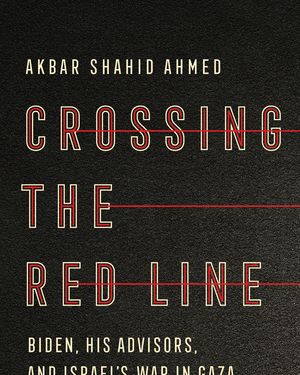
Photo: W. W. Norton & Company
You describe the “staggering hubris” of the Biden team and their “harrowing mismanagement.” Was there one specific failure that helped set the course for how the administration would handle Israel’s offensive post–October 7?
I gave President Biden and his spokespeople until early summer to retract his statement on the “40 beheaded babies.” That was a claim that the president made early, that this occurred on October 7. It was an unproven claim. He never apologized.
That kind of language very early on really established where they’re going to view this conflict through the lens of partisan and ideological preferences rather than the data that they are getting. And they’re not going to admit any fault or wrongdoing. I think those kinds of things set the tone.
After Biden stepped aside, you write how Kamala Harris had an opportunity to signal a shift at the Democratic National Convention. Tell me about the decision to not put a Palestinian voice onstage and how that reflected the broader way that the administration was responding during this period.
You never saw Kamala Harris or her team outline what they would actually do differently. What continued was the sense of no daylight — the Biden mantra that if we present ourselves as separate from Israel, others, like Hamas and Iran, will take advantage of it.
Not only does it ignore that the Biden administration had not met goals it set for itself — bringing home hostages, reducing civilian casualties, moving toward the Israeli-Palestinian peace — it also didn’t reflect any of their other messaging, which was “There’s a new fresh face for the party.” We have the opportunity for this historic candidacy: first woman president, a Black and South Asian woman much younger than Biden.
Based on what was happening in the party Establishment at that time, it reflected the continued dominance of people from the Biden era, and really even going back to the Clinton era, who were longstanding Democratic partisans and operatives who didn’t want to rock the boat.
And there was a constant dismissal of the antiwar sentiment, a sense that we’ll get these voters back as that can’t be a driving issue for them. Of course, in this year’s primaries we’ve seen that Gaza has been the animating force for a number of major wins.
How do expect Democratic candidates will position themselves on Israel in 2028?
I think there will be a very strong effort by 2028 candidates to present themselves as having evolved on Israel. You already see this from figures like Rahm Emanuel.
What I document in the book, and what I think people are hoping for differently from a 2028 candidate, is: Don’t in the moment be shocked by how the Israelis are acting and what U.S. leverage can do and cannot do. Learn from the recent past. I think 2028 candidates will be asked to show that they’re doing that rather than just say, “Oh, we want a two-state solution. We’re sick of Netanyahu.” I think there’s going to be a real pressure.
You write that “The Gaza war has always been an American war.” Can you elaborate?
I came at reporting this as a Pakistani, someone who grew up next door to the “War on Terror” and can remember my hometown becoming the conduit for American forces to go into Afghanistan and American supplies. I remember the fighter jets.
Americans don’t understand the degree to which populations abroad are able to connect the dots between the violence, upheaval, and stresses in their countries and decisions made in Washington. And that tendency has only grown post-9/11, even as people globally have been able to connect the dots between what’s happening in Gaza and what’s happening in the Oval Office.
When we think about this maybe being an American war, I wanted to show the junctures in which, even though it was the Israelis ordering the strikes, using the bombs, maintaining the aid blockade, the moments at which those things could have been changed were very much in the hands of American officials. What we’ve seen from this “War on Terror” period is a desire to say, “We were blindsided.” I think the book shows very much that they weren’t blindsided.
This interview has been edited for length and clarity.
Sign Up for the Intelligencer Newsletter
Daily news about the politics, business, and technology shaping our world.
Vox Media, LLC Terms and Privacy Notice