

Listen to this article
Estimated 4 minutes
The audio version of this article is generated by AI-based technology. Mispronunciations can occur. We are working with our partners to continually review and improve the results.
Saskatchewan Premier Scott Moe defended the province’s potash industry as ethically and economically superior to other international exporters after U.S. President Donald Trump threatened to source more of his country’s fertilizer from Belarus.
“Buying blood potash from Belarus is supporting Russian aggression,” Moe said in a post on social media. “It’s wrong and it doesn’t make sense.”
Moe’s post on Monday afternoon was a response to a Trump social media post from earlier that day.
“The United States is working on a massive Deal with respect to the purchase of Potash from Belarus,” Trump said on Truth Social. “The pricing would be for substantially less than we are currently paying to Canada, very good news for our Farmers and Ranchers.”
Potash is mainly used in fertilizers. In 2024, almost a third of the world’s potash production came from Canada and all of the country’s 10 active potash mines are in Saskatchewan, according to Natural Resources Canada.
“More than 40 countries — Canada and its allies — have sanctions against Belarus for supporting war criminal Putin’s invasion of Ukraine,” Moe said in his social media post.
“Does anyone believe Belarusian blood potash shipped through Russia is going to be more affordable, more sustainable or more ethical than potash shipped from Saskatchewan — right here in North America?”
Nutrien Ltd., The Mosaic Company, Compass Minerals, and K+S Potash Canada are responsible for all of Canada’s potash production. BHP is building the Jansen potash mine in Saskatchewan and expects to start commercial production in mid-2027.
Nutrien is the largest potash fertilizer producer in Canada and one of the largest in the world. The Saskatoon-based company referred CBC to Fertilizer Canada when asked to comment on Trump’s post.
U.S. farmers have used Canadian potash for decades, said Fertilizer Canada, an industry trade group, in an emailed statement to CBC News.
“Reliability, proximity, transportation infrastructure, product availability and the ability to deliver during critical application windows all matter,” the statement said.
“A strong and integrated North American fertilizer supply chain helps support farm productivity, affordability and food security on both sides of the border.”
Potash is currently exempt from U.S. tariffs. Canada exported $4.2 billion of potash to the U.S. in 2025, according to Natural Resources Canada.
Last year, Nutrien announced plans to build a potash export terminal at the Port of Longview, Wash., to handle expected growth in international demand for its fertilizer products.
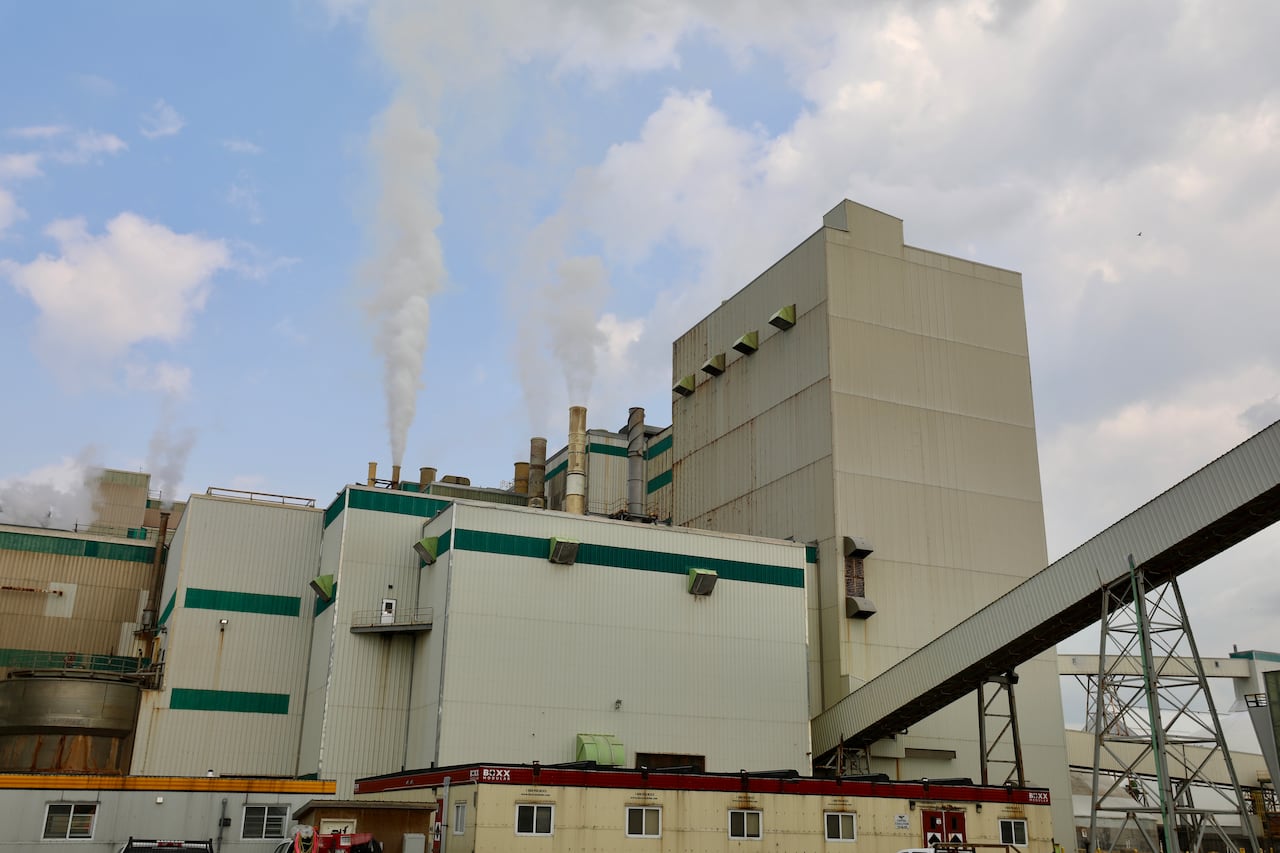 The exterior of the Mosaic potash mine, located near Belle Plaine, Saskatchewan, is shown on July 16, 2025. (Alexander Quon/CBC News)
University of Regina economics professor Jason Childs said exporting potash to the U.S. from Belarus could end up costing more compared to exports from Canada.
“I’m skeptical just because you’ve got so much more transportation to deal with,” Childs said in an interview with CBC.
“Unless you come up with some wonderful deal where Belarus is going to have way lower production costs or something like that, I don’t see it being that big a boon for the American farmer.”
If Trump does make a deal with Belarus, it could affect the companies in Canada by lowering the overall price of potash, Childs said.
“Right now, Belarus and Russia have not really been active in the North American market. We benefited from that,” Childs said.
“If they [enter] the North American market, then we’re competing against another supplier and that’s going to hurt our costs. That’s going to hurt the price we can get for our product.”
The opposition NDP called Trump’s social media post “infuriating” in a statement on Monday.
“He is looking at signing a deal with an authoritarian Russian satellite state that is supporting Putin’s brutal war against the people of Ukraine,” the NDP statement said.
“This is a bad idea that will only hurt families and communities on both sides of the border.”