
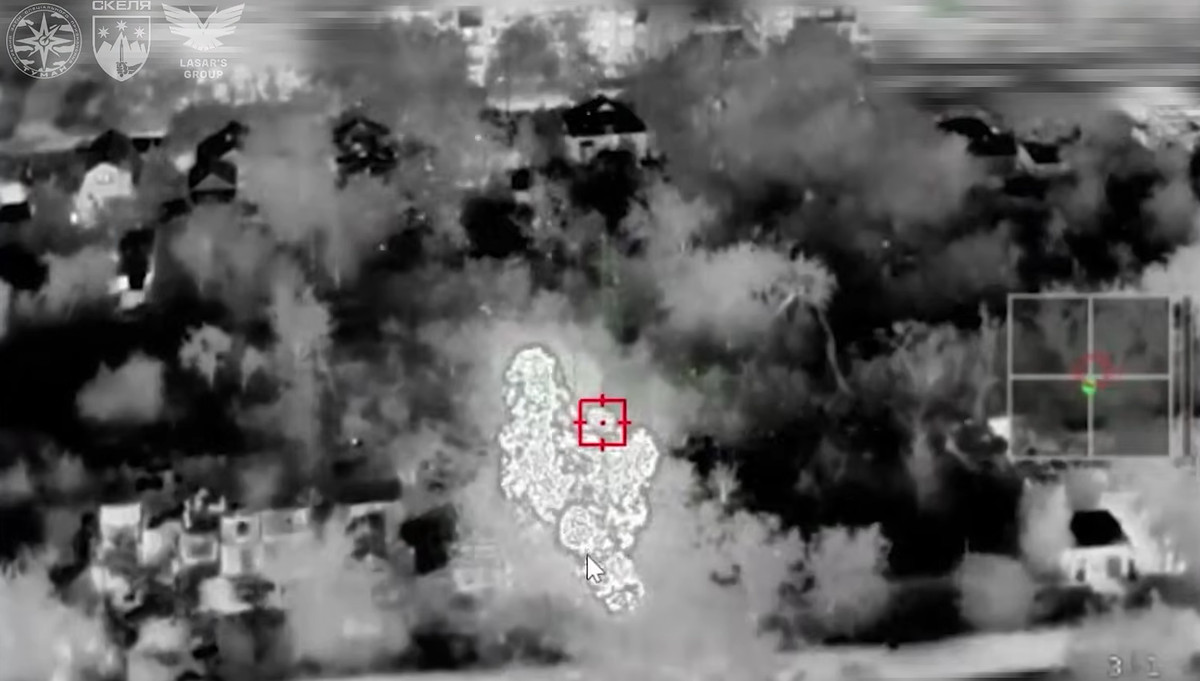
Ukrainian forces have completed a nearly two-month operation that destroyed a Russian troop grouping and disrupted Moscow’s attempt to encircle Druzhkivka and advance toward Dobropillya in the Donetsk region, Ukraine’s First National Guard Corps Azov said.
According to a video report published by the corps on Wednesday, Sept. 23, the Russian troops had been accumulating in the area throughout the summer in preparation for further offensive operations.
JOIN US ON TELEGRAM
Follow our coverage of the war on the @Kyivpost_official.
Ukraine claimed that 193 Russian soldiers were killed, 44 wounded, and three taken prisoner during the operation.
Ukraine launches joint clearing operation
The operation began on Aug. 7 and involved the Azov Brigade’s First and Sixth battalions, the Ultima Ratio special reconnaissance unit, the Tuman special operations detachment, and the Shkval Battalion of the 425th Skelia Separate Assault Regiment.
The Lasar’s Group special-purpose unit of Ukraine’s National Guard provided additional support.
Ukrainian forces first attempted to isolate the area where Russian troops had concentrated, using firepower to prevent reinforcements from arriving and stop the existing units from moving farther forward.
“The first task was to isolate the area where the enemy grouping had accumulated using firepower, prevent its further advance and create favorable conditions for the movement of our assault groups,” said Azov Brigade commander Lev, call sign Khorus.

Other Topics of Interest
Taiwan Cement Backs Ukraine’s Recovery With IFCEM Investment
One of the world’s largest cement producers, Taiwan Cement Corporation, is set to become a strategic investor in Ukraine’s IFCEM, a rare wartime entry of a global industrial player into a Ukrainian asset.
“I consider this task completed,” he added.
The Ukrainian assault groups subsequently moved into Russian-held positions and conducted clearing operations.
Serhii, call sign Zamok, commander of the Shkval Battalion, said drones were used whenever a direct infantry assault would have created an excessive risk of casualties.
“If it was difficult to clear the enemy out because of shelters or the risk of our personnel being killed or wounded, we struck them with both our own weapons and those of the 12th Brigade, using FPV drones and bombers,” he said.
Russian plan threatened Ukraine’s fortress cities
According to Khorus, units from Russia’s 90th Tank Division and Eighth Combined Arms Army had attempted to reach Ukrainian logistics routes.
Capturing or placing those roads under fire control could have created conditions for an operational encirclement of Druzhkivka, threatened the wider Sloviansk-Kramatorsk urban area, and supported a renewed Russian push toward Dobropillya.
The cities form part of Ukraine’s heavily fortified defensive belt in the northern Donetsk region. Russia has made capturing the remaining Ukrainian-controlled territory in the region one of its principal objectives for 2026.
Russian forces have increasingly attempted to bypass fortified cities and disrupt the roads supplying them instead of launching direct frontal assaults.
Azov’s First Corps was originally deployed to the Dobropillya sector in August 2025 as an emergency response to a Russian penetration of Ukrainian lines. Ukrainian reserves later contained the breakthrough and launched counterattacks against the exposed Russian units.
Moscow’s Dobropillya claim disputed
Russia’s defense ministry on Tuesday claimed that troops from its Center grouping had encircled Dobropillya and were advancing northwest toward Oleksandrivka.
Moscow did not publish maps, geolocated footage, or other evidence supporting the assertion.
The Institute for the Study of War rejected the claim, saying available battlefield evidence did not indicate that Russian forces had surrounded the town.
Russian forces have nevertheless continued transferring equipment to the Dobropillya sector and could be preparing for mechanized attacks during the fall, according to Ukrainian and Western assessments.
Azov Corps commander Denys Prokopenko previously said that around 1,200 drone crews from Russia’s elite Rubikon unit were operating in the sector, indicating that Moscow intended to provide extensive unmanned support for renewed assaults.