
Tánaiste and Minister for Foreign Affairs and Trade Simon Harris said the EU-US framework trade agreement, published today, provides welcome clarity that the deal includes a single, all-inclusive 15% tariff on EU goods.
Mr Harris also said there is now assurance that this rate will extend to pharmaceuticals and semiconductors.
“This provides an important shield to Irish exporters that could have been subject to much larger tariffs pending the outcomes of Section 232 US investigations into these sectors,” he added.
He also said the Joint Statement includes “zero for zero” tariff rate carve outs for aircraft and aircraft parts, with further carve outs to be determined for certain products in generic pharmaceuticals and chemicals.
“Importantly, the Joint Statement leaves the door open for negotiation of further tariff reductions in the future on products of strategic common interest,” he said.
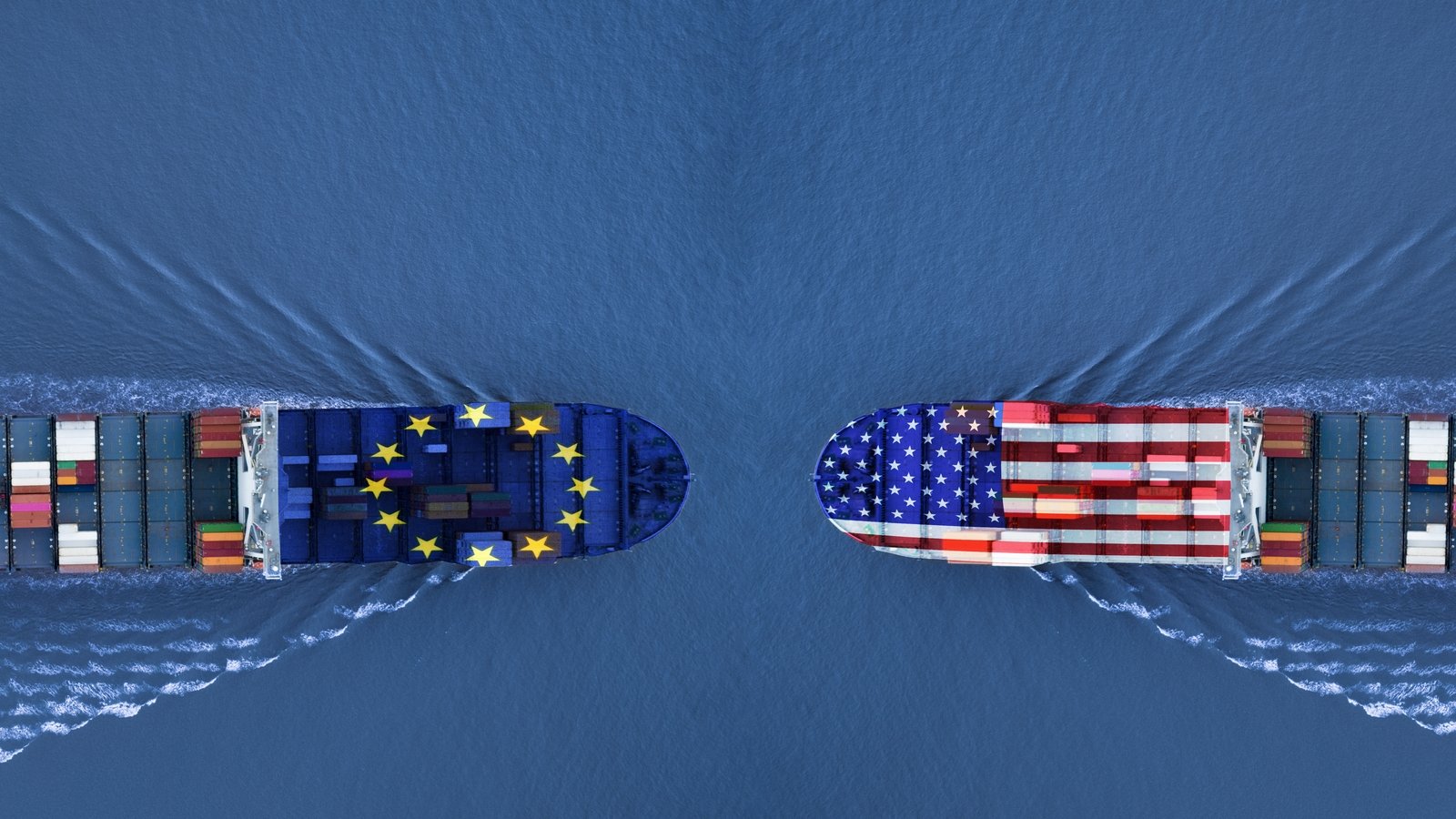
The US and the European Union said today they had locked in a framework trade deal that includes a 15% US tariff on most EU imports, including cars, pharmaceuticals, semiconductors and lumber.
In a three and a half page joint statement, the two sides listed the commitments made, including the EU’s pledge to eliminate tariffs on all US industrial goods and to provide preferential market access for a wide range of US seafood and agricultural goods.
Washington will take steps to reduce the current 27.5% US tariffs on cars and car parts, a huge burden for European carmakers, once Brussels introduces the legislation needed to enact promised tariff cuts on US goods, it said.
US President Donald Trump and European Commission President Ursula von der Leyen announced the deal on July 27 at Trump’s luxury golf course in Turnberry in Scotland after an hour-long meeting that followed months of negotiations.
The two leaders met again this week as part of negotiations aimed at ending Russia’s war in Ukraine, with both lauding their trade framework deal as an historic accomplishment. The joint statement said the deal could be expanded over time to cover additional areas and further improve market access.
A senior administration official, speaking on condition of anonymity because they were not authorised to speak publicly, said European carmakers could see relief from the current US tariffs within “hopefully weeks.”
“As soon as they’re able to introduce that legislation – and I don’t mean pass it and fully implement it, but really introduce it – then we will be in a position to provide that relief. And I will say that both sides are very interested in moving quickly,” they said.
The joint statement was “a play to hold each other accountable” and ensure that both sides carried out the pledges announced last month, the official said.
“We are trying to sequence with the European Union to make sure that they feel sufficient pressure to obtain the mandate they need to begin the legislative process for reducing their tariffs, as they’ve promised,” the official said.
“We’re confident that they’ll do that. It’s just good for all parties to make sure that everyone’s on the same page and taking actions around the same time.”
Read more
What’s in Trump’s trade deal with Europe?
The statement said US tariff relief on autos and auto parts would kick in on the first day of the month in which the EU introduced the legislation, offering the prospect of retroactive relief for carmakers. It was not immediately clear when Brussels would start the legislative process.
The joint statement noted that the US agreed to apply only Most Favored Nation tariffs from September 1 on EU aircraft and parts, generic pharmaceuticals and ingredients, chemical precursors and unavailable natural resources, including cork.
It reiterated the EU’s intention to procure $750 billion in US liquefied natural gas (LNG), oil and nuclear energy products, plus an additional $40 billion of US-made artificial intelligence chips.
It also repeated the intention for EU companies to invest an additional $600 billion across US strategic sectors up to 2028.
Both sides committed to address “unjustified digital trade barriers,” the statement said, and the EU agreed not to adopt network usage fees.
They also agreed to negotiate rules of origin to ensure that the agreement’s benefits accrued predominantly to both trading partners.
In addition, they said they would consider cooperation to ring-fence their respective steel and aluminum markets from overcapacity, while ensuring secure supply chains between each other, including through tariff quotas.
In a statement today, Simon Harris said that while the deal finally provides certainty, the Government is also acutely aware of the impact of higher tariffs and the existing difficulties that many Irish exporters have already faced this year.
“In that regard, we also must continue to control what we can control and continue to make our country, and our European Union, as competitive as possible, as good a location as possible to invest in and create jobs.
“We must also look for other opportunities to diversify markets for Irish business. While we want to continue to do business with the US and indeed want to grow business. It is important that we take every opportunity to identify new markets. On Monday, we will publish Ireland’s new Market Diversification Action Plan,” the Tánaiste added.