
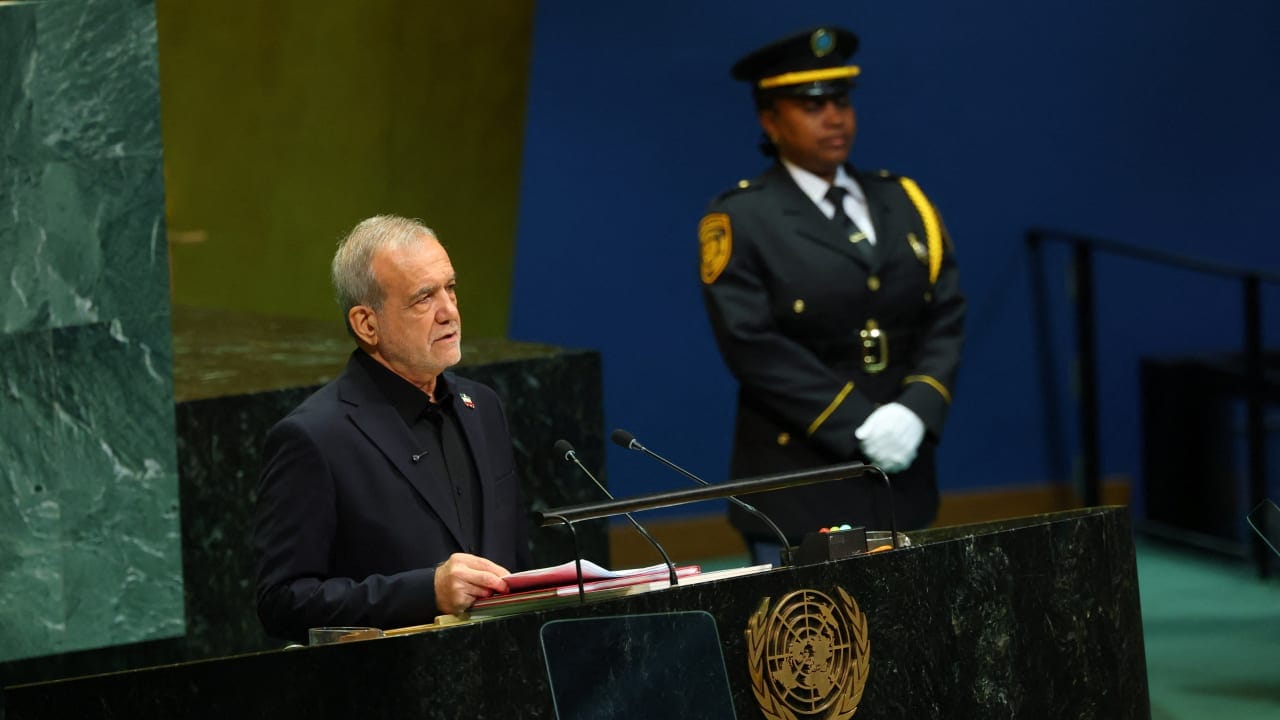
Scores of bereaved Iranians responded to claims by Iranian President Masoud Pezeshkian that January protesters had been armed with weapons provided by Israel and the United States, insisting over social media over the past few days that their loved ones had neither been armed nor represented the interests of foreign powers.
“For the past seven months, our people have been in the streets every night to defend our Iran and to prevent those incited and armed by the US and Israel from gaining the upper hand and creating insecurity within the country,” Pezeshkian said during his speech at the United Nations General Assembly. “The people of Iran have been in the streets day and night for seven months. The people are the source of power; we stand strong through the power of the people.”
Though Tehran has insisted that 3,117 people, including members of the security forces, were killed during the January protests and attributed the deaths to foreign-backed rioters, human rights organizations, the UN probe and survivors have disputed the government’s account.
The UN probe published on Monday was unable to determine the total number of people killed, but found that the true death toll was likely significantly higher than the figure provided by the Islamic Republic. The report also found reasonable grounds to believe that Iranian authorities committed crimes against humanity, including unlawful killings. Human rights organizations have separately estimated that the death toll could be as high as 30,000.
The sister of 22-year-old Sina Kazemi, who spoke with The Jerusalem Post in July, posted on X/Twitter, “I am sister of #Sina_Kazemi
“I testify that my brother was unarmed when he was killed by the Islamic Republic of Iran’s forces on January 8, 2026. He was not acting on behalf of any foreign government.
“I seek truth, justice, and accountability.”
Kazemi’s body was found after a six day search in Kahrizak. His death certificate said that he had died the same night he disappeared, on January 8, contradicting the authorities’ repeated claims that he was alive.
The bruising on his body suggested he had been assaulted, and it was determined he was shot from behind. Both of his wrists had significant bruises, which suggested that his hands had been tied and he had multiple cuts and stitched-up wounds on his arm and thigh.
An account attributed to Babak Sadeghi Mohseni’s sister published the same message.
Mohseni was killed by security forces firing on him on January 9 and his body was discovered on January 14, according to human rights organizations.
Individuals of numerous others killed by the regime’s security forces, each repeating the testimony that they were unarmed and had been demonstrating of their own accord.
Corinne Baum and Alex Winston contributed to this report.