
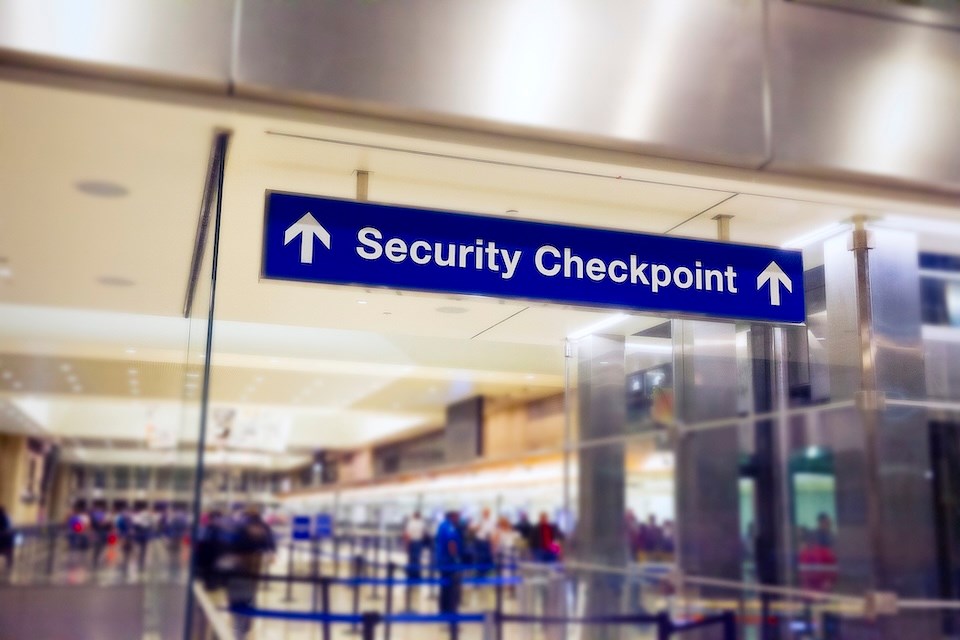
A recent court ruling has implications to foreign travellers entering America.
A recent U.S. Court of Appeals decision has further solidified how far U.S. border agents may go when accessing a traveller’s cellphone
The news follows more than a year of additional worry for Canadian travellers crossing the border. In March 2024, Canada updated its U.S. travel advice amid a wave of detentions at the U.S. border, including travellers arriving from across the globe.
Security has continued to tighten over the past year, with additional guidance that U.S. border agents don’t need a warrant to search electronic devices, and misrepresenting information could land travellers in trouble.
Here’s what you need to know about border agents checking your cellphone when entering the U.S., including advice from a lawyer who specializes in U.S. immigration law.
Warrantless border searches are ‘history as old as the Fourth Amendment itself’
In a decision issued Sept. 17, the U.S. Court of Appeals for the Second Circuit found permanent resident Chinwendu Alisigwe guilty of “fraud offenses” after he used real people’s identities to open bank accounts.
In the hearing, the defendant argued that the “district court erred by denying his motion to suppress evidence obtained from two searches of his cellphone at John F. Kennedy International Airport.”
The search denied his Fourth Amendment right to protection from unreasonable government searches and seizures, Alisigwe argued.
The Fourth Amendment requires law enforcement to obtain warrants before searching individuals they suspect have committed crimes.
In its ruling, the court states that “no suspicion is required before the government searches a traveler’s cellphone at the border.”
According to U.S. immigration lawyer Scott Railton, the case is noteworthy because border guards don’t need to have reasonable suspicion to conduct searches of cellphones.
“Under the border search exception, they talk about what is invasive and what are non-invasive searches. And this court says that since cellphones are property, they don’t fit into that non-invasive standard. They’re just property,’ he says. “So they’re not concerning themselves with the volumes of information, obviously, that are on cell phones.”
An invasive search, in contrast, would involve a search of a person, such as a body cavity search, Railton says.
U.S. travel advisory: What does this mean for Metro Vancouver travellers?
The ruling has implications for all travellers to the U.S., as customs officers may conduct warrantless cellphone searches with confidence.
U.S. Customs and Border Protection (CBP) is already “aggressive” with their tactics, but this ruling further justifies behaviour, Railton explains.
The decision is legally binding for border crossings in areas covered by the Second Circuit (Connecticut, New York and Vermont) including major airports such as John F. Kennedy International Airport (JFK), which is a popular choice for travellers from Vancouver International Airport (YVR).
However, it may also be used in other jurisdictions, such as the U.S. Court of Appeals for the Ninth Circuit, which covers Washington, Railton adds.
“The prosecutor could use this case to justify the search,” he says.
U.S. border guards may request access to your smartphone and can look at whatever is on it. They don’t require a warrant or even reasonable suspicion to do it, either. This might include sensitive photos, documents and text messages.
To access your smartphone, U.S. border security guards may request your password, your fingerprint, or other biometric data, such as your facial recognition, according to Canada’s U.S. travel advisory.
Travellers should comply with all border officials’ requests. If you’re denied entry for not cooperating, you may be detained until you are deported. You may also have your devices seized, according to the government.
In 2024, U.S. travel represented a staggering three-quarters of Canadians returning from abroad. That figure dropped sharply in 2025 to two-thirds of returning citizens, according to the latest data from Statistics Canada.
Much of the anti-American sentiment is attributed to President Trump’s foreign policy, including the soaring tariffs on Canadian products, as well as the ongoing conflict in the Middle East, causing staggering fuel costs and airfare prices.
Tips for a safer U.S. visit
Before crossing the border, put your device in airplane mode so remote files aren’t downloaded, according to advice from the Canadian government.
The U.S. Department of Homeland Security is proposing additional changes to its Electronic System for Travel Authorization (ESTA) program, which include requiring a traveller’s social media history for up to five years, their family members’ places of birth and email addresses used in the last decade.
Locals who plan to travel to the U.S. from Canada can submit their passport and customs declaration information through a free, secure app on their smartphone before they leave for a trip.
The U.S. Customer Customs Mobile Passport Control (MPC) app allows travellers to experience “shorter wait times, less congestion, and efficient processing,” when crossing the border.
Canadian and U.S. travellers may use the app at 44 sites, including 32 international U.S. airports, eight Canadian Preclearance locations, and four seaports of entry.
Find more information about exciting destinations in B.C. and across the globe, as well as travel deals and tips, by signing up for V.I.A.’s weekly travel newsletter The Wanderer. Since travel deals can sell out, find out the day they are posted by signing up for our daily Travel Deals newsletter.
Want to learn more about a specific destination or have a travel concern or idea you would like V.I.A. to write about? Email us at [email protected]. Send us stories about recent holidays that you’ve been on, or if you have any tips you think our readers should know about.