
Hot, dry summer hit farm yields hardpublished at 09:59 BST
09:59 BST
 Georgina Rannard
Science correspondent
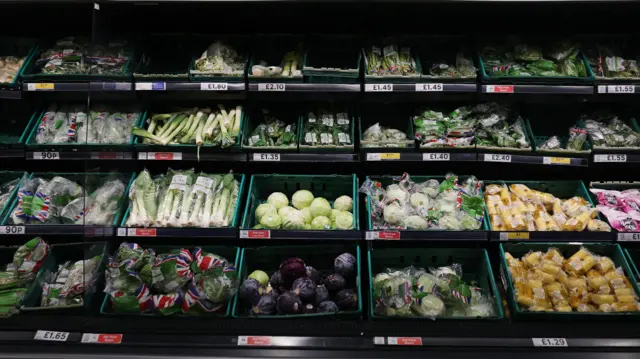 Image source, EPA
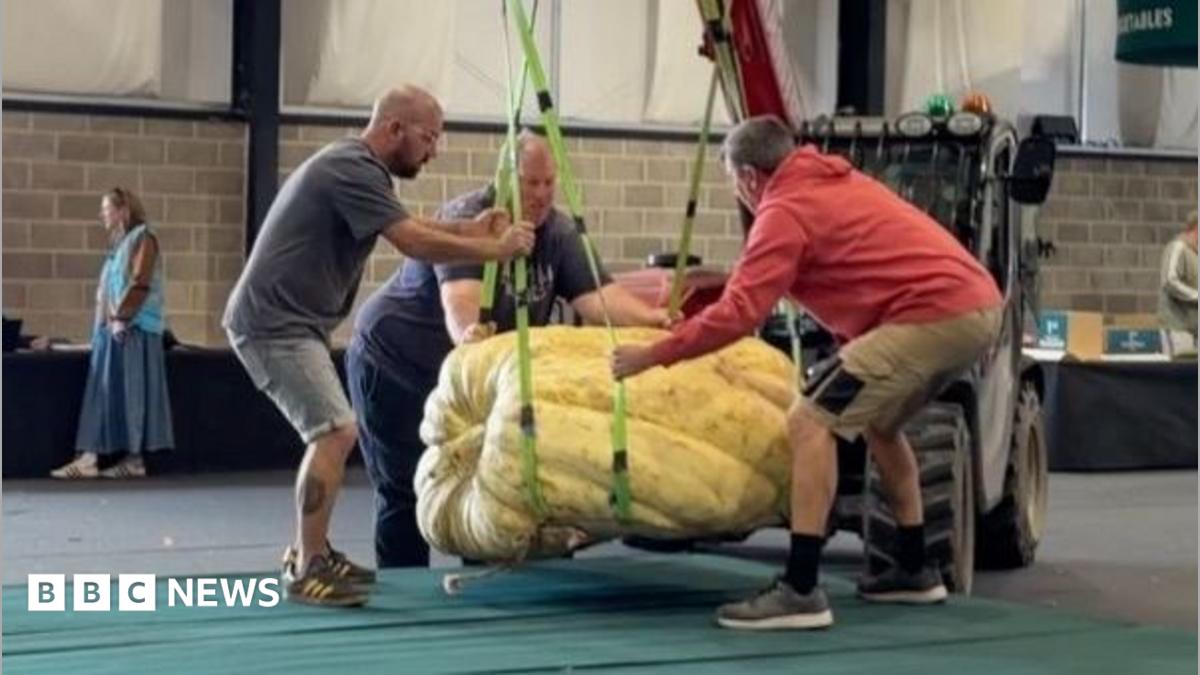
The vegetables competing today are best in class – but many crops have suffered in this summer’s hot dry weather, with farmers reporting smaller vegetables and yields.
Some broccoli growers have resorted to packing two heads together in order to make up the weight in supermarket packs. English peas, cauliflowers and carrots harvests are affected, and, anecdotally, many apple growers have said it’s been a bad year.
Without enough rainfall feeding the soils and rivers, farmers must rely on their own private reservoirs or boreholes, while those without a private supply prioritise their most valuable crops at the expense of others.
With less water, vegetables grow to be smaller, or some simply die. Harvests of barley, oats and rapeseed, which are used in beer, breakfast cereals and vegetable oil, is estimated to drop to 19.5 million tonnes, the worst since records began in 1984.
Europe is facing one of its smallest potato harvest on record, according to the Energy and Climate Intelligence Unit, with one leading potato grower in Britain saying yields will be down 10-30%.
Smaller, less reliable harvests usually lead to price hikes, or “shrinkflation” where you get smaller portions but the same price.
The next few months are expected to be unusually wet and stormy in the UK, as the weather phenomenon El Niño strengthens. It’s this volatility that makes our food supplies and security one of the most obvious victims of extreme weather and climate change.
Just how hot and dry was your summer? Use our postcode lookup to find out