
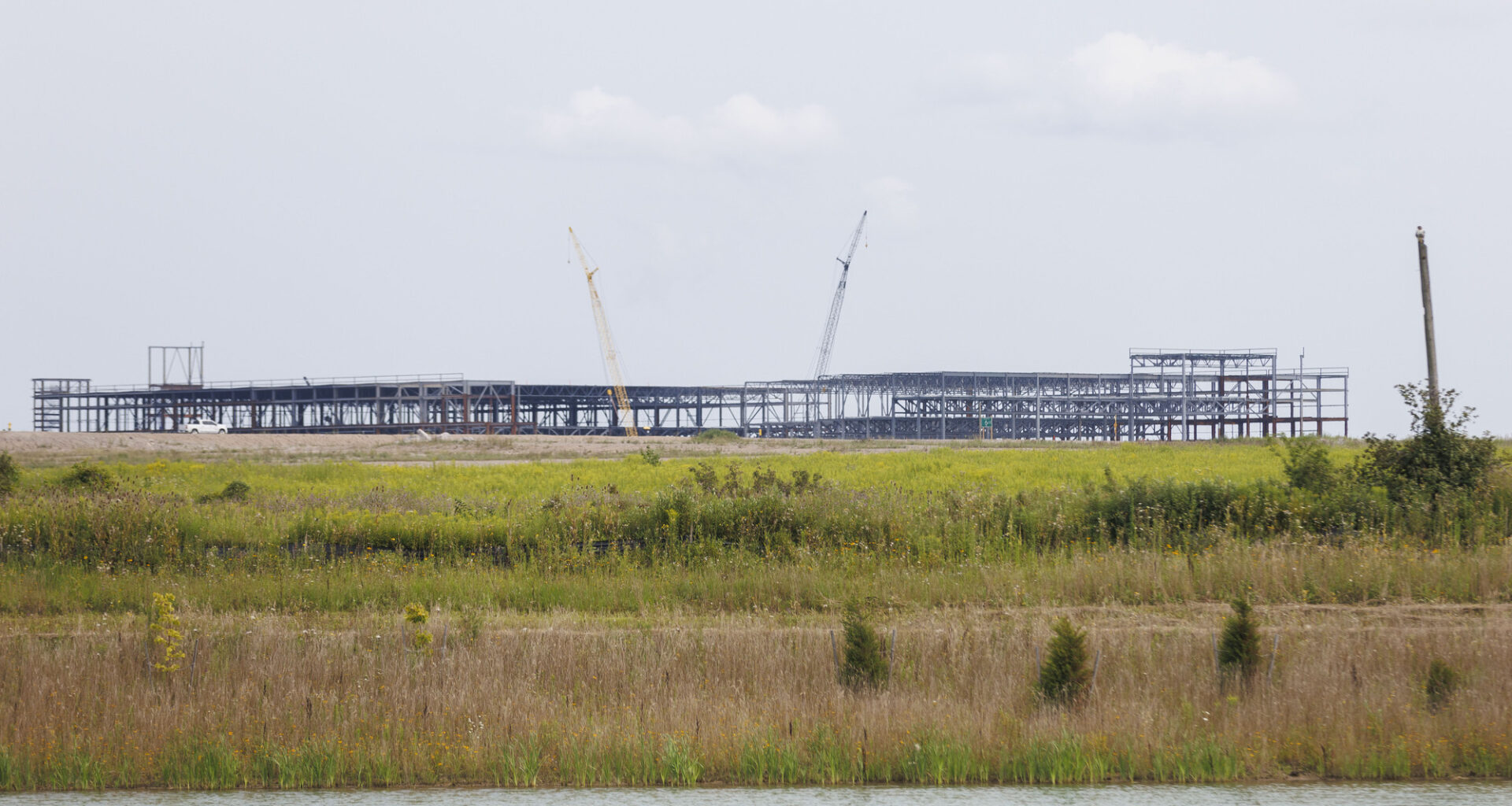
The highly anticipated Volkswagen AG battery plant in St. Thomas won’t be powering up until 2029, two years later than planned, but one industry watcher says the decision isn’t surprising given the poor state of the electric vehicle market in North America and the financial pressures facing VW.
The delay, announced Thursday by PowerCo Canada Inc., VW’s battery subsidiary, comes amid waning demand for electric vehicles, recent VW job cuts and the Canada-United States trade war.
Earlier this month, VW announced it was looking to cut up to 100,000 jobs worldwide in response to competitive pressures, including weaker sales in China, where Chinese automakers have eaten into its market share.
“For anybody to be surprised by that (decision), they haven’t been watching what’s been happening to either Volkswagen or the electric vehicle market in North America,” said Greig Mordue, an associate professor at McMaster University’s Booth School of Engineering Practice and Technology in Hamilton.
“The silver lining is that Volkswagen in Germany is going through a tremendous process of scaling back and right-sizing their operations, so the fact that St. Thomas is not on the chopping block is a positive thing. Frankly, it could’ve gone either way.”
But Mordue said a lot can happen in three years and the future of the plant is far from resolved.
“What we really need to understand is this: Is Volkswagen legitimately deferring actual production, or are they deferring a decision on the ultimate utility and necessity of that plant?” he said.
PowerCo said Thursday that EllisDon has been selected as the general contractor and the onsite construction workforce is expected to peak at 1,300 workers.
“The appointment enables work on-site to continue building on steady progress since groundbreaking in 2025,” it said in a news release. “Construction is now moving into core infrastructure and structural phases that will support future production.”
PowerCo also said the company “is aligning the project’s timeline and product strategy with evolving market demand, technological advancements and the Volkswagen Group’s long-term strategy.”
related stories
Joel Karlsberg, PowerCo Canada’s chief procurement officer, said the St. Thomas factory “remains a cornerstone” of VW’s North American strategy.
“This is about getting the pacing right – not stepping back – to protect our long-term investment, support regional jobs and position Canada, Ontario and St. Thomas to benefit in a dynamic and evolving market,” he said in the release.
Despite the delay, St. Thomas Mayor Joe Preston said Thursday’s announcement is positive news that points to the plant moving forward.
“I have a rough time trying to find a cloud on a sunny day,” he said. “They’re moving forward and in a substantial way at a time when we’re looking at worldwide trade with great Canadian solutions to the building of the plant.”
Conrad Layson, a senior analyst at AutoForecast Solutions LLC, said the decision to postpone the opening was puzzling, considering producing battery cells in Canada would be cheaper than bringing them to North America from China despite U.S. tariffs.
“It would still be hideously expensive; let’s not beat around that bush,” he said. “However, the cost of importing a Chinese cell versus a Canadian cell is different, and the Canadian cell is lower.”
Layson said market conditions – including EV sales in the U.S. being affected by the elimination of incentives for such vehicles – likely mean it will take a long time before the St. Thomas plant operates at full capacity.
Also compounding the issue is Volkswagen’s decision in April to stop production of electric ID.4 vehicles at its Tennessee plant, one of the key products the St. Thomas plant was supposed to support.
Though higher gas prices as a result of the war in Iran have renewed interest from buyers in EVs, demand and the scale of the St. Thomas plant, which PowerCo has said could produce as many as one million batteries a year, are “well out of line with the vehicles that Volkswagen is looking to produce in North America,” Layson said.
He said EV sales have been rising in recent months and now account for five to six per cent of all car sales, but that’s still below the eight per cent recorded before 2024.
“In the long run, I believe electric vehicles will be more prominent in the U.S. and North American markets as times go by. The degree of prominence is the open question,” Layson said.
“It’s still not a great decision, but it saves (VW) from having to spend billions of dollars to complete a facility that won’t begin to approach operating at capacity for years to come.”
Mordue said delaying production could also save taxpayers billions of dollars because many government incentives used to attract the plant were tied to production targets and were set to scale back in 2030 before disappearing by 2032.
“The fact that they won’t produce until 2029 and won’t produce nearly at the level that they thought they were going to produce presumably means that those production incentives, that are measured in the billions of dollars, will not occur.”