
Will Oct. 5 be the last Quebec election under the current voting system?
Three parties — including the leading Parti Québécois — say yes, promising to replace the current system with a proportional method of voting, which would align seats in the National Assembly more closely with the percentage of votes each party gets.
Quebec Conservatives and Québec solidaire also support changing the system.
The three parties have all felt the sting of distortions under the current “first-past-the-post” model, which assigns seats to whichever party wins the most votes in each consituency.
In 2022, first past the post gave former premier François Legault’s Coalition Avenir Québec 72 per cent of the seats in the National Assembly with just 41 per cent of the votes.
The Liberals also benefited from the system, taking almost 17 per cent of the seats with around 14 per cent of the vote.
Québec solidaire won over 15 per cent of the vote but nine per cent of the seats, while the PQ took only three seats (around two per cent), despite earning almost 15 per cent of the vote. Conservatives finished with almost 13 per cent of votes, but were completely shut out of the National Assembly.
The question played out on the debate stage Wednesday evening, when QS co-spokesperson Ruba Ghazal turned to PQ Leader Paul St-Pierre Plamondon, asking the front-runner if he would stick to his engagement.
“Do you solemnly promise, here in front of the public, to change the voting system?” she asked.
“Yes,” St-Pierre Plamondon said.
Ghazal had reason to ask — the promise has been broken before.
In 2018, Legault, Québec solidaire co-spokesperson Gabriel Nadeau-Dubois and PQ leader Jean-François Lisée signed a pact to implement a proportional voting system if elected. In October that year, Legault’s CAQ won the election.
In September 2019, Sonia LeBel, acting as Legault’s Minister for Electoral Reform, presented her plan. The National Assembly would be comprised of 80 “constituency MNAs” and 45 “region” MNAs elected proportionally, based on their party’s performance in each of Quebec’s 17 administrative regions.
The proposal would have been put to a referendum in the 2022 election and, if the Yes side won, implemented in 2026.
But the CAQ abandoned the plan in December 2021, reportedly after senior advisers opposed the reform.
A similar episode played out at the federal level in 2017, when then-prime minister Justin Trudeau abandoned plans to reform Canada’s voting system, citing a lack of consensus. The promise had been central to his successful 2015 campaign.
As polls stand now, St-Pierre Plamondon is poised to form government, meaning the promise could be his to keep or break.
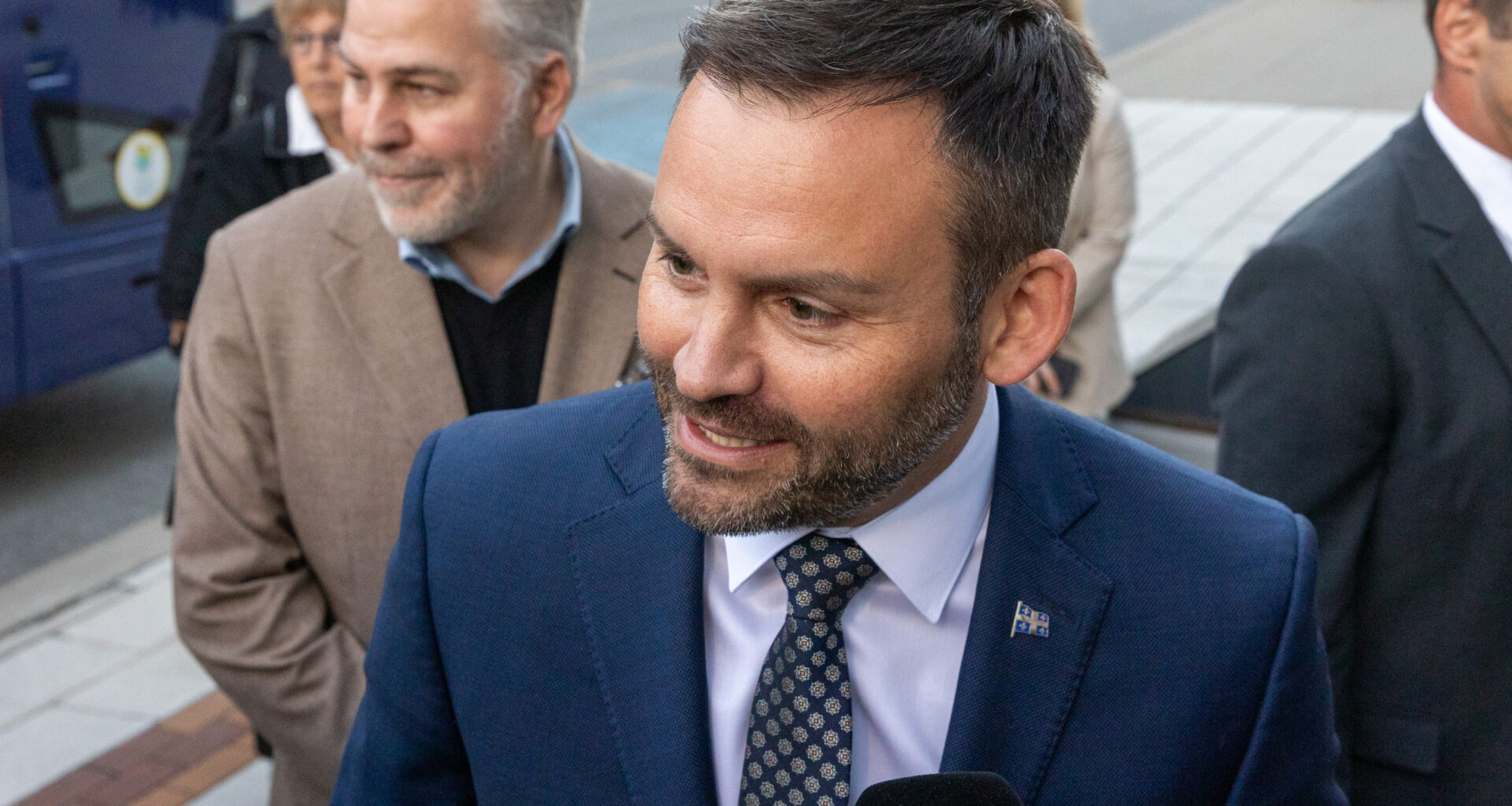
“We’re still committed to” proportional representation, the PQ leader told reporters Monday in Montreal. “In terms of timing, we have a challenge, because there are many reforms we want to make, one of which is becoming a country,” he said, referring to plans for a sovereignty referendum.
“It’s yet to determine” when changes will come into place, he said. “But we will (add) a proportional aspect to our system within the mandate.”
Liberal Leader Charles Milliard and CAQ Leader Christine Fréchette have no plans to change the voting system, arguing the issue isn’t pressing for Quebecers.
“Nobody has talked to me about this,” Fréchette said earlier this month. “So, I don’t necessarily consider it something to put high on the list.”
Though at opposite ends of the political spectrum, the Conservatives and QS say they’ll work together to advance electoral reform.
“Despite our political differences, Québec solidaire is right on this issue,” Conservative candidate Maïté Blanchette Vézina said Sept. 6. “The current voting system misrepresents the popular will and feeds cynicism,” she said.
“We’re allies on this,” Ghazal said Monday. “The current voting system isn’t democratic enough. And we’re all democrats.”
Editor’s Picks