
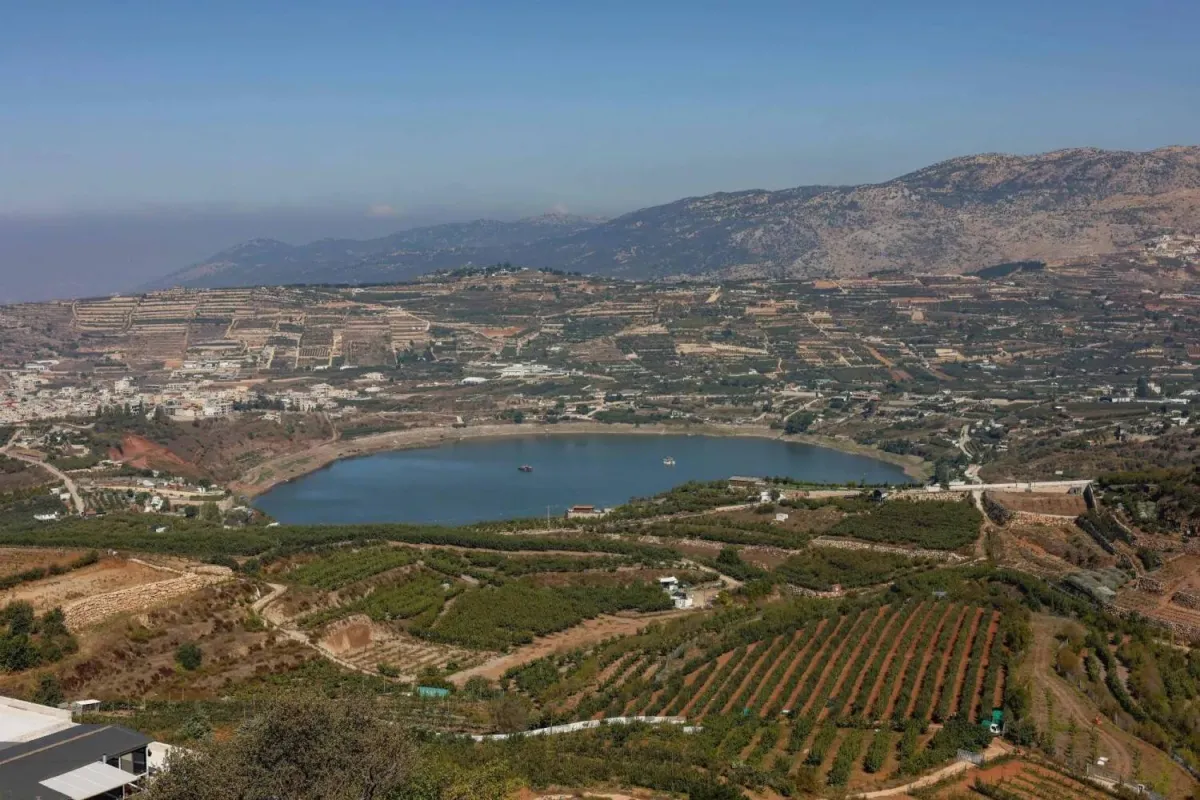
The exchange over the Golan Heights between Israeli Prime Minister Benjamin Netanyahu and Syrian President Ahmed al-Sharaa at the UN General Assembly exposed part of what has stalled talks between Israel and Syria.
The negotiations began two years ago but stopped after an Israeli attack on Abu al-Duhur airport in Idlib province a few weeks ago.
To Netanyahu’s critics, his hard-line stance at the United Nations revealed how wary Israel’s current leadership is of peace with Damascus.
Al-Sharaa told the General Assembly in New York that Syria wants peace, but at a price: the return of the Golan Heights, which Israel has occupied since 1967.
Knowing Israel is not ready to pay that price today, he pressed instead for security agreements that would pull Israeli forces out of areas they occupied after Bashar al-Assad’s fall in December 2024 and restore the framework of the 1974 disengagement agreement.
Israel knows Syria’s position from the talks held so far. Al-Sharaa’s government has signaled its willingness to keep negotiating, rebuild trust and eventually reach a full peace agreement, with embassies, good-neighborly relations, trade and cooperation across various fields, according to accounts circulating in Tel Aviv.
Israel’s leadership, unwilling to pay a price for peace, responded sharply. Defense Minister Israel Katz said that the Golan under Israeli sovereignty is an inseparable part of the State of Israel forever.”
Israel, he added, will not withdraw from Mount Hermon or the security zone. He also warned: “Any territory we take this time will remain ours forever, in accordance with the laws of war.”
Netanyahu followed from the UN podium with what appeared to be a history lesson for al-Sharaa, according to his own reading of that history.
“Mr. al-Sharaa, you should know the Jews have been on the Golan Heights since the days of Moses,” he said. “You can read it in the Bible.”
But the region’s history does not establish the claim Netanyahu sought to make. His remarks gave a religious and historical cast to Katz’s statements about occupation. Archaeological sites show that people inhabited the Golan long before the time of Moses and the Israelites.
Evidence of settlement dates to the Copper and Bronze Ages, alongside stone structures, burial sites and other remains left by communities that lived there thousands of years ago.
Critics of Netanyahu’s account say that even if Jews lived in the Golan, they did not live there alone; others may have outnumbered them.
Those critics also accuse Israeli governments of hiding a central fact about the Golan’s occupation: Israel displaced as much as 90% of the Syrian plateau’s population in 1967.
They say 140,000 people lived there at the time, compared with just 8,000 today. Israel still prevents disclosure of the reasons for their displacement, while people from the Golan recount crimes and massacres that drove them out, the critics say.
Under Assad, the Syrian government agreed to lease the Golan to Israel for 15 years, with an option to extend the lease.
Netanyahu now rejects even proposals he once accepted. He wants to use what he sees as a new balance of power and what Katz calls the laws governing the outcome of war. Yet al-Sharaa’s Syria did not start a war with Israel.
The Israeli military, instead, took advantage of Assad’s fall to launch thousands of strikes on Syria, destroy 85% of the Syrian military’s defensive capabilities and occupy new areas in the south.
Israelis confirm al-Sharaa’s assertion that the two sides had agreed on 90% of the issues in a proposed security arrangement.
They explain Israel’s retreat from the talks by claiming that Syria is becoming a sphere of Turkish influence and that Syrian territory could be used to attack Israeli settlements in the Golan, as Hamas attacked communities around Gaza on Oct. 7, 2023.
Syrians offered far-reaching security guarantees in the negotiations: demilitarization in southern Syria and a secure trade corridor that would allow Druze communities in Israel and the Golan to send aid to Sweida province.
They also agreed to joint security coordination under US supervision, including intelligence sharing and Jordanian participation in monitoring the entire border area.
Israel wanted more: to keep Mount Hermon’s peaks and parts of a security belt, and to retain the freedom to enter Syria in pursuit of armed cells.
The prevailing sense is that Israel has little interest in successful talks and entered them only because US President Donald Trump wanted it to. Trump alone is seen as stopping Netanyahu from using the situation in Syria to launch further military attacks.
The US president appears to be waiting for the Israeli election results before deciding where he stands on the government’s policies.
Trump issued a presidential proclamation in March 2019 recognizing Israeli sovereignty over the Golan Heights.
UN resolutions, however, affirm that the Golan is occupied territory and reject Israel’s declaration that it has imposed its laws and administration on the Syrian plateau.