
The executive order reverses a regulatory framework the government created less than two years ago, and betting companies say they will seek compensation for licenses.
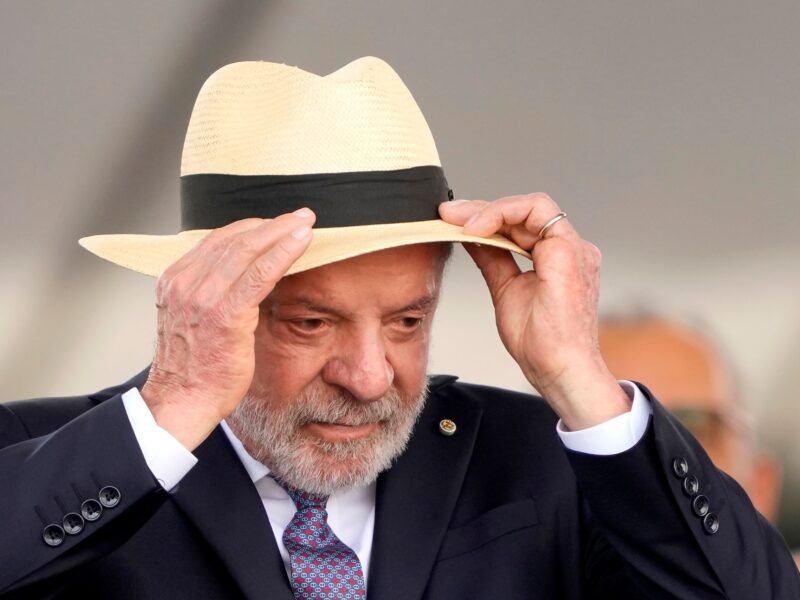
RIO DE JANEIRO (CN) — President Luiz Inácio Lula da Silva signed an executive order Friday banning online betting in Brazil. The order takes effect upon publication but must receive congressional approval within 120 days to remain in force.
“Society was left completely unprotected,” Lula said. “The country brought the casino into people’s homes. It is in the kitchen, it is in the living room. There has to be oversight.”
The order comes nine days before the first round of Brazil’s presidential election, in which Lula is seeking reelection.
Gambling-related harm costs Brazil’s public health system an estimated 38.8 billion reais (about $7.7 billion) a year, according to a report by the Institute for Health Policy Studies.
The executive order reverses a regulated betting market the country implemented in 2025. Brazil legalized fixed-odds sports betting in 2018. Congress expanded the law to include online games in 2023, during Lula’s administration.
“The ban on online betting reinforces the path we have been building since 2023 to prioritize Brazilian families’ labor income,” Finance Minister Dario Durigan said.
When Lula’s administration finalized the regulations in late 2024, the president warned that he would shut down the industry if the new rules failed to protect bettors.
Durigan said more than 60 billion reais (about $12 billion) went to betting companies since the regulated market began operations.
Betting websites and apps will be taken offline Oct. 6. Over the next two days, operators must provide banks with each bettor’s remaining balance, taxpayer identification number and the account used to transfer the money.
Banks must return the funds between Oct. 9 and Oct. 14. State-owned bank Caixa Econômica Federal will handle payments that cannot be completed through that process beginning Oct. 14.
Under the regulatory framework, betting companies paid 30 million reais for five-year licenses. The government collected at least 2.55 billion reais in licensing fees, according to a study by consulting firm LCA commissioned by the Brazilian Institute for Responsible Gaming.
Brazil’s Secretariat of Prizes and Bets did not respond to questions about how the ban will affect existing licenses or whether the government will refund the licensing fees.
The Brazilian Institute for Responsible Gaming, which represents the leading companies in Brazil’s regulated betting industry, said the ban breaks with the regulatory framework established by the government less than two years ago.
The National Association of Games and Lotteries, another industry group, said it is preparing a court challenge to overturn the executive order.
“The compensation claim would cover not only the 30 million reais, but also material damages arising from all the investments made by the industry, and moral damages,” Plínio Lemos Jorge, the association’s president, said in a statement.
Alexandre Santos de Aragão, an administrative law professor at Rio de Janeiro State University, said current law already provides that licenses may be revoked at the government’s discretion.
“In my view, companies have no vested right to keep their licenses,” Aragão said.
He added that legal disputes are likely to center on compensation, proportional refunds of licensing fees and whether companies are entitled to a transition period.
Diego Fernandes, a partner at Roenick Fernandes Advogados specializing in public and regulatory law, said claims for proportional refunds covering the unused portion of the licenses have a stronger legal basis than demands for compensation for investments and expected profits.
“No one has a right to expect the law never to change,” Fernandes said. “A proportional refund of the licensing fee for the period that can no longer be used has a stronger legal basis.”
Fernandes said that if the order expires without Congress regulating its effects, licenses terminated while it was in force may not be restored.
The order also bans new advertising upon publication. Companies will have until Oct. 5 to remove advertisements and branding tied to sponsorship agreements, including from digital platforms.
The government also announced a ban on bank transfers for betting and increased enforcement against illegal platforms. A federal task force will work to identify websites and bank accounts used by unlicensed operators.
In a separate proposal, the government will send Congress a bill making the operation of online betting businesses a crime punishable by up to six years in prison. Brazil’s Constitution bars executive orders from creating crimes or criminal penalties.
Courthouse News reporter Marília Marasciulo is based in Brazil.
Subscribe to our free newsletters
Our weekly newsletter Closing Arguments offers the latest about ongoing
trials, major litigation and rulings in courthouses around the U.S. and the world,
while the monthly Under the Lights dishes the legal dirt from Hollywood,
sports, Big Tech and the arts.