
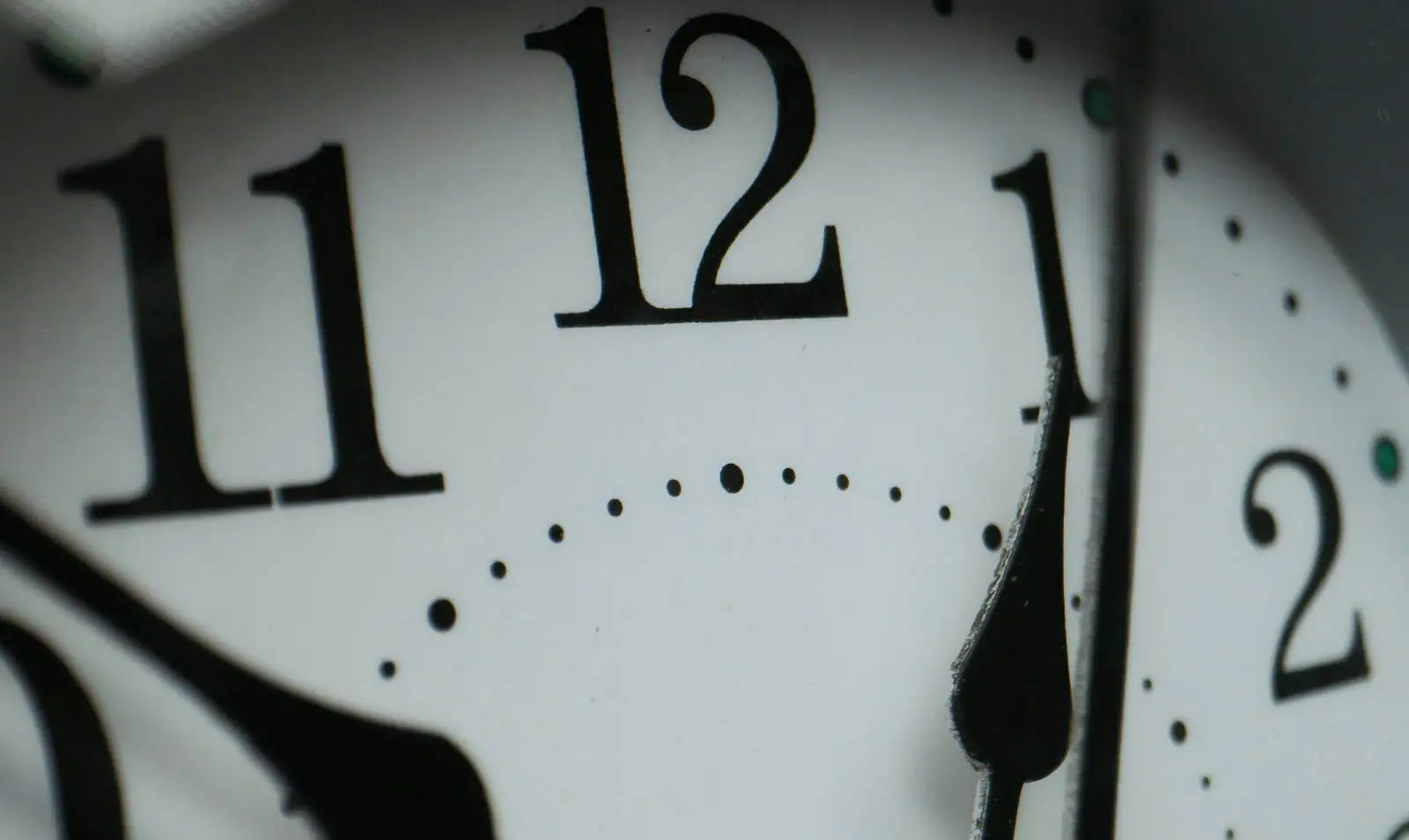
It’s almost that time of year again when Ontarians get something most of us could probably use, an extra hour of sleep.
Daylight Saving Time comes to an end in Ontario on Sunday, Nov. 1, 2026, when the clocks officially fall back one hour.
At 2 a.m., the time will move back to 1 a.m.
The good news is that most of us won’t actually have to do anything. Smartphones, computers and many other connected devices should make the change automatically.
But if you still have clocks on your stove, microwave, car or an old-school alarm clock, you’ll probably have a few things to change when you wake up Sunday morning.
The time change also means mornings will get brighter earlier, but there is a trade-off. It will start getting dark noticeably earlier in the evening.


Ontario changes the clocks twice a year, moving them forward on the second Sunday in March and back again on the first Sunday in November.
And if you feel like we’ve been talking about getting rid of the time change for years, you’re not imagining it.
Ontario actually passed legislation in 2020 that would allow the province to stop changing the clocks and remain on Daylight Saving Time year-round.
Last 30 Days: 55,269 Votes
All Time: 1,540,005 Votes
1049 VOTES
Do you still shop at indoor malls regularly?
The Time Amendment Act received Royal Assent on Nov. 30, 2020, but nearly six years later, the change still has not taken effect.
So why are we still changing the clocks?
The legislation was written so the changes would only come into force on a date proclaimed by the Lieutenant Governor. That proclamation has never happened.
Ontario has also historically coordinated its time changes with neighbouring jurisdictions, particularly Quebec and New York. Keeping the same time helps avoid potential complications involving business, financial markets, transportation and cross-border activity.
Until the permanent-time provisions are officially brought into force, Ontario continues to follow the twice-a-year clock change.
This year, Daylight Saving Time began on March 8 when clocks jumped forward by an hour. On Nov. 1, we get that hour back.
The easiest way to remember which direction the clocks go is still the old saying, “spring forward, fall back.”
Since Halloween falls on Saturday, Oct. 31 this year, the clock change will happen overnight immediately after Halloween.
So if you’re out late celebrating or staying up watching scary movies, you technically get an extra hour that night.
Ontario will then remain on standard time throughout the winter before the clocks are scheduled to move forward again in March 2027.
Until then, enjoy the extra hour of sleep.
We’ll deal with losing it again in the spring.
INsauga’s Editorial Standards and Policies
Stay in the know.
Subscribe now to receive our daily email of today’s top stories in your city!