
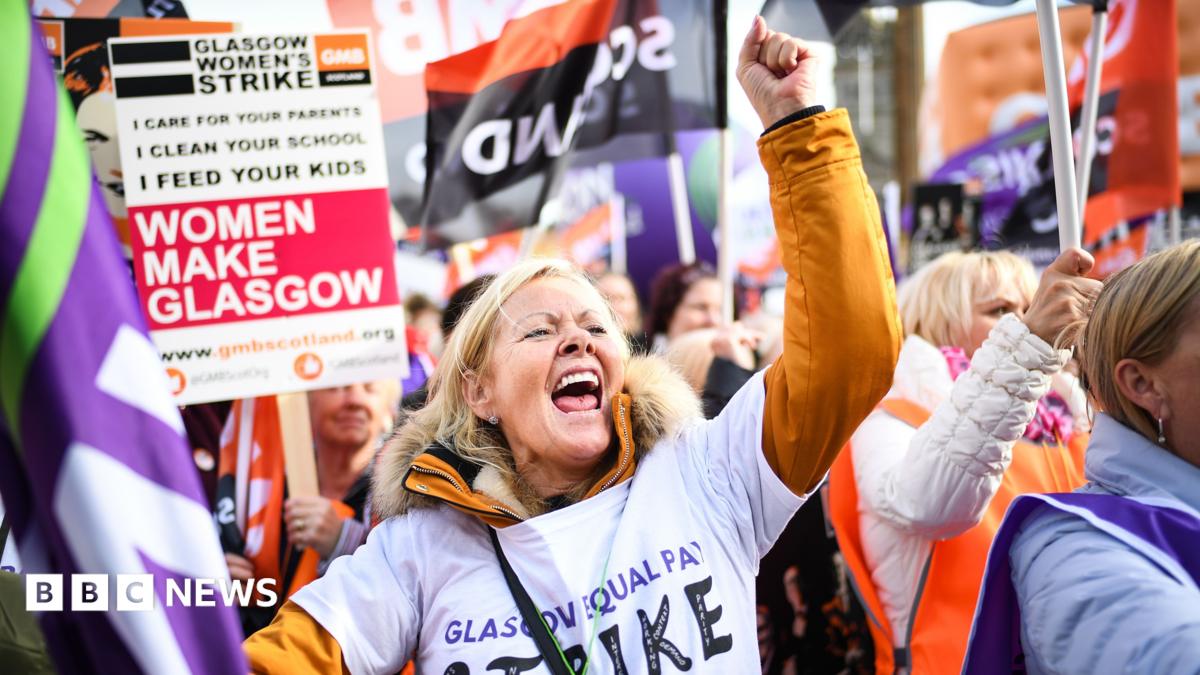
The council is introducing the scheme to resolve a long-running equal pay dispute, after it emerged the previous structure discriminated against women workers.
The changes should see 63% of about 24,000 non-teaching staff get a pay rise, but 11% of staff face a reduction in wages.
Employees with Assist who work 35 hours a week have been told their salary – which usually is about £45,000 – will be slashed by £11,500. Those who work 28 hours a week face a reduction of about £9,000.
One worker, who did not wish to be named, said: “I know colleagues who won’t be able to pay their mortgages because of this.
“It’s a huge amount of money, and that’s not even taking into account what you will be losing from your pension.
“We’ve already got mortgages, holidays, care for elderly relatives, childcare. We all have financial commitments that we can’t get out of, even by tightening our belts.”
Staff told BBC Scotland News they fear experienced and skilled workers will choose to leave their jobs or end up on sick leave due to stress caused by the changes.
This would then have the knock-on effect of placing current users of Assist at further risk.
The new pay structure was created by grading each role across 13 different categories and creating a ranked order of jobs.
Staff with Assist carry out tasks such as risk assessments, support plans for domestic abuse victims with other services such as police and social work, and court support.
Last week, Dr Emma Forbes, the national lead for domestic abuse with the Crown Office, said the service relies on the likes of Assist “to be best equipped” in dealing with cases.
The service is already under pressure. In January this year it began operating under temporary referral criteria, external – meaning it has to send many applicants elsewhere.
A second worker affected by the proposals said: “This is going to wipe out a lot of really skilled colleagues.
“This isn’t just affecting a group of advocacy workers. If we are not going to be there in the moment at work, then very vulnerable woman we support are at higher risk of homicide.
“We deal with women who are potential victims of homicide, and it feels not enough people in the higher levels of the council understand that.”
The council intend to introduce the new scheme in April 2027, with salary changes cutting pay deferred for 12 months.
The local authority say it will help staff adjust to the changes and explore other options with affected employees.
These could include service reform or redeploying staff, as well as offering early retirement and voluntary redundancy.