

Listen to this article
Estimated 5 minutes
The audio version of this article is generated by AI-based technology. Mispronunciations can occur. We are working with our partners to continually review and improve the results.
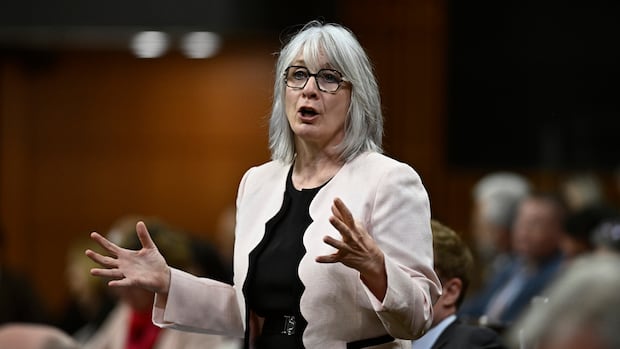
Though organized labour is pushing back against the Carney government’s latest major projects bill — which aims to amend a controversial portion of the Labour Code — Jobs Minister Patty Hajdu says unions will have new leverage, not less, under the proposal.
“It’s meant to provide, first of all, another tool to parties to understand what the dynamics are and why they’re struggling to get to that deal,” Hajdu said in an interview on Rosemary Barton Live airing Sunday morning.
The federal government introduced Bill C-39 on Monday, an omnibus bill that includes changes to Section 107 of the Labour Code — a provision that gives the minister responsible broad powers to “maintain or secure industrial peace.”
Since 2024, the federal government has come under fire for repeatedly using Section 107 to order striking workers back on the job and begin binding arbitration.
Under Bill C-39, the federal government can appoint a special mediator for 21 days, who would then provide a report to the minister, which sets out the bargaining issues and both sides’ positions, and assess the likelihood of an agreement.
The report, with recommendations, would be released publicly five days after being issued — unless the parties strike a deal. The report also must be considered by the minister before invoking Section 107 to order workers back to their jobs.
WATCH | Is Carney changing the right to strike?:
Fact check: Is Carney changing the right to strike?
Prime Minister Mark Carney says his government’s proposed set of changes to the Labour Code “absolutely reinforces the right to strike.” Here are the facts.
Hajdu told host Rosemary Barton that public release is where she thinks union members will have “new leverage.”
“In the past, if an employer was refusing to bargain or was removing things from previous offers or acting in a way that was not bargaining in good faith, the union members could talk about it, but they couldn’t necessarily prove it,” Hajdu said.
“And that mediator’s report — should it become public — is not going to be pleasant for a company’s shareholders [or] their reputation in Canada and worldwide. Nobody wants to know that their shipper had a deal at the table and didn’t pick it up.”
Still, unions remain deeply worried about what the bill means for labour rights. Under the bill, the minister must also be of the belief an ongoing strike or lockout “adversely affects or may adversely affect the national interest” before issuing their order.
Hajdu used the Section 107 provision to order Air Canada flight attendants back to work last summer. But the union ultimately defied that order and a tentative agreement was reached days later.
WATCH | Canadian Labour Congress pushes back on Bill C-39:
Any new restrictions on right to strike are ‘unacceptable’: Canadian Labour Congress
Speaking to reporters about the new Liberal major projects bill, Canadian Labour Congress president Bea Bruske says while Canada’s workers want to help in the U.S. trade war, ‘we cannot have our elbow up against Trump with our hands tied behind our backs at bargaining tables.’
On Tuesday, the Canadian Union of Public Employees said it passed a unanimous resolution vowing to defy Bill C-39 if passed unamended through Parliament.
Bea Bruske, president of the Canadian Labour Congress, said in a statement her group welcomes some measures in the bill, “but on the right to strike, the government broke its promise to workers.”
“This bill gives government the new and expanded power to end a legal strike when it decides the strike is, or could be, against the national interest,” Bruske said. “We reject the idea that workers’ bargaining power is somehow contrary to the national interest.”
On Friday, government House leader Steven MacKinnon told CBC’s The House there is a constitutional right to strike in Canada, and the bill is meant to implement guardrails.
When asked how labour groups can view this bill so differently than the government, MacKinnon said the federal government has “no interest in getting in the middle of labour negotiations.”
AFN chief concerned about consultation
It’s not just unions concerned about Bill C-39 in its current form: Indigenous groups are also raising alarms about provisions meant to speed up project approvals.
Assembly of First Nations National Chief Cindy Woodhouse-Nepinak told Barton that First Nations understand Canada is facing difficult times, but her team is also seeing red flags in the bill — namely its intent to finish federal reviews within one year of a proponent submitting an application.
“The truth is that any predetermined timeline, principally designed to attract investment, subordinates the honour of the Crown to commercial imperatives,” Woodhouse-Nepinak said.
WATCH | AFN national chief on new major projects legislation: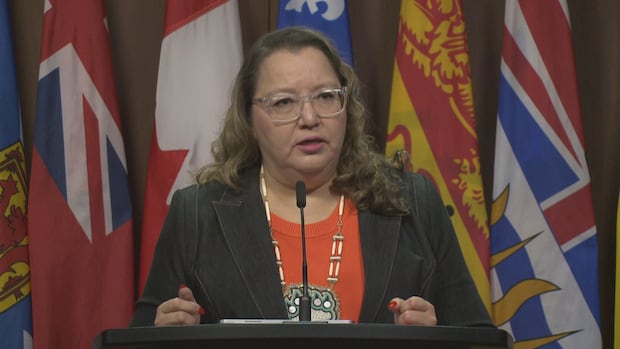
Major Projects Office can’t be used to ‘side-step’ our rights, AFN chief says
Asked how accessible the federal government’s major projects office has been to Indigenous leaders, Assembly of First Nations National Chief Cindy Woodhouse-Nepinak said staff with the Alberta-based office ‘don’t know what they’re doing when it comes to First Nations.’
“The government has described Bill C-39 as the most consequential legislation in decades. Then we expect the legislation to be matched by an equally consequential level of parliamentary consideration and public review,” she added.
Federal ministers, including Hajdu and MacKinnon, have emphasized there will be opportunities for interest groups to weigh in on the bill.
The Carney government is planning to use a parliamentary tool not seen since the Harper government to prioritize study of Bill C-39, called a “legislative committee.”
A legislative committee is a bespoke group of parliamentarians who are designated to study only one particular bill, allowing it to leapfrog other business underway by standing committees. It’s not yet known when this committee’s work will begin.
The mechanism has been used in the past for some of the most consequential laws in Canadian history, including the Clarity Act in 2000 and the 2005 Civil Marriage Act, which legalized same-sex marriage across the country.
Woodhouse-Nepinak said Canada should make sure it dedicates enough time for people to weigh in on the bill head on.
“That’s democracy, right? Hearing from all people,” she said.