

Supervisor of Banks Daniel Hahiashvili took office in June 2023, four months before the October 7 disaster, and has not had a quiet moment since. Even before then, the banking system was in his sights, and even more so after the war. The main criticism was directed at huge profits, and it was no coincidence that Finance Minister Bezalel Smotrich sought to tap into their coffers.
Banks earned NIS 15.7 billion in the first half of 2026. Second-quarter profit grew by 2% to NIS 8.56 billion with high return-on-equity rates of about 15%. The supervisor responds: “Bank profitability is indeed high compared to previous years, even before interest rate hikes began. It is explained by the growth in economic activity and credit growth. In addition, the efficiency measures taken by the banks are significantly felt. There is growth in activity with almost no change in expenses.
“The third factor affecting profits is the relatively high volume of non-interest-bearing funds in checking accounts. Steps were taken to change the situation, but these are still low-interest funds. In international comparison, bank profitability rose worldwide, although in Israel it rose slightly more.”
Taxation and banking competition
Is that a reason to overtax the banks, contrary to the rest of the world?
“There was a team that recommended taxing the banks, and an agreement was reached with the banks for a one-time tax. We opposed sector-specific taxation for three reasons: If you want to introduce new entities, it is not right to tax only the banks. Not all calculations can be made in taxation on excess profitability.
“As stated, we opposed it, and ultimately the Finance Ministry reached an agreement with the banks. Two years of special taxation have passed. Every single time they promised it was one-time, and this is the third year. We will see what happens next year. Following our intervention, the banks were required, in addition to taxation, to return NIS 3 billion to customers within two years.”
Where does competition between banks stand, as well as the entrance of new financial entities into the field?
“In the Economic Arrangements Law from late March, legislative amendments were passed allowing the creation of a flexible business model for new entities in banking. In June, we issued the directive for phased licensing with adapted regulation. These steps will create an infrastructure for entities to come and examine their entrance. There is interest from several new entities that submitted a request to receive a banking license with a business model. One of the entities is the Revolut company, and the second entity is Ogen. There is an additional entity whose name has not yet been published.”
Are political pressures being exerted on you?
“I do not feel that illegitimate pressures are being exerted on us, but there is an ongoing dialogue with government stries and public representatives, and we maintain independence and professionalism.”
In which growth engines should the banking system invest to continue maintaining its profitability?
“There is the world of selling additional products in the capital market. Additional digital investment instruments suitable for banks have developed. But ultimately, banking is credit and deposit activity, and that is its foundation.”
 Daniel Hahiyashvili, Supervisor of Banks. (credit: BANK OF ISRAEL SPOKESPERSON)Insurance, artificial intelligence, and salaries
What about the entrance of banks into the insurance sector?
“The financial system is changing, and also in the latest reform of the phased licensing framework, we allowed financial holding companies that hold insurance to invest in small banks whose market share in the system is up to 5%. We certainly need to reexamine the list of activities permitted to banks, some of which should be opened up.
“We supported allowing banks to sell insurance products as well as capital market products, and that makes sense. They sell funds, but they are forbidden from selling savings certificates. We support the move, but other policymakers need to be convinced. In my opinion, this will happen, because the financial system is changing.”
How do you see efficiency measures in the banks and the challenges of AI?
“The system has been undergoing significant efficiency measures in recent years, and we see that efficiency ratios are among the best in the world. Bank Leumi is very efficient, but the entire system is efficient. AI will bring another quantum leap. We see that banks are starting to operate, especially regarding feasibility and in the realm of risk management. We, for our part, look at the impact on service and the risks involved. i have set up a team within the supervision department that closely examines what is happening in these areas in the banks, and we respond in real time.
“AI will change not only the banks, but also us as customers. There are customers using AI to get insights into accounts and recommendations in the investment field. This is happening at a very fast pace. Interview me in a year, and you will see that we will be in a completely different world in this field.”
Won’t this come at the expense of customer service levels?
“It can actually lead to an improvement in service, and the banks need to head in this direction. In the service world, we have very clear rules regarding adapting service levels to the type of customers and communication channels, because there is also a less digital population.
“We are working on another directive that will relate not only to service, but also to a higher level of commitment of service to customers. It will define for banks how to adapt products to customer needs. In my conversations with bankers, I tell them that fairness and customer service levels are not only because of my directives, but that it is also required for business reasons. The public today demands higher service levels and fairness from banks.”
Salary restrictions and talent retention
How do you address external pressure to recruit bankers, and the mobility resulting from salary restrictions in banks?
“We mentioned sector-specific taxation earlier, and I explained why it is problematic. Salary restrictions are also sector-specific and create difficulty, especially because they were set many years ago. Since then, salaries across the private sector have risen, while in banks they remained restricted. We must rediscuss these restrictions and raise the bar. Ultimately, when there is too wide a gap between bank salaries and the private sector, it could create a problem in recruiting suitable personnel and draw talent away. But this is Knesset legislation, and the last debate on the topic touched on phased licensing. In the Knesset committee where the discussion took place, it was decided not to proceed with legislation on the matter. I assume it will come up in the next Knesset.”
Would you agree that changing salary restrictions could have prevented situations like the one at Bank Leumi, where options were allocated to a subsidiary’s CEO (a decision the supervisor overturned)? By the way, in insurance companies, there is no issue with this.
“Ultimately, there are directives that relate to how salaries are set in the banking system. They do not relate to salary levels, but to the incentives that salary structure can create. A salary structure that could lead to unnecessary risks must not be created, and we strictly ensure that the banking system complies with this. I agree, as stated, that salary cap levels are a problematic limitation that must be addressed.”
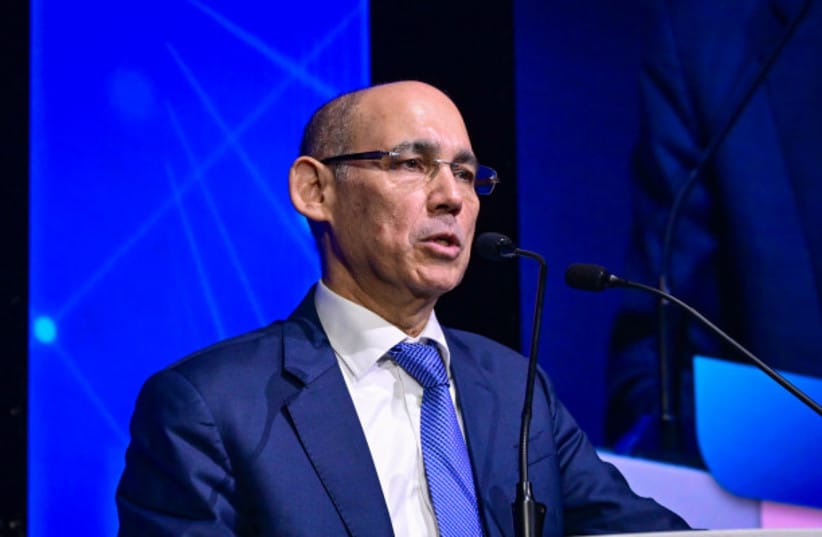 Bank of Israel Governor Amir Yaron. (credit: AVSHALOM SASSONI/FLASH90)Housing market risks and credit oversight
Recently, the governor called on contractors to lower apartment prices. Wouldn’t lowering prices harm system stability? Wouldn’t the risk level rise?
“We monitor the housing market closely because it is a significant part of bank credit. We monitor housing prices, transaction volumes, and the inventory of unsold apartments, which stands at 85,000. Financing credit for project support grew significantly in recent years because fewer apartments are being sold and contractors need more credit. Financing promotions, known as 20/80 deals, also increase credit. We also monitor absorption capacity metrics when housing prices drop. There is a certain rise in risk in the real estate market, and indicators are less favorable.
“Part of our review is risk assessment, and as needed, we instruct the banks in real time. When the governor addressed apartment prices, he referred to the fact that there is a high inventory of apartments and selling requires lowering prices. As stated, risk has risen, but banking can absorb a drop in housing prices of even up to 30%.”
Claims reached me from manpower organizations regarding black-market money moving through the banking system.
“No inquiry on the matter reached me. The issue is not specifically known to me. Banks have very clear rules regarding customer identification, as well as what funds and reports must be transferred. If there is additional information, they are welcome to contact us.”
There are claims that banks are making it difficult to transfer funds to investment houses.
“A letter on the matter did indeed reach us from the Association of Investment Houses. Our regulation is very clear on this issue, and transferring funds must not be prevented. We in the supervision department did not identify difficulties, but I am ready to meet with representatives of the Association of Investment Houses and hear from them.”
You have completed three years in office, and there are estimates that you will retire in about two years, at the end of your term.
“Two years from now is a long time. I am not thinking about retirement for now, but rather about continuing to take further steps for the benefit of the financial system, the economy, and customers, and there is still much to do. Toward the end of the term, I will decide what to do.”