
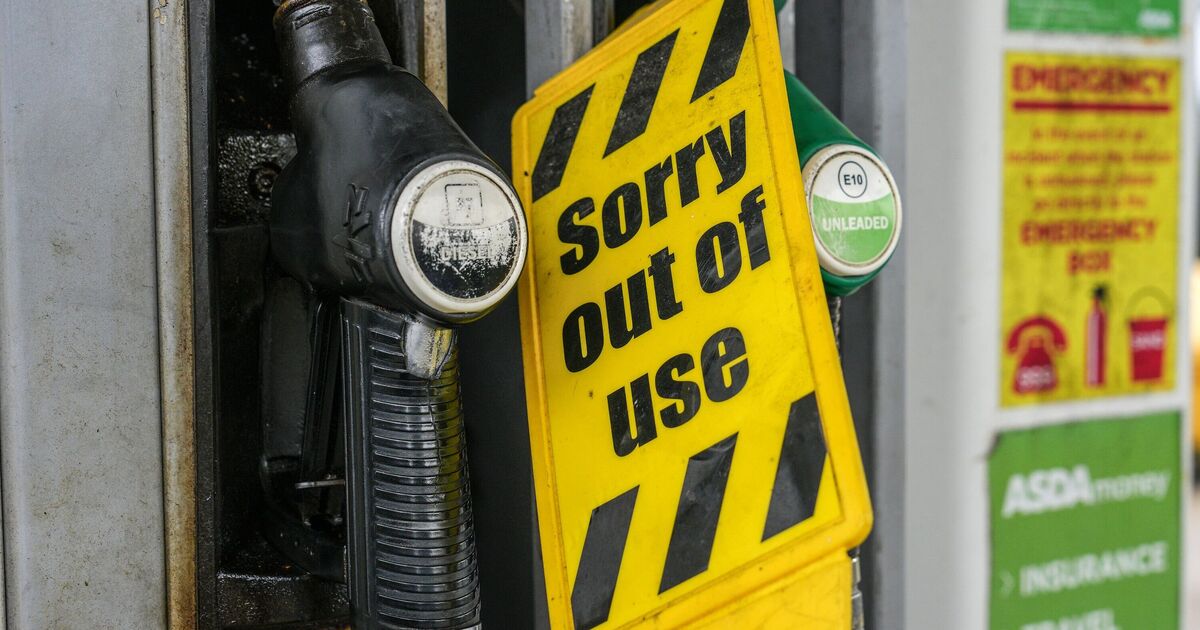
Contingency plans held by government to help the country cope with potential shortages of diesel could be put back on the table as prices at the pump hit a record high this weekend.
Simon Williams, the RAC’s head of policy, has forecast “the record of 199.09p will almost certainly be surpassed over the weekend”, as Labour‘s conference gets under way and indeed the average prices are just 0.4p per litre away.
Reports from Sky News suggest the UK had just 42 days of diesel left as of July, the lowest among developed nations aside from Australia.
Back in March, as the conflict first broke out, a Labour Treasury minister refused to rule out petrol rationing in the wake of the crisis, and government plans set out by the Department for Energy Security & Net Zero under its National Emergency Plan for Fuel show exactly how rationing would work in practice should it be implemented.
With diesel prices set to break records amid supply concerns, the contingency plans by government could theoretically be used for diesel in future. These plans include priority filling for emergency services and public transport and temporary speed limit reductions down to 50mph.
Louisa James, Political Correspondent at ITV’s Good Morning Britain, said back in March: “As you would expect the government has emergency plans in place which will be activated in the event of a severe disruption. Those are published online and they include things like petrol rationing, giving emergency services and public transport priority for fuel. Also reportedly a temporary 50mph speed limit to reduce demand for fuel.”
The National Emergency Plan for Fuel says: “The majority of potential fuel supply disruptions can be addressed by measures to help industry maintain fuel supply; these would be deployed by DESNZ in co-ordination with industry and other government departments.
“However, the government does have emergency powers under the Energy Act 1976, which it can use to control supply and demand of petroleum products. It should be noted that use of these emergency powers is reserved for the most severe of disruptions.
“These measures would only be activated in the event of a severe national fuel supply shortage.
The National Emergency Plan for Fuel (NEP-F) document details when such measures could be activated: “Only when an incident has the potential to cause significant and widespread disruption to oil supply will government consider activating measures within the NEP-F. The decision to activate the measures in the NEP-F can only be taken at a national level and would be led by DESNZ, as the government department responsible for energy resilience.
“Local Resilience Fora and relevant organisations providing essential services are expected to have robust business continuity plans in place that take into account of their own local and organisational context. Business continuity plans should align in principle to the NEP-F but not rely on early activation of the NEP-F measures.”
A DESNZ spokesperson said: “We have a diverse and resilient supply. We continue to engage with our international partners and the UK fuel industry.”