
The United States has urged Bulgaria to purchase billions of dollars’ worth of American liquefied natural gas through a specific Greek company, according to an investigation by The Wall Street Journal into US Ambassador to Greece Kimberly Guilfoyle’s meetings in Sofia.
Guilfoyle traveled to Bulgaria as part of an effort to encourage the country to buy US LNG and was accompanied in meetings with Bulgarian officials by Christos Marafatsos, a lobbyist for Greek construction company Aktor. Aktor is working with Greece’s state-owned energy company DEPA on a business intended to supply American LNG to Southeast Europe.
According to The Wall Street Journal, Guilfoyle directed Bulgarian officials toward Aktor as a potential partner, after which the Greek company signed agreements with Bulgarian gas companies.
The US administration has sought to persuade allies on Europe’s eastern flank to purchase billions of dollars in American natural gas. A person familiar with the discussions told the newspaper that Guilfoyle’s recommendation of Aktor amounted to “the official position of the U.S. government.”
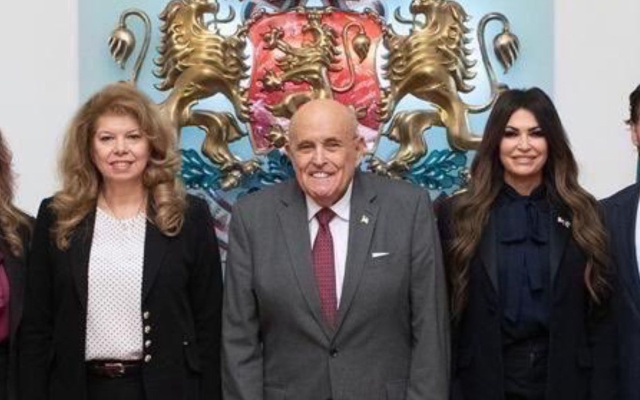
Marafatsos, 39, was present alongside Guilfoyle, 57, during a meeting with the Bulgarian president Iliana Yotova. He had attended so many of the ambassador’s meetings that some foreign officials believed he was her chief of staff. He is, however, a leading lobbyist for Aktor, whose CEO flew Guilfoyle to Bulgaria on a private jet.
Guilfoyle, a former prosecutor and former Fox News host who became associated with the MAGA movement, has used her position as ambassador to Greece to promote what the report describes as one of the Trump administration’s most influential diplomatic roles.
She has traveled around the Balkans to promote the so-called Vertical Gas Corridor, which is intended to bring US LNG into Greece and transport it by pipeline to Ukraine, as part of efforts to reduce Europe’s dependence on Russian energy.
Her strong backing of Aktor and her efforts to bring Marafatsos into diplomatic meetings have raised questions among government officials in the region, particularly because he has no previous experience in diplomacy or the energy sector.
Marafatsos previously co-founded a fruit and vegetable distribution company in the Washington area and worked in areas including real estate consulting and the creation of an “ultimate immersive experience” featuring the Acropolis in IMAX 3D.
Born and raised in Maryland, Marafatsos is now frequently seen with Guilfoyle. He serves as her unofficial intermediary and accompanies her to meetings at her ambassadorial residence and with government officials around the region, a role described in the report as unusual for a private citizen.
Several people who have met Guilfoyle and Marafatsos, including government officials, said he did not disclose his connection to Aktor.
At a Thessaloniki conference earlier this month attended by representatives from nine countries to discuss the Vertical Gas Corridor, a Wall Street Journal reporter saw Marafatsos and Guilfoyle arrive in the back of a black BMW traveling with the US motorcade. Marafatsos entered the MET Hotel separately from the photographers.
Former State Department officials who had worked closely on the Vertical Gas Corridor said US Embassy officials involved in developing the project had never met Aktor executives and had not previously heard the company mentioned as a potential partner.
Robin Brooks, a Foreign Service officer with 21 years of experience who served as Director for the Balkans and Central Europe at the National Security Council during the Biden administration, said an American ambassador promoting a foreign company was “absolutely problematic.”
Brooks also said the presence of a registered lobbyist in meetings with foreign officials “raises questions about whether the meeting serves U.S. interests or some private interest.”
A US Embassy official said Guilfoyle’s trip to Bulgaria was intended “to advance U.S. interests: increasing sales of U.S. liquefied natural gas to European partners and reducing Europe’s dependence on Russian gas.” The official added that she had “fully adhered to State Department guidelines” governing official travel.
Guilfoyle’s attorney, Jesse Binnall, said she has “worked with companies across the energy sector” rather than concentrating on one company. He said her official meetings are arranged through embassy channels and not by Marafatsos.
In a White House statement, Secretary of State Marco Rubio described Guilfoyle as an “extremely effective advocate for the President’s agenda” and said that he and Trump “greatly value” her work.
Marafatsos said in a written statement: “I am proud to support trade initiatives that advance U.S. interests and create sustainable economic opportunities in Greece and Southeast Europe. I am grateful for the opportunity to leverage my business experience and leadership roles within the Greek-American community.”
His lawyer challenged some of The Wall Street Journal’s reporting but did not identify which parts were disputed.
Aktor’s lawyers said in a letter that Guilfoyle had not improperly promoted the company’s commercial interests and that Aktor’s participation in the Vertical Corridor had begun before “any contact” with the ambassador.
The lawyers described Aktor as an “attractive candidate for advancing U.S. goals and interests” because it has no connections to Russian gas, unlike some of its Greek competitors.
The report also examines the broader influence Guilfoyle has gained in a region where governments have sought closer relations with the Trump administration. When she arrived in Athens last autumn, only one of the region’s 10 ambassadors had been officially confirmed. The report links this to a wider pattern of diplomatic vacancies that has increased the influence of the few US envoys abroad viewed as close to Trump.
Aktor announced in November that it was establishing Atlantic-SEE LNG, a joint venture to be owned 60% by Aktor and 40% by DEPA. The company and the joint venture have since signed memoranda of understanding and commercial agreements with gas companies in Bulgaria, Ukraine, Bosnia and Herzegovina, and Romania.
A USD6 billion agreement that Guilfoyle helped Aktor secure in Albania, if implemented, would result in Albania purchasing gas from the company through 2050.
Whether all of the agreements will ultimately be completed remains uncertain. On Friday, Ukraine’s state-owned gas company told The Wall Street Journal that talks over future purchases from Atlantic-SEE had been suspended.
Guilfoyle’s activities have also drawn attention in Romania, where The Wall Street Journal investigation prompted reactions focused not only on claims about political discussions but also on American LNG, the Vertical Gas Corridor, Aktor, DEPA and Marafatsos.
Romanian media have examined the story as an intersection of energy, infrastructure and corporate interests in Southeast Europe.
Ziarul Financiar identified Marafatsos as a businessman and registered Aktor lobbyist, while stressing that he is neither an American diplomat nor an embassy employee. The outlet noted that, according to The Wall Street Journal, he nevertheless took part in meetings connected with Guilfoyle’s activities.
Digi24 examined the case through the Vertical Gas Corridor, describing it as a route intended to facilitate the movement of natural gas from Greece toward Central and Eastern Europe, with US LNG playing a key role in the strategy.
HotNews raised the broader question of where US energy diplomacy ends and the interests of individual companies begin.
Financial Intelligence focused on Atlantic-SEE LNG Trade, the company established by Aktor and DEPA to develop trade in US LNG in Southeast Europe as part of the wider Vertical Gas Corridor concept.
G4Media also examined Guilfoyle’s promotion of the Vertical Gas Corridor and US LNG while reporting The Wall Street Journal’s claims about interest in a particular Greek company and Marafatsos’s involvement.
At the same time, the reports distinguish between documented business and diplomatic contacts and claims about what those contacts meant. Guilfoyle and her lawyer have disputed the characterization of the conversations described in the US investigation.
Another part of the Wall Street Journal report concerns an alleged conversation in Athens in March involving Greek Energy Minister Stavros Papastavrou.
According to a person who attended the dinner and others who were subsequently told about the exchange, Guilfoyle was discussing the anticipated collapse of the Romanian government when she said: “We can do this to any country we want. We can do it here, too.”
The same account said Papastavrou objected, arguing that the United States could not change the Greek government because it had been elected by the people. Guilfoyle’s lawyer disputed this description of the conversation.
The report also generated political reactions in Romania. Mediafax reported that USR MP Alexandru Dimitriu filed a criminal complaint against Sorin Grindeanu, George Simion and Bogdan Ivan, accusing them of high treason.
Grindeanu rejected the allegations as “pure fabrication,” while Simion denied having discussed overthrowing the Romanian government with Guilfoyle.
The story has also drawn attention to Guilfoyle’s public profile and her role as a representative of the Trump administration.
Guilfoyle, who was previously married to California Governor Gavin Newsom, has spoken publicly about her close relationship with the Trump family and posts videos for nearly two million Instagram followers. Her social media content features meetings with regional leaders alongside appearances at European fashion shows and glamorous galas where she wears crystal-adorned gowns.
She is friends with Greek pop singer Konstantinos Argyros. During a recent concert, Argyros spotted Guilfoyle in the audience speaking with Marafatsos and danced with her to one of his hit songs.
Visitors to Jefferson House, the official ambassadorial residence where Guilfoyle frequently holds meetings, said the interior contains large black-and-white portraits of the ambassador.
Some Greek officials have welcomed the increased attention their country receives from an ambassador with direct access to the US president. Others have expressed concern about losing her favor.
At a dinner in Athens in March attended by Greek and American officials, Guilfoyle reportedly argued with Greek Energy Minister Stavros Papastavrou. According to a person at the dinner and others who later heard about the exchange, she made the remark concerning the possible collapse of the Romanian government. Guilfoyle’s lawyer disputed that characterization.
Guilfoyle’s appointment as ambassador followed a widely publicized breakup with Donald Trump Jr.
She began dating Trump Jr. during his father’s first term and became one of Trump’s most aggressive defenders. At the 2020 Republican convention, she warned that Democrats sought to enslave Americans through liberal ideology.
The couple became engaged before Trump left the White House and bought a USD9.7 million estate in Florida in the spring.
Guilfoyle also pursued several business ventures, including the “Flor de Maga” hair products and perfume line, champagne projects called “1776 Liberté” and “Liberty Dream,” and the “PETriot Vet” pet veterinary service, according to US Patent Office records. Those trademarks have since been abandoned.
She later joined Trump’s reelection campaign and urged supporters at the 2024 Republican convention to “rise up” behind him.
That summer, photographs emerged showing Trump Jr. with Bettina Anderson, a 39-year-old Palm Beach socialite. In December, Trump, who had previously supported Guilfoyle, announced on social media that she would become ambassador to Greece.
Sources familiar with the discussions said people close to Trump Jr. had lobbied behind the scenes in support of Guilfoyle’s nomination. Guilfoyle had spent weeks speaking with members of her former fiancé’s circle about how the two might reconcile, and some subsequently suggested that she could be offered an ambassadorial position.
Guilfoyle has long expressed an affinity for Greece. She told friends she admired the country’s international stature and glamorous image and cited Jacqueline Kennedy Onassis, the former first lady who married a Greek shipping magnate after her husband’s assassination, as an example.
A US Embassy official said Guilfoyle had spent her honeymoon in Greece and often spoke about her affection for the country, which began while she was studying Greco-Roman history in college.
Greek media also revisited comments Guilfoyle made in 2015 while working as a Fox News host during the European debt crisis. At the time, she said Greeks needed to be trained like “a dog that pees on the rug.”
She also said: “It doesn’t matter if you make great yogurt. I don’t care.”
Trump reportedly told associates that he had offered Guilfoyle the ambassadorship because of his son, saying, “I had to get her out of here.” A White House official denied that the president had made the remark.
Marafatsos became increasingly close to Guilfoyle after her nomination and was described as a man with extensive knowledge of Greece.
His personal website includes a photograph of a basket of root vegetables and identifies him as a co-founder of a company distributing local food products to Washington-area restaurants. He left that company nearly two decades ago.
Corporate records and company websites show that he subsequently pursued ventures including an investment firm, the now-defunct Institute of Investigative and Translational Medicine, and a family construction company where he was vice president.
His major political breakthrough came before Trump’s first presidential campaign in 2015, when he joined the then-new campaign. He later became chairman of Greek Voices for Trump.
Marafatsos, who has a young family in Virginia, told a Greek newspaper that he had met Guilfoyle early in Trump’s political career. After her nomination, he became a close adviser.
The two were seen together at the presidential inauguration, including at an event honoring the Greek-American community, where Marafatsos stood behind Guilfoyle while she spoke.
At a White House reception marking Greek Independence Day in March, Trump invited Guilfoyle to speak and said: “She represents Greek culture very well, let me tell you,” before turning to Marafatsos and adding, “He’s a good-looking man.”
A person familiar with the matter said Marafatsos helped Guilfoyle prepare for her Senate Foreign Relations Committee hearing. Afterward, Guilfoyle posted photographs from the hearing room with supporters including Marafatsos and wrote: “Grateful to be surrounded by amazing friends and family.”
He was also present at her swearing-in ceremony in September.
As Guilfoyle prepared to move to Athens, both she and Marafatsos continued pursuing business activities.
Around the time her nomination was confirmed, Guilfoyle was seeking investment for Polished Rice, a vodka company she had founded the previous year. A person familiar with the matter said she asked at least one Greek-American businessman for a USD3 million investment.
A lawsuit later filed by Polished Rice against its distiller said the vodka line was due to be unveiled at a “global VIP event” in Greece on July 2, the same day Guilfoyle was scheduled to host an American Independence Day celebration in Athens.
The launch was disrupted after the shipment reportedly arrived with broken bottles and damaged labels. Guilfoyle’s lawyer denied that she had sought a USD3 million investment and said she had not pursued private business ventures since entering government service.
Before Guilfoyle took office, Marafatsos offered his services to Greek companies in the energy and shipping industries.
According to a person who received one such pitch, he told CEOs about his connection to the incoming ambassador and named companies he said he represented, including regional energy companies Copelouzos and Metlen.
Representatives of both companies said they had never hired Marafatsos.
Aktor was another company he identified as a client.
Guilfoyle met Aktor CEO Alexandros Exarchou on November 1, the day she arrived in Athens, according to Aktor’s lawyers.
Four days later, on November 5, Marafatsos registered as an Aktor lobbyist in the United States, according to federal lobbying records. By June, the company had paid him USD160,000 to “build relationships” with the Executive Office of the President, the State Department and the Department of Energy.
It was the first time Marafatsos had registered as a US lobbyist.
Aktor’s lawyers said the company hired him after Exarchou attended a September 2025 luncheon with US Interior Secretary Doug Burgum and senior Greek energy representatives, where the Vertical Gas Corridor was discussed.
According to the lawyers, Exarchou subsequently contacted DEPA and proposed a joint venture to “take the lead in supplying non-Russian liquefied natural gas to Southeast Europe.”
Marafatsos later added three other Greece-linked companies to his US lobbying clients, including an energy company and businesses in shipping and infrastructure.
Over nine months, he reported more than USD440,000 in lobbying revenue.
Marafatsos frequently accompanied Guilfoyle to meetings at the ambassadorial residence and elsewhere. People who met the pair said Guilfoyle usually introduced him simply by saying, “This is Christos,” and that he generally remained silent unless she asked him to participate.
They also said Guilfoyle often directed people she met to provide additional information through Marafatsos.
An investor who met Guilfoyle and Marafatsos seeking assistance with energy-sector investment opportunities, including potential deals involving Aktor, was referred to Marafatsos for follow-up.
The investor later learned that Marafatsos worked for Aktor and was surprised because that connection had not been disclosed during the meeting.
Only weeks after Aktor hired Marafatsos, the company’s access to the Trump administration expanded significantly.
At a conference in Greece in November attended by cabinet members including Burgum and Energy Secretary Chris Wright, the Aktor-DEPA joint venture announced a 20-year agreement with US company Venture Global to purchase American LNG beginning in 2030.
Guilfoyle posed for photographs with Exarchou and other representatives as the new venture signed cooperation agreements with Romania and Ukraine’s Naftogaz, among others.
A Venture Global spokesperson said the company met with Aktor and DEPA to discuss a possible supply agreement after meeting Guilfoyle about the Vertical Corridor. She also said Venture Global had already been working with DEPA on commercial matters for years.
Other US LNG companies that have not reached agreements with Aktor said they have had difficulty getting Guilfoyle’s attention.
Jonathan Bass, CEO of Louisiana-based Argent LNG, a competitor of Venture Global, said his company had been overlooked by Guilfoyle. Asked whether she had promoted Argent in any conversations, he answered: “No. She has her favorites.”
Guilfoyle’s lawyer said the claim that the embassy had ignored Argent was false.
In December, Exarchou attended a reception at the Kennedy Center and was photographed with Trump.
At the World Economic Forum in Davos in January, he met Guilfoyle and was photographed with Eric Trump. A spokesperson for Eric Trump said he “has no idea who this person is.”
In February, Exarchou traveled back to Washington with Guilfoyle and joined the energy ministers of Greece and Bulgaria for dinner at Joe’s Seafood, a steak and seafood restaurant across from the White House.
People familiar with the dinner said guests were asked to introduce themselves and explain how they had met Guilfoyle or propose a toast to her.
Guilfoyle’s stylist, Fancy James, was also present and posted photographs with the ambassador using the hashtag #ambassador.
During the same trip, one person familiar with the matter said Exarchou also met White House Chief of Staff Susie Wiles.
At the conference the next day, the Aktor-DEPA venture signed additional memoranda of understanding with gas companies from Bulgaria, Ukraine, Albania and Bosnia and Herzegovina.
In March, Guilfoyle made an unpublicized trip to the Albanian capital while Albania’s government was seeking closer relations with the White House.
She traveled without embassy staff, arriving after dark in a black SUV with Marafatsos and Exarchou. The three entered a meeting with Albanian Prime Minister Edi Rama together, where Guilfoyle presented energy cooperation proposals.
Several weeks later, Albania’s government received an email from the Trump administration’s National Council on Energy Dominance listing companies interested in partnering with Albania to buy US gas.
The only proposed deal involved Venture Global, the American LNG supplier that had signed an agreement with Aktor’s joint venture several months earlier.
Albanian Energy Minister Enea Karakaci said: “Look, I don’t think there were – let’s say – many companies in that email.”
In April, Guilfoyle returned to Albania for the signing of a USD6 billion, 20-year agreement.
Under the agreement, Albania’s state-owned gas company would purchase one billion cubic meters of gas annually from Venture Global through a US subsidiary established by Aktor several weeks earlier.
Aktor’s lawyers said Atlantic-SEE conducts all of the company’s LNG transactions, while a Venture Global spokeswoman said her company was not a party to the Albanian agreement.
In June, Atlantic-SEE announced that it would double the volume of gas it planned to purchase from Venture Global.
Aktor estimates that its pretax profit from signed LNG contracts and agreements “in the process of being signed” will reach €1.8 billion over 20 years.
At the Thessaloniki conference earlier this month, while Guilfoyle prepared for her speech in a side room, Marafatsos repeatedly appeared at the doorway to speak with delegates.
Before going on stage, Guilfoyle handed her phone to Marafatsos. Her lawyer said he was carrying the phone because her dress had no pockets.
In her speech, Guilfoyle praised the agreement between Atlantic-SEE and Venture Global and highlighted progress on the Vertical Corridor, calling it “something that, frankly, we have never seen before.”
As Marafatsos watched from the audience, Guilfoyle then told those present: “Greece, please.”