
The writer is a political and legal researcher from Ramallah, Palestine, specializing in public international law, human rights, and state responsibility.
Israeli ideological thought includes the notion of a state whose boundaries, based on biblical beliefs, would extend from the Nile to the Euphrates. The current right-wing government has articulated this vision more explicitly. Finance Minister Bezalel Smotrich stated: “I tell you quite clearly that we want a Jewish state that includes Jordan, Saudi Arabia, Iraq, Syria, and Lebanon, extending as far as the Nile in Egypt.” He further stated: “I want a Jewish state based on the values of the Jewish people. Gradually, according to our great religious sages, Jerusalem is destined to extend as far as Damascus.” [1]
These statements reflect expansionist aspirations beyond Palestine towards Syria and Lebanon. Settlement outposts have been attempted on Mount Hermon and in the Quneitra countryside [2], while southern Lebanon has faced recurrent attacks and ground incursions. However, the first steps towards the purported state were taken in Palestine through the 1948 Nakba and 1967 Naksa, with Israeli restrictions continuing to this day.
The absence of a Palestinian State in Israeli political thought
The Israeli government and its political institutions reject the establishment of a Palestinian state. The Knesset voted 68 to 9 against its establishment, passing a resolution that stated: “The establishment of a Palestinian state in the heart of the Land of Israel would pose a danger to the State of Israel and its citizens, perpetuate the Israeli-Palestinian conflict, and destabilize the region.” It further described Palestinian statehood as a “reward for Palestinian terrorism.” [3] Similarly, Prime Minister Benjamin Netanyahu stated: “There will be no Palestinian state. The response to the latest attempt to impose a terrorist state on us in the heart of our land will be given.” [4] Finance Minister Bezalel Smotrich had previously denied the existence of the Palestinian people, describing them as “an invention less than 100 years old.” [5]
This rejection predates Oct. 7, 2023. The 1948 Nakba displaced over 750,000 Palestinians and destroyed hundreds of villages. In 1967, Israel occupied the remaining Palestinian territories, displacing hundreds of thousands and placing the West Bank and Gaza Strip under military rule until the 1993 Oslo Accords, which laid the foundations for Palestinian statehood. Yet subsequent Israeli policies continued to obstruct its establishment [6].
Under the current right-wing government, calls to repeal the Oslo Accords have emerged. Ben-Gvir’s party introduced a bill seeking their annulment, stating: “The establishment of a Palestinian state in the heart of the Land of Israel would pose an existential threat to the State of Israel and its citizens, perpetuate the Israeli-Palestinian conflict, and undermine regional stability.” Ben-Gvir further stated: “The time has come to correct one of the greatest mistakes in the country’s history—the cursed Oslo Accords, which brought us thousands of deaths and from which we are still suffering.” [7]
Since Oct. 7, 2023, displacement, settlement activity, and attacks have intensified. The Gaza war has resulted in more than 74,000 Palestinian deaths, while the residents of three northern West Bank refugee camps, formerly home to over 40,000 Palestinians, have been displaced. Israeli measures have also extended to Areas A and B, alongside Knesset efforts to impose Israeli sovereignty over the West Bank and plans for more than 114 new settlement units [8].
These practices continue despite international law and UN General Assembly Resolution 67/19 (2012), which accorded Palestine non-member observer State status. Approximately 157 states recognize Palestine, and its right to self-determination enjoys broad international support. Nevertheless, settlement-related pressure has extended to Qusra, Taybeh, and Turmus Ayya, prompting US ambassador visits and his characterization of certain acts by occupiers as “terrorism.”
‘Horrific act of terrorism’
“This is a horrific act of terrorism,” stated US Ambassador Mike Huckabee during his visit to Qusra, Nablus, on Aug. 12, 2026, after occupiers surrounded the home of Luay Abu Rida, a Palestinian-American. He also described attacks on land as “a violation of God’s law.” [9]
On Sept. 5, 2026, Huckabee visited Turmus Ayya following recurrent occupier attacks involving looting, arson, and property destruction. Mayor Nawaf Zaghloul stated that approximately 80% of the town’s residents hold US citizenship. Huckabee described occupier actions as “criminal behavior and terrorism” and the perpetrators as a “small group of marauders” damaging Israel’s reputation [10].
These statements raised questions about a possible shift in US policy. However, Washington’s renewed denial of visas to President Mahmoud Abbas and other Palestinian officials, preventing their in-person participation in the 81st UN General Assembly, indicates policy continuity. Therefore, on Sept. 17, 2026, the assembly voted 152-3, with four abstentions, to permit their virtual participation when denied US entry [11]. By contrast, European states have taken a firmer stance against violence by occupiers in the West Bank, including sanctions against certain occupiers.
European sanctions against Israeli settlements
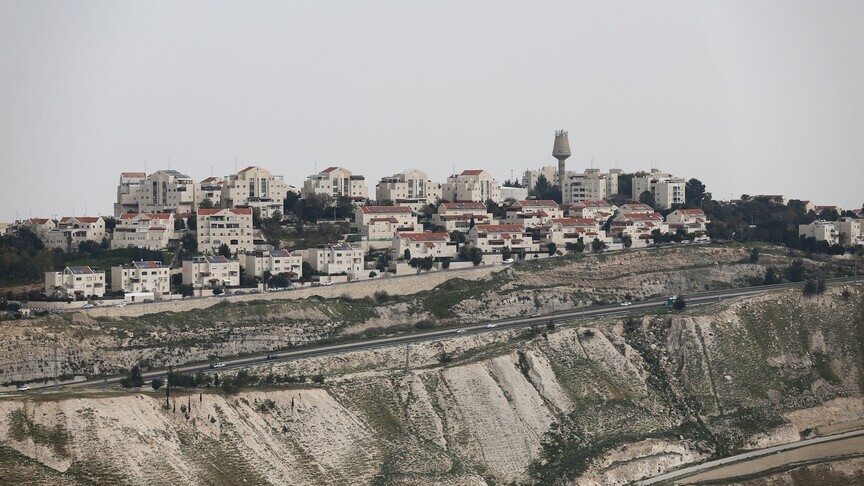
As violence by occupiers intensified, more than 12 European states, including France, Denmark, Iceland, and the United Kingdom, imposed sanctions on occupiers and sought to extend these sanctions to entities dealing with the occupiers. The British foreign secretary described practices by occupiers in the West Bank as “ethnic cleansing,” prompting Israel to close the British Consulate in Jerusalem and suspend cooperation with the UK. Israeli Foreign Minister Gideon Sa’ar rejected the allegation, stating: “The accusations made by the Foreign Secretary in the British Parliament are outrageous and false.” Despite Israel’s rejection, European states proceeded with sanctions against violence by occupiers and Israeli practices in the West Bank [12].
Conclusion
Characterizations of settlement practices in the West Bank vary between “ethnic cleansing” and “terrorism.” This analysis presents “ethnic cleansing” as a legal concept reflecting organized settlement aimed at displacing Palestinians from their land to facilitate annexation. In contrast, “terrorism” is viewed here as a limited political characterization unaccompanied by effective measures against practices by occupiers. Accordingly, this analysis views settlement activities, alongside the genocide in Gaza, as steps toward controlling all of Palestine and paving the way for the purported Israeli state extending from the Nile to the Euphrates.
[1] “Greater Israel” is Smotrich’s project to occupy Arab countries”. Oct. 19, 2024. https://alkhanadeq.com/post/7723
[2] “Pioneers of Bashan: An Israeli settlement movement targeting southern Syria”, July 26, 2026. https://www.aljazeera.net/encyclopedia/2026/7/20/%D8%B1%D9%88%D8%A7%D8%AF-%D8%A7%D9%84%D8%A8%D8%A7%D8%B4%D8%A7%D9%86-%D8%AD%D8%B1%D9%83%D8%A9-%D8%A7%D8%B3%D8%AA%D9%8A%D8%B7%D8%A7%D9%86%D9%8A%D8%A9
[3] “Israeli parliament ‘firmly’ opposed to a Palestinian state”, Aug. 7, 2024. https://www.dw.com/en/israeli-parliament-firmly-opposed-to-a-palestinian-state/a-69707960
[4] “Israel rejects Gaza plan… Netanyahu: We will not withdraw from the Strip and there will be no Palestinian state”, Aug. 9, 2026 https://asharq.com/politics/192488/%D8%A5%D8%B3%D8%B1%D8%A7%D8%A6%D9%8A%D9%84-%D8%AA%D8%B1%D9%81%D8%B6-%D8%AE%D8%B7%D8%A9-%D8%BA%D8%B2%D8%A9/
[5] Greater Israel” is Smotrich’s project to occupy Arab countries”. Oct. 19, 2024. https://alkhanadeq.com/post/7723
[6] Nabil Al-Sahli – Netherlands, “ The Nakba of 1948 and the setback of 1967: Refugees, displaced persons, and the bleeding of forced displacement continues”.
https://www.masar.ps/ar/Article/764/%D9%86%D9%83%D8%A8%D8%A9-48-%D9%88%D9%86%D9%83%D8%B3%D8%A9-67-%D9%84%D8%A7%D8%AC%D8%A6%D9%88%D9%86-%D9%88%D9%86%D8%A7%D8%B2%D8%AD%D9%88%D9%86-%D9%88%D9%86%D8%B2%D9%8A%D9%81-%D8%A7%D9%84%D8%AA%D9%87%D8%AC%D9%8A%D8%B1-%D8%A7%D9%84%D9%82%D8%B3%D8%B1%D9%8A-%D9%85%D8%B3%D8%AA%D9%85%D8%B1
[7] Moahamed Alsayed, ” Ben-Gvir’s party proposes a bill to “cancel the Oslo Accords” , Alhura News, March 9, 2025. https://www.alhurra.com/israel/2025/03/09/%D8%AD%D8%B2%D8%A8-%D8%A8%D9%86-%D8%BA%D9%81%D9%8A%D8%B1-%D9%8A%D8%AA%D9%82%D8%AF%D9%85-%D8%A8%D9%85%D8%B4%D8%B1%D9%88%D8%B9-%D9%82%D8%A7%D9%86%D9%88%D9%86-%D9%84%D9%80%D8%A5%D9%84%D8%BA%D8%A7%D8%A1-%D8%A7%D8%AA%D9%81%D8%A7%D9%82%D9%8A%D8%A7%D8%AA-%D8%A3%D9%88%D8%B3%D9%84%D9%88
[8] “Four years of annexation legislation: Key steps and stages of the process since the beginning of 2023”, Sept. 8, 2026. https://www.cwrc.ps/page-4955-ar.html
[9] “US diplomat calls Israeli settler siege of West Bank homes ‘act of terror’”, Aljazeera, Aug. 13, 2026 https://www.aljazeera.com/news/2026/8/13/us-diplomat-calls-israeli-settler-siege-of-west-bank-homes-act-of-terror
[10] “The US ambassador inspects the homes of those affected by settler attacks in Turmus Ayya”. Sept. 5, 2026. https://alquds.com/ar/posts/256704-us-ambassador-visits-turmus-ayya-settler-attacks
[11] “UN allows Palestinian president to again speak via video after US denies visa”, Routers, Sept. 17, 2026 https://www.reuters.com/world/middle-east/un-allows-palestinian-president-again-speak-via-video-after-us-denies-visa-2026-09-17
[12] “Canada and 11 European countries plan to impose sanctions on trade with Israeli settlements.”, “Al-Sharq Al-Awsat, Sept. 8, 2026. https://aawsat.com/%D8%A7%D9%84%D8%B9%D8%A7%D9%84%D9%85/%D8%A3%D9%88%D8%B1%D9%88%D8%A8%D8%A7/5315874-%D9%83%D9%86%D8%AF%D8%A7-%D9%8811-%D8%AF%D9%88%D9%84%D8%A9-%D8%A3%D9%88%D8%B1%D9%88%D8%A8%D9%8A%D8%A9-%D8%AA%D8%B9%D8%AA%D8%B2%D9%85-%D9%81%D8%B1%D8%B6-%D8%B9%D9%82%D9%88%D8%A8%D8%A7%D8%AA-%D8%B9%D9%84%D9%89-%D8%A7%D9%84%D8%AA%D8%AC%D8%A7%D8%B1%D8%A9-%D9%85%D8%B9-%D8%A7%D9%84%D9%85%D8%B3%D8%AA%D9%88%D8%B7%D9%86%D8%A7%D8%AA-%D8%A7%D9%84%D8%A5%D8%B3%D8%B1%D8%A7%D8%A6%D9%8A%D9%84%D9%8A%D8%A9
*Opinions expressed in this article are the author’s own and do not necessarily reflect the editorial policy of Anadolu.