

With the Parti Québécois leading in the polls, the party is facing questions about the economic impact of Quebec independence — and a new study on Alberta separation offers a sobering point of comparison.
If his party forms government, PQ Leader Paul St-Pierre Plamondon has promised to hold a vote on independence after U.S. President Donald Trump’s term ends in January 2029.
The delay, St-Pierre Plamondon has argued, is necessary because the unpredictability of Trump’s administration would undermine the project. It would be the first time since Jacques Parizeau’s 1994 government that the PQ would take power with the promise to hold a referendum.
The PQ’s 2026 costed platform outlines a $130-million price tag for preparing and holding a referendum. The party’s broader Livre bleu — spanning more than 500 pages — paints a rosy picture of independence, and frames separation as a net financial benefit.
“The goal is to end federal waste that duplicates everything we do and loses money like nowhere else, costing us billions of dollars,” St-Pierre Plamondon said last month.
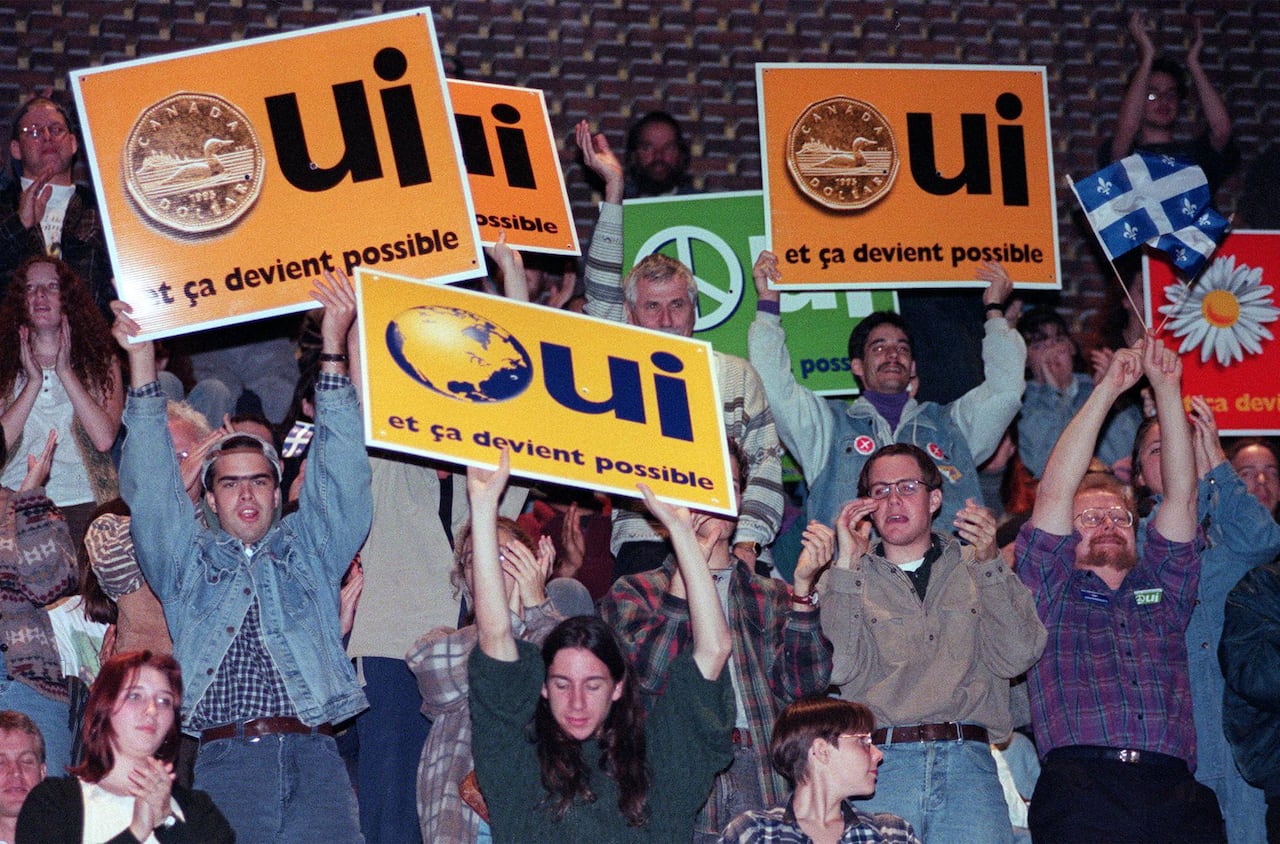 Supporters of Quebec independence at a rally in October 1995. The Yes side narrowly lost the vote later that same month. (Ryan Remiorz/The Canadian Press)
According to the document, independence would yield $13 billion to $16 billion in administrative savings by eliminating or merging most of the roughly 230 federal agencies operating in the province.
But the Livre bleu does not fully cover other state expenses, such as establishing an independent military or border services. The PQ contends it would maintain an open border with Canada and reroute tax money currently directed to the Canadian military at no extra cost.
A $170B cautionary tale
A recent report examining the possibility of an independent Alberta, however, presents a more complex economic reality.
The report, commissioned by the Alberta government and conducted by experts at the University of Calgary, found that Alberta’s separation from Canada could cost between $50 billion and $170 billion over a five-year period.
It’s hard to see the economic upside from Quebec independence.- Tim Sargent, University of Calgary
It lays out two possible scenarios — a “smooth” option, in which negotiations to exit Canada would be quick and favourable to Alberta, and a “difficult” option, in which those negotiations would drag on and be unfavourable to the province.
Tim Sargent, the lead economist on the report, said in an interview that the cost to the Quebec economy and its finances would likely be comparable.
“It’s hard to see the economic upside from Quebec independence,” said Sargent, a longtime economic expert in the federal civil service and the director of economic growth and prosperity at University of Calgary’s school of public policy.
“It wouldn’t be hard for me to see losses in GDP, maybe not quite as high as we have for Alberta, but — choose my words carefully here — a similar order of magnitude is not unreasonable.”
In terms of the province’s finances, he said a sovereign Quebec would “face a bigger risk premium” that would increase interest rates throughout the economy. This could be passed on to consumers, raising interest rates on people’s mortgages and lines of credit.
He acknowledged that Quebec’s setup costs would be lower because it already has institutions like Revenu Québec and the Quebec Pension Plan. But he pointed out that, unlike Alberta, Quebec doesn’t have an oil and gas sector it could unleash for potential economic gain.
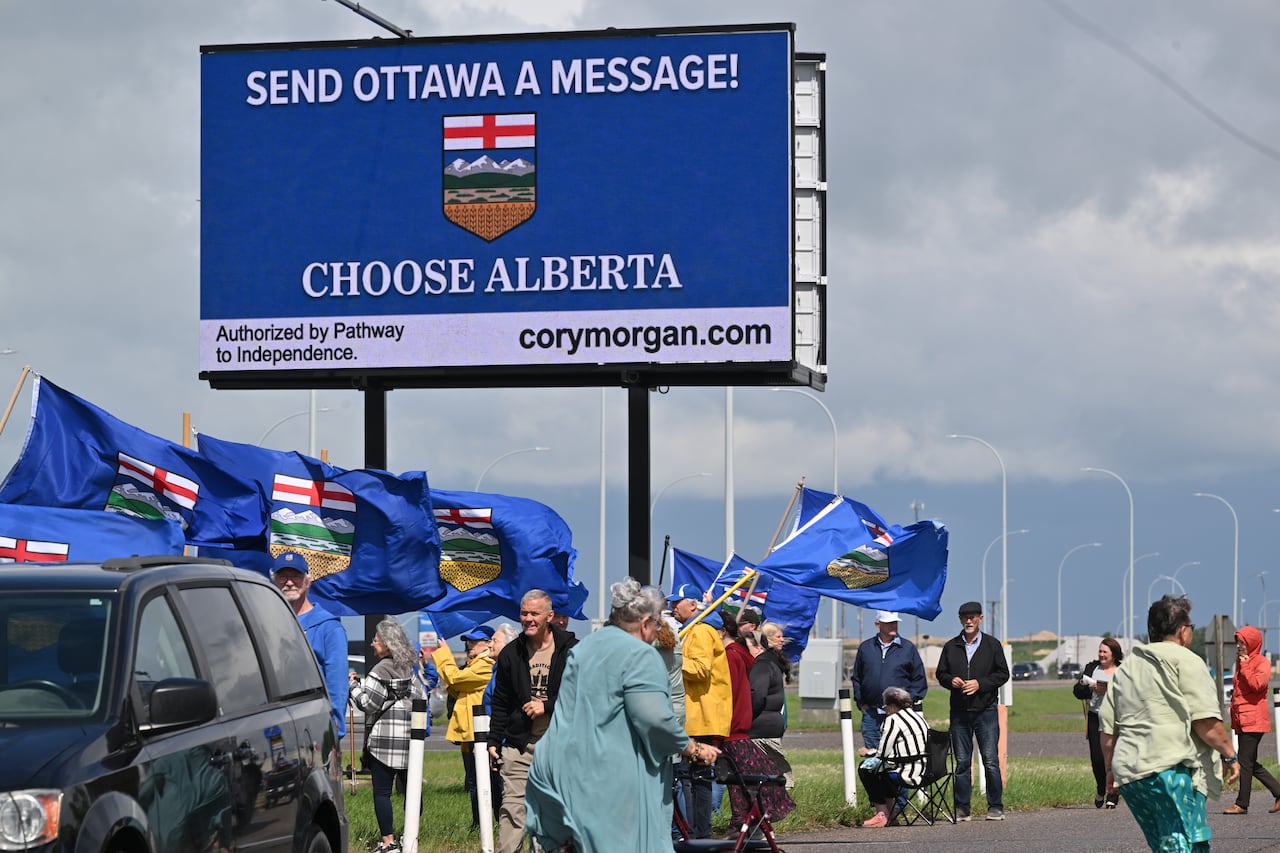 Demonstrators gather beneath a billboard promoting Alberta independence in June. Alberta is set to hold a referendum to determine if residents want to hold a formal vote on whether to stay or leave Canada. (Matthew Bruce/The Canadian Press)The Brexit comparison
Sargent noted that exports to the rest of Canada account for about 20 per cent of both provinces’ GDP.
He said turning an interprovincial border into an international one could slow down that trade, pointing to the economic slowdown in the United Kingdom after it left the European Union.
“If you look at what happened after Brexit, the U.K.’s goods exports went down significantly,” Sargent said.
“You could no longer just drive stuff from Dover to Calais without having to fill in any forms. And it would be the same if Quebec left.”
The University of Calgary report, which was reviewed by an independent panel, cites historical studies conducted in Quebec prior to the 1995 referendum that projected a real GDP contraction for the province ranging between 1.2 per cent and 7.7 per cent.
The authors also point to Quebec’s 1980 referendum period as a precedent for corporate head office relocations driven by political uncertainty.
The report relies on historical research because independent economic analysis on Quebec independence virtually dried up after the 1995 referendum, Sargent said.
WATCH | Conservative leader wouldn’t work with PQ on referendum: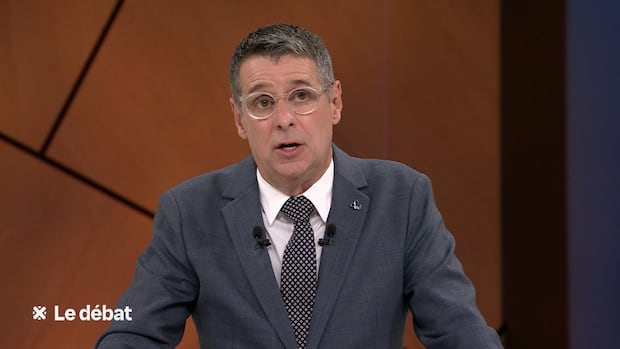
Quebec Conservative leader rules out referendum in balance-of-power scenario
Éric Duhaime said he’s ready to collaborate with other parties on everything “except a referendum” in the event of a Quebec minority government.Uncertainty the operative word
Daniel Béland, director of the McGill Institute for the Study of Canada, said the Alberta study highlights a key element about any secession project: uncertainty.
(Another recent Alberta study, produced by a pro-independence group, found that an independent Alberta would have a potential budget surplus of as much as $32 billion a year. )
“There are so many different factors that can affect the cost of the transition,” Béland said, pointing to questions around the state of the economy, international recognition of a newly formed state and negotiations with Canada.
“It’s a process that can take years,” he added. “It’s hard to put an actual number on it, but it’s good to have this exercise.”
With Quebecers heading to the polls on Oct. 5, Quebec independence could become a greater target for St-Pierre Plamondon’s rivals, Béland said.
During Wednesday’s debate, both Coalition Avenir Québec Leader Christine Fréchette and Quebec Liberal Leader Charles Milliard argued a referendum would lead to economic turmoil.
In defending his position, St-Pierre Plamondon has described himself as an “optimist” and on the side of “courage and hope.”
“We shouldn’t be afraid of democracy,” he said during Wednesday’s debate. “Jacques Parizeau used to say, ‘Don’t be afraid of your democracy, of going to the polls, of reflecting on our future.'”
WATCH | Why Quebec City is a key battleground in this election: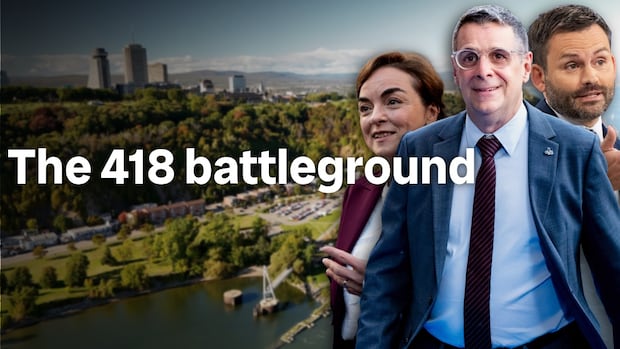
Why the greater Quebec City area could play a big role in this election
Experts say the larger Quebec City area, known as the 418, is one of the spots that could decide whether the next provincial government will be a majority or minority. They say the Conservative Party of Quebec is capturing the attention of right-leaning voters in the area.