
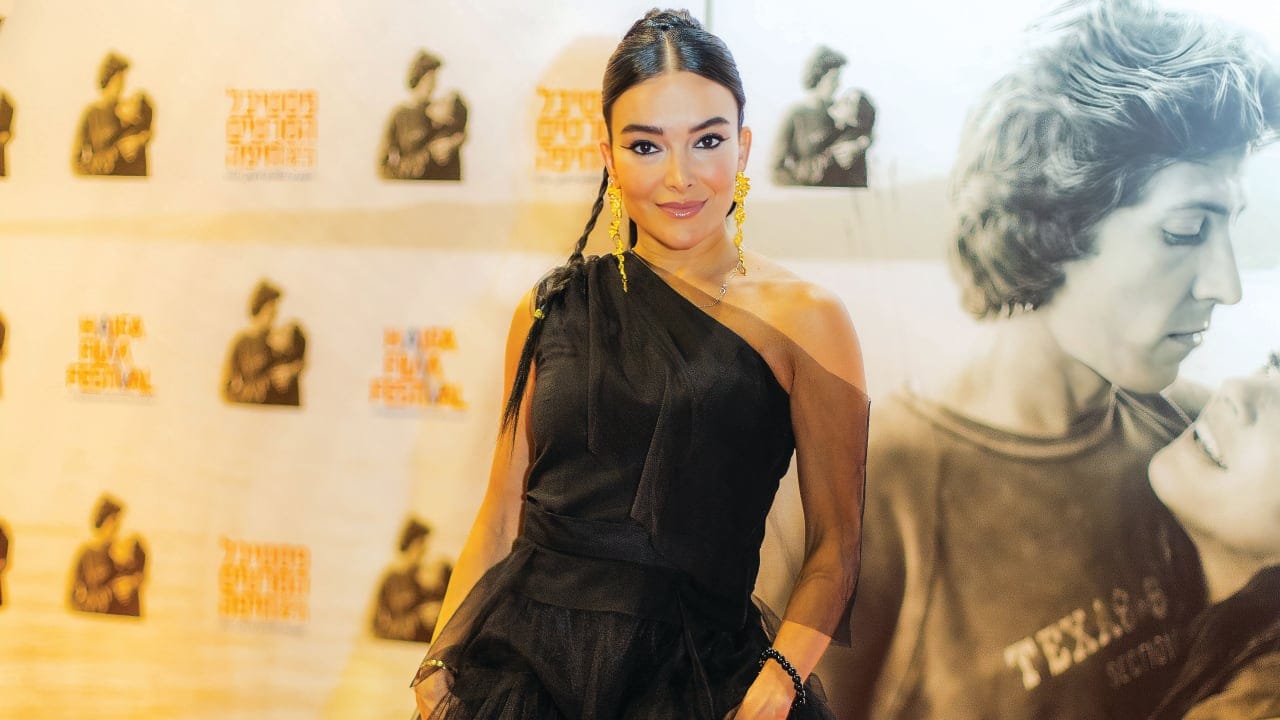
Golazin Ardestani, an Iranian singer based in the UK who is known professionally as Gola, lit up the stage at the opening of the 42nd Haifa International Film Festival on Saturday night when she performed “New Day Will Rise,” a song inspired by the massacre at the Nova Music Festival on October 7, 2023, with Yuval Raphael, a Nova survivor, who originally sang the song at Eurovision in 2025.
The duet was one of the highlights of the opening. The next day, Ardestani said, “Last night’s performance was very symbolic for me. … Yuval’s story is very important, and it’s a story of many people in Israel, and I really love the song because it has a message of hope.
“We performed it in four languages: English, French, Hebrew, and Iranian (Farsi), and I really enjoyed this performance. I think our performance shows that we are all human beings and at the end of the day, it doesn’t matter where we come from or what our religion is. It shows that to win, we need to get together and be united and love each other as human beings.”
Ardestani is also an actress, and she attended last year’s festival with the movie Mortician, in which she starred, and was happy to return this year to sing and serve on the festival’s selection committee.
Responding to a compliment about the emotional intensity of her performance, the petite, soft-spoken singer, who nevertheless has great stage presence, said, “Thank you. I think the stage reveals the truth about a person. For me, it has always raised the question of why women singers cannot occupy that space in Iran.
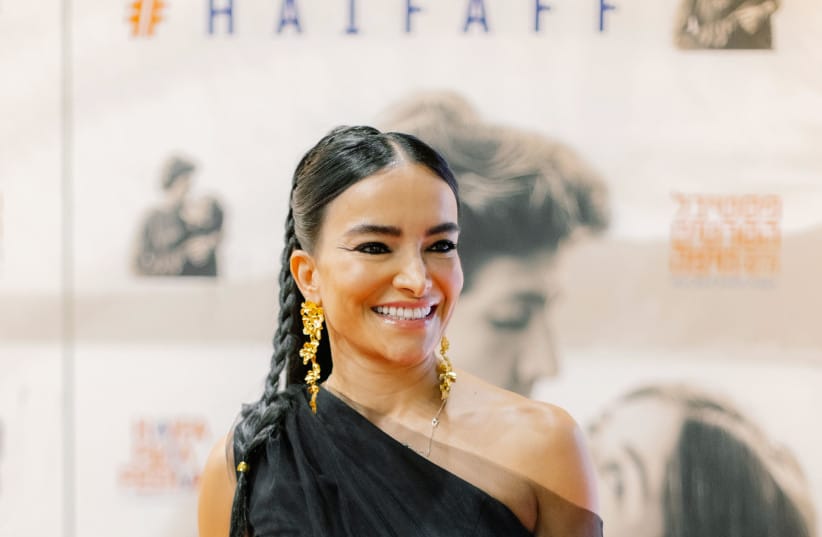 GOLAZIN ARDESTANI attends the Haifa festival this week. (credit: Courtesy of the Haifa International Film Festival)’I want to convey messages of hope’
“You have a microphone and a stage. What you do matters, and the message you communicate matters. If it comes from the heart, it reaches people’s hearts. When I’m onstage, what you see comes from my own life and experiences, both back home and here. I want to convey messages of hope and equality, and encourage people to empower one another.”
“That’s also why I love theater,” she added. “I’m developing a one-woman show called I’m Not Political. It will be about 90 minutes onstage, telling my story and connecting with the audience. It isn’t a musical, but it will have music. I’ll speak, act, and sing. We’re still developing it, and I hope it will premiere in 2027. I would like to bring it to Israel first …
“I have always felt a strong connection between Iranians and Israelis. But there is a difference between reading about Israel and coming here, meeting people and experiencing its culture, music, and food. Haifa’s festival feels very international. It brings together people from different places and backgrounds to watch films and learn about one another. I feel very fortunate to be here.”
As an outspoken female singer who is delighted to perform for Israelis, she knows her life would be in danger at home in her native Iran.
“The last time I visited Iran was in 2011. Since then, London has been home, although I travel a great deal and spend time in Los Angeles and elsewhere in the United States.”
It is difficult for her to be cut off from her family. Her mother married as a young teen and gave up her dream of becoming a doctor to raise a family, then opened a successful fashion business in two cities, and her father worked in a bank.
While Ardestani enjoyed her home life, she did not enjoy being required to wear a hijab, which meant she had to curtail her participation in sports from the age of six at school and nine outside.
“You grew up constantly asking yourself what you could do, what was forbidden, and how to get around a rule while staying safe. It was a kind of double life,” she said. “At school, we also had to line up and chant ‘Death to America’ and ‘Death to Israel.’ I questioned why I had to begin my day calling for anyone’s death.”
She loved music, both traditional Iranian music and Western music, when she was growing up.
“Most of that [Western] music came into our home secretly. You couldn’t simply buy a Madonna cassette in a store. My older brother and sisters had cassettes of artists such as Madonna, Michael Jackson, Whitney Houston, and Mariah Carey. That was my first exposure to music from outside Iran.
“Later, satellite television became very important. People could see and hear things they wouldn’t find on national television. Today, people in Iran can hear my music by satellite or through VPNs. Iranian people find a way.”
She decided to study music in Iran.
She couldn’t study singing as a woman
“The male students could study singing, but women could not, so I played piano and other instruments. I joined Orchid, a female pop band formed after the revolution. We toured and sold out venues, but we could perform only for women. There could be no recordings, photographs, or cameras.
There was supervision, and restrictions on movement and dancing. The audience had to remain seated. Imagine a pop concert like that.”
She recalled the repressive rules that led her to leave Iran. “Even when we had permission to perform, a concert could be canceled for all kinds of reasons.”
She was always curious and questioned what she was told. “I went to different imams and asked them to show me a passage in the Quran that said women couldn’t sing.
They couldn’t show me one. I see fear behind those decisions: fear of women’s voices, of their ability to reach people, and of the messages music can carry. Music is powerful. Women making music can bring change.”
When asked why she ultimately decided to leave Iran, she said, “I was tired of remaining in the background. I couldn’t grow as a singer or an actor. I had also been arrested many times for things such as my work or walking in the street with a boyfriend. Being arrested is frightening because you don’t know what will happen once they take you into the van.
“I once struggled to avoid being taken, and my arm was broken. I couldn’t play an instrument for about two months. You don’t know where they will take you, whether you’ll be able to contact your family, or what charge they might bring against you.”
Gola established her own label in UK
In England, she studied music and received a PhD while building a career as a performer, despite her initial naivete and the obstacles faced by any young female artist in a competitive, male-dominated industry.
“I wanted to help other singers who arrived in London without knowing how the industry worked. I established my own label, Zan Recordings. Zan means ‘woman’ in Farsi. I hope it can help girls and women from different countries and backgrounds make music.
“I released my own songs and contacted radio and television stations directly. I performed live on Manoto television, which reached Farsi-speaking viewers in Iran and across the diaspora. People began sharing the songs.”
But her success came at a price. “Choosing to sing publicly in London was one of the hardest decisions I made. I knew it meant I could no longer go back to Iran. But I wanted what I had experienced to serve a purpose. I couldn’t know whether I could change Iran’s future; I could take a step toward freedom and hope others would, too …
“What scares me is living without purpose. I don’t want fear to determine what I say or do.”
Ardestani spoke passionately about the sacrifices those protesting the regime have made for freedom.
“People went into the streets knowing they could be arrested, tortured, or killed. It’s important for the world to understand that people inside Iran have tried to bring change. When people outside say change must come from within, I want to ask them how they expect people to accomplish that under those conditions. Families may not even be told where an arrested relative is.”
She said that the number of protesters killed by the regime during two days of widespread protests was even higher than has been reported, and that from what she has heard, as many as 100,000 people were killed for demanding their freedom.
She admitted that it pained her that many in the West are indifferent to the struggle of Iranians against the regime.
“People say, ‘I’m not political,’ but politics affects their lives – from the price of milk to what happens to their neighbors. We have to make decisions, or others will make them for us. That is part of what my show, I’m Not Political, is about.”
Hers has been a difficult journey, and she said she hoped that by building a career and speaking out, she could have an impact on the struggle of Iranians protesting their oppression.
“I used to ask myself why I had been born in Iran, because I spent so much of my life fighting for basic rights. Now I value what growing up there taught me: how to find a way forward when something seems impossible. I want to help others feel they can do that, too. … And I dream of the day when people can fly from Tehran to Tel Aviv.”