
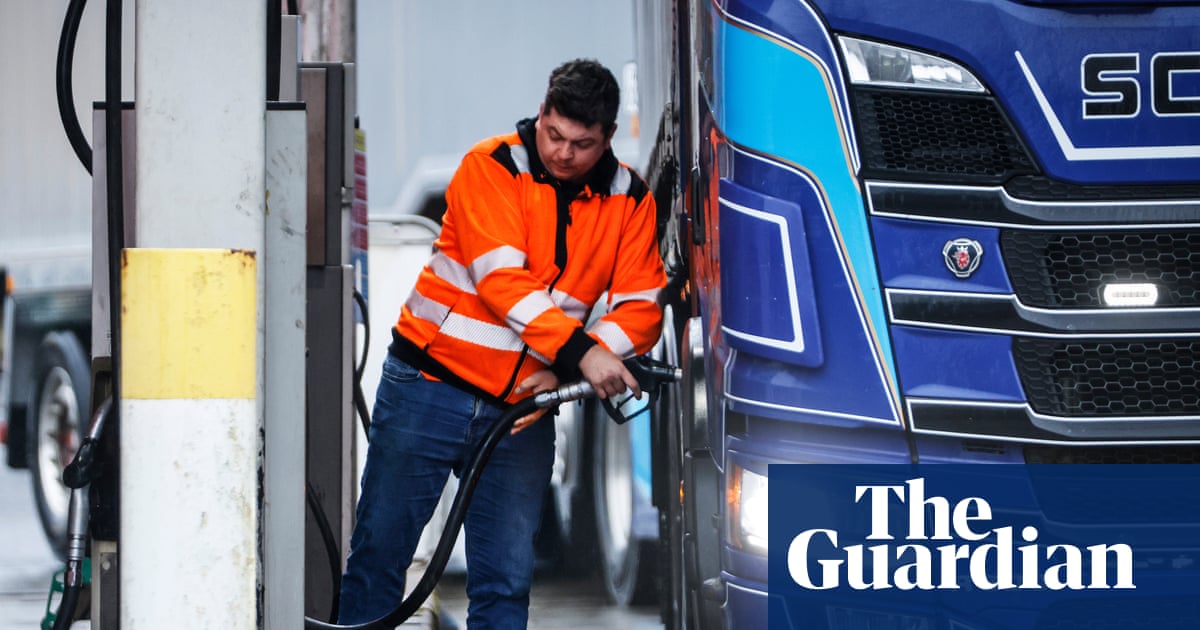
The price of diesel on UK forecourts has hit an all-time high average of 199.18p a litre, as the conflict in the Middle East continues to drive the cost of fuel to record levels.
The price, which previously peaked at 199.09p in June 2022 after Russia’s invasion of Ukraine, could soon top the £2 mark after Donald Trump rejected Iran’s proposal for a seven-day peace deal to reopen the critical oil and gas shipping route through the strait of Hormuz.
The RAC estimates that the cost of filling an average family car with diesel is now almost £110, £31 more than it was at the start of the Iran war, a rise of 40% since 28 February.
“The diesel price has entered new uncharted territory,” said Simon Williams, the head of policy at the motoring organisation.
“This spells pain not only at the pumps for drivers, but for everyone who buys goods or services that rely on diesel lorries and vans. Undoubtedly, these increased costs will be passed on to consumers.”
The cost of petrol is also continuing to rise, with the average price of a litre hitting 174.13p on average, 41p more than at the start of the war and an increase of 31% since 28 February. The cost of filling a full tank is nearly £96, according to the RAC.
Trump has said he is “very seriously” considering a US diesel export ban to try to curb soaring prices, and has urged Ukraine’s president, Volodymyr Zelenskyy, to pause strikes on Russian oil refineries over concerns that they could further push up prices.
Output from Russia’s war-damaged refineries has fallen by almost a third over the past year to reach a 20-year low following sustained drone attacks by Ukraine, according to the International Energy Agency.
“The consequences [of soaring fuel prices] could reach almost every part of UK economic life: supermarkets, manufacturing, construction, agriculture, e-commerce and countless other sectors that depend upon road freight,” said Dr Jonathan Owens, an operations and supply chain expert at the University of Salford.
“So, a geopolitical event and potential policy decision thousands of miles away can travel rapidly through our supply chain: from a refinery to a tanker, to a UK haulier, to a distribution centre, to a supermarket shelf, and ultimately, the price will be paid by the consumer.”
The RAC urged the government, which has extended the 5p cut in fuel duty until the end of the year, to consider expanding the discount or reducing VAT to help motorists at the pump.
“As things stand, another 5p a litre will be loaded on to pump prices by the spring if the current fuel duty cut is fully reversed as planned,” said Williams. “VAT receipts from fuel are also extremely high.”
Before the US-Israeli attack on Iran in February, Brent crude – the international benchmark for oil prices – traded at about $72 a barrel.
skip past newsletter promotionFree newsletter |Every weekday
Sign up to Business Today
Get set for the working day – we’ll point you to all the business news and analysis you need every morning

after newsletter promotion
It hit a peak of $126 a barrel in April, before dipping to $71 at the start of July on hopes of a peace deal. The price of oil climbed by more than 3% on Monday to $108.
In August, the Competition and Markets Authority published a report that found that many petrol stations were too slow to pass on falls in wholesale energy prices to their customers.
The UK competition watchdog said that, while costs overall fell at fuel pumps in June, prices remained significantly higher than before the Middle East conflict, and retailer profit margins were either at or above the historically high levels of 2025.
However, it did not find any evidence of profiteering by fuel retailers on the back of the Iran conflict.
“These extraordinarily high prices are another reminder of just how exposed the UK is to events occurring far away from its shores,” said Williams. “Only a sustained lower oil price – over several weeks, not days – will lead to cheaper prices at the pumps.”
A government scheme called Fuel Finder allows drivers to compare the cost of fuel offered by petrol stations across the UK.