
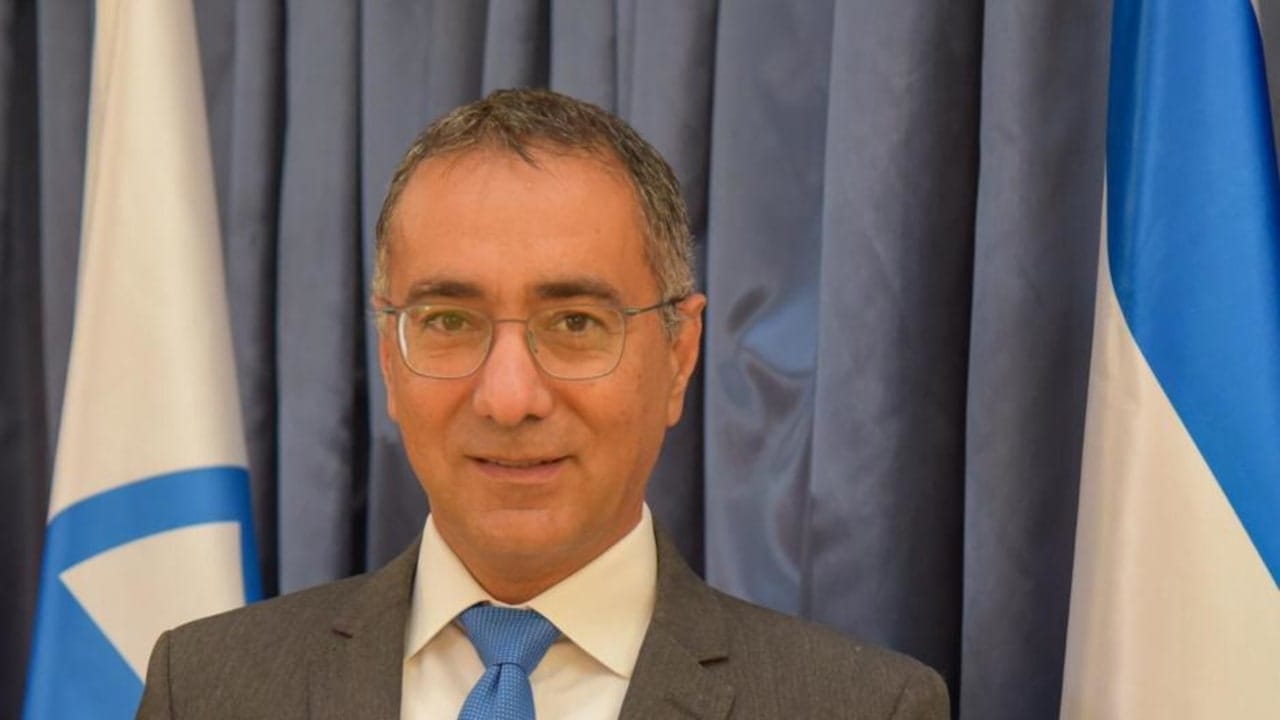
The Dutch measure banning the entry of products from the West Bank into the Netherlands is “outrageous and offensive,” the Foreign Ministry’s Political Director, Gilad Cohen, told The Jerusalem Post on Monday.
Cohen argued that, in practice, it is leading to Israelis being singled out and treated differently from other travelers.
“This is a very offensive law,” Cohen said. “It allows Dutch customs officials to open the luggage of visitors from Israel and check whether they have brought products from Judea and Samaria, east Jerusalem or the Golan Heights.”
The law, which has now entered into force, prohibits the import of products from the West Bank, east Jerusalem or the Golan Heights into the Netherlands. Anyone caught importing such products could face up to six years in prison.
According to Cohen, Israel has already received reports of Israelis being stopped at airports in the Netherlands and asked to open their luggage for inspection.
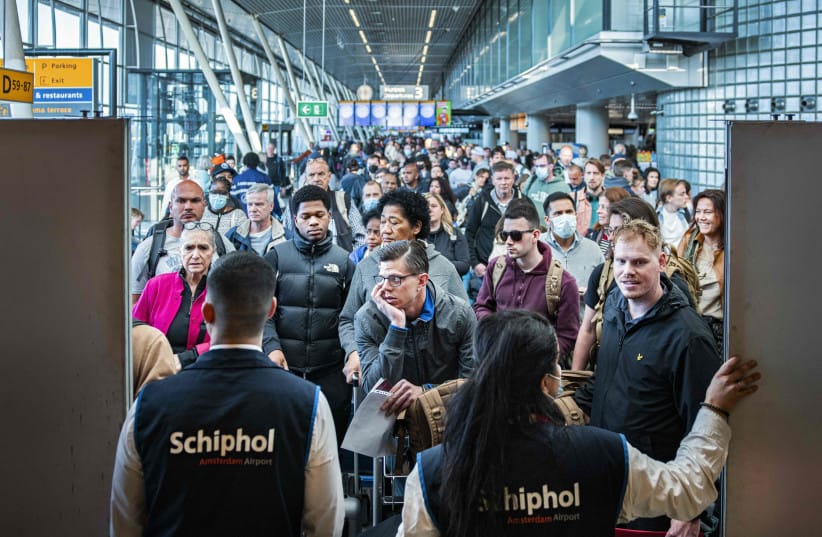 Travelers wait in a departure hall at the Netherlands’s Schiphol airport, a day after a strike by KLM luggage handlers caused many flights to be canceled, near Amsterdam, April 24, 2022 (credit: RAMON VAN FLYMEN/ANP/AFP via Getty Images)
“We sent our consul in The Hague to look into the matter,” he said. “There are indeed signs at the airport explaining the law and telling passengers to expect inspections.”
Cohen explained that Israeli travelers arriving in the Netherlands go through passport control, collect their luggage and then pass through customs.
“At customs, they stop passengers arriving on flights from Israel and tell them to open their luggage,” he said. “They check whether there are products from Judea and Samaria, Jerusalem, the Golan Heights and so on.”
Israel views Dutch decision as significant escalation
Cohen said Israel views the Dutch measure as a significant escalation in relations between the two countries.
“I am not familiar with a precedent for something like this, where Israelis’ luggage is opened, and they are asked where they got a particular item,” he said. “From our perspective, this is definitely an escalation.”
Foreign Minister Gideon Sa’ar announced on Sunday that Israel was revoking the status of Dutch diplomats based in Ramallah and requiring them to return their diplomatic accreditation within seven days as a response to Dutch customs checks. At the end of that period, the immunities and privileges Israel granted them as part of that status will expire.
“The message was that if they want to operate vis-à-vis the Palestinians, there is no problem; they can do so from Ramallah,” Cohen said.
Cohen described the Israeli response as part of a broader policy of countermeasures in response to what Jerusalem views as unilateral and hostile steps.
‘Israel will respond, take countermeasures, to unilateral, hostile measures’
“If someone takes unilateral and hostile measures against Israel, Israel will have to respond and take countermeasures,” he said.
According to Cohen, countries seeking to remain relevant to developments in the Middle East cannot simultaneously take steps that Israel views as unilateral actions against it.
“Unilateral measures will be met by the State of Israel,” he said. “We have no choice. We will not leave this unanswered, and we will not accept it without responding. We are responding.”
Asked whether Israel was concerned that additional European countries could adopt similar measures, Cohen said Jerusalem was working to prevent the Dutch policy from spreading.
“I very much hope that this will not happen, but we need to prepare and make sure that it does not,” he said. “We reserve the right to respond to each case individually.”
Cohen stressed that Israel is in contact with additional European governments and noted that not all EU member states support measures of this kind.
“We hope common sense will prevail,” he said, warning that the consequences of the policy are not limited to residents of the West Bank or the Golan Heights.
“These are measures that hurt all Israelis,” he said. “It hurts every Israeli, regardless of who they are.”
At the same time, Cohen stressed that Israel does not view the Netherlands as a single, unified entity, distinguishing between the Dutch government and other actors in the country.
“There are also friendly elements in the Netherlands. It is not all one monolithic bloc,” he said.
Cohen said Israel had engaged in extensive diplomatic efforts to prevent the policy from taking effect.
“There were a great many contacts with the Netherlands, especially in recent times, at every level, with the authorities there, with the Foreign Ministry and with other officials,” he said.
A local organization in the Netherlands also petitioned the court against the law, but the court rejected the petition.
“This is an outrageous and offensive measure that harms the entire Israeli public,” Cohen said. “The Israeli response is accordingly proportionate, and we view this as a hostile step, and therefore we are responding with the tools at our disposal.”