

The elusive former head of Manitoba’s lone law school — who’d been in the wind since being disbarred 2½ years ago — racked up millions in debt in Switzerland before he was recently picked up by police in France.
Jonathan Black-Branch owes the equivalent of $5.67 million to Swiss banks, in municipal taxes, mortgage payments and an art gallery, among other parties, according to public Swiss government financial documents reviewed by CBC News.
“We can only guess why individuals engage in this type of behaviour,” said Christian Leuprecht, security expert and co-editor of the book Dirty Money: Financial Crime in Canada.
“But clearly this is somebody who understood contract law, corporate law and how to weaponize that against the people who lent him money and also how to obfuscate processes.”
Black-Branch, the former University of Manitoba law school dean, was recently arrested in France, years after disappearing from his post and failing to appear at his professional misconduct hearings, which revealed hundreds of thousands of dollars in misappropriated funds from the university.
A search of “Jonathan Lee Black-Branch” in the Swiss government’s official Gazette generates at least 22 hits detailing debts and orders to pay in 2025 and 2026.
The debts total 3.29 million Swiss francs, or $5.62 million, according to Bank of Canada exchange rates as of Thursday.
Some of those public debt records suggest Black-Branch owed $71,700 to a Zurich-based art gallery.
Five other records suggest he owed over $30,000 in state and municipal taxes to the canton of Thurgau, a jurisdiction in the northeast of Switzerland. Some of those taxes go back to 2023, according to Swiss records.
The majority of the Swiss debt — $5.43 million Cdn — is tied up in real estate agreements, including mortgage payments owed, to Thurgauer Kantonalbank in Switzerland, records suggest. One such entry — dated March 3, 2026 — includes a note describing Black-Branch as “currently of unknown whereabouts.”
He vacated his position as dean of the University of Manitoba law school suddenly in 2020.
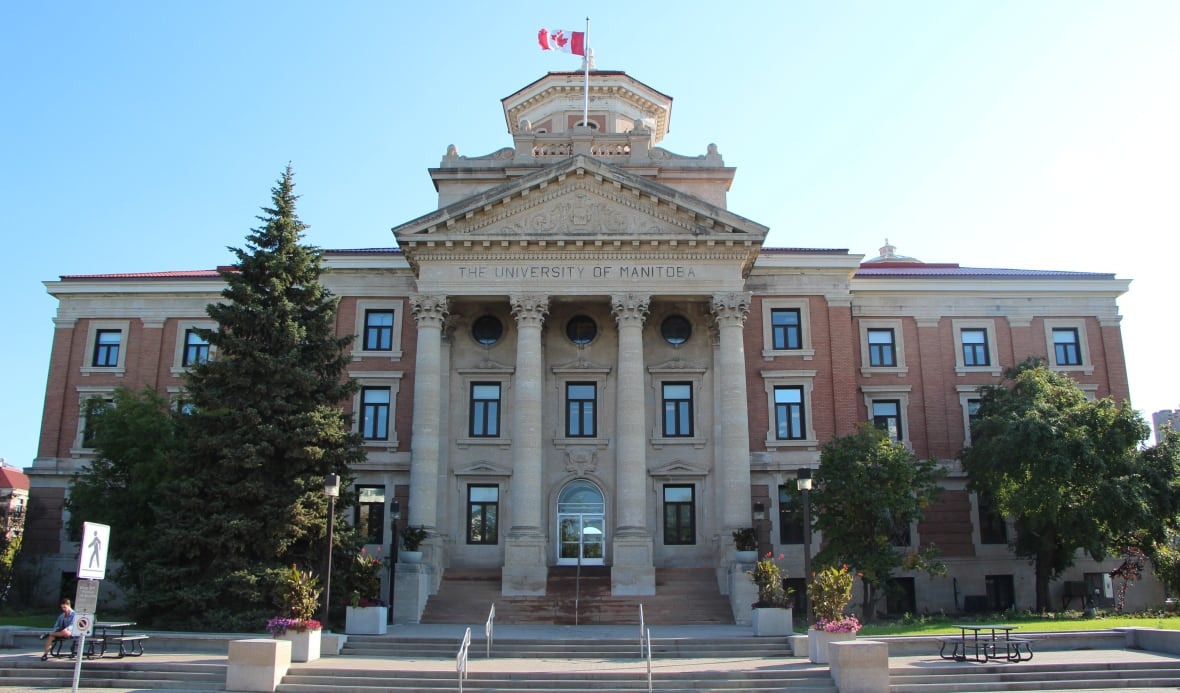 The law society found Black-Branch misappropriated over $600,000 from the University of Manitoba and an endowment fund while dean of its law school. (Bryce Hoye/CBC)
Black-Branch disappeared amid drawn-out professional misconduct proceedings in Winnipeg that ultimately led to his disbarment by the Law Society of Manitoba in early 2024.
The law society found he misappropriated over $600,000 from the U of M and an endowment fund while dean of the law school from 2016-2020.
Black-Branch misspent that on expensive meals at a Winnipeg board game restaurant and at the private-members’ Manitoba Club, as well as on travel and his own professional development coursework at schools such as Yale and Harvard.
Though reluctant to pursue criminal charges initially, the U of M asked Winnipeg police to investigate in late 2023, shortly before Black-Branch’s disbarment. His whereabouts were unknown by then.
Black-Branch, 64, was subsequently disbarred in the United Kingdom and Wales last year and fined nearly $5,000.
A Canada-wide warrant had been in effect since earlier this year, ahead of Black-Branch’s recent arrest.
Extradition processes have begun, but it’s too soon to say whether that will necessarily lead to him being sent back to Canada soon, or at all.
“France certainly isn’t a country that is reluctant to extradite, it is just there are many checks and balances,” said Gaspard Lindon, an attorney with the Paris Bar Association, where he practises criminal law and general litigation.
If someone were to consent to extradition, that could expedite things, he said.
Lindon, who isn’t involved in Black-Branch’s case, suggested that from what he understands of the case, Black-Branch might be less likely to do that.
 Christian Leuprecht, who co-edited the book Dirty Money: Financial Crime in Canada, says the lack of co-ordination between North American and European credit rating agencies can create an opening for financial crime. (Submitted by Christian Leuprecht)
“If you’ve been caught in a foreign country, and you’re contemplating spending weeks and months … potentially in a foreign cell, it makes a lot of sense sometimes to consent to being extradited,” he said. “But then, if you’re litigating and not consenting to extradition, then it can take weeks, months. It all depends.”
Leuprecht, a professor at the Royal Military College of Canada, said the lack of co-ordination between North American and European credit rating agencies can create an opening for someone with the legal and financial know-how to exploit financial institutions.
“You find yourself a new financial institution, and you show up with enough money to get yourself started. You’re probably able to convince people that you’re worthy of credit,” said Leuprecht, noting one area of expertise Black-Branch has is corporate law.
“This seems to be a case of somebody who’s turned his professional knowledge against his own profession.”
Leuprecht said his work on financial crime suggests there are a few key “professional enablers” — accountants, lawyers, real estate agents and others — who are “essential to making illicit financial flows work, especially at scale.”
Lawyers play a particularly important role in global financial crime, Leuprecht said, because of how they might set up corporate structures to reroute money illicitly.
“It’s one thing to get him extradited. It’ll be a very different matter of actually trying to recover any of the funds,” he said.