
President Donald Trump on Monday announced a plan for a $15 billion steel mill in Iowa.
“This steel will be mined, melted, and made right here in the USA, which is something very unusual,” Trump said in the Oval Office, where he was joined by Commerce Secretary Howard Lutnick; Joe Broking, the CEO of the company building the plant; and other business leaders.
Mesabi Metallics is constructing the plant with the aim of starting production by 2030, a White House official said. The facility is expected to produce 10 million tons of steel a year and create as many as 1,750 permanent jobs in the state, the official said.
The plant will be capable of supporting defense sector requirements for high-grade steel, the official said.
The president claimed the plant will “produce some of the highest quality, most affordable steel anywhere in the world.”
The Wall Street Journal was first to report on the new facility.
The plant will use iron ore from a new mine that the company invested $2.5 billion to build in Minnesota. The mine, which will come on line in the coming weeks, will produce about 7.5 million tons of iron per year and create about 350 jobs in the state, the White House official said.
The mine is based in Minnesota’s Mesabi Iron Range, which stretches 80 to 100 miles and contributed about 60% of total iron ore production in the U.S. during the 20th century, according to the U.S. Geological Survey.
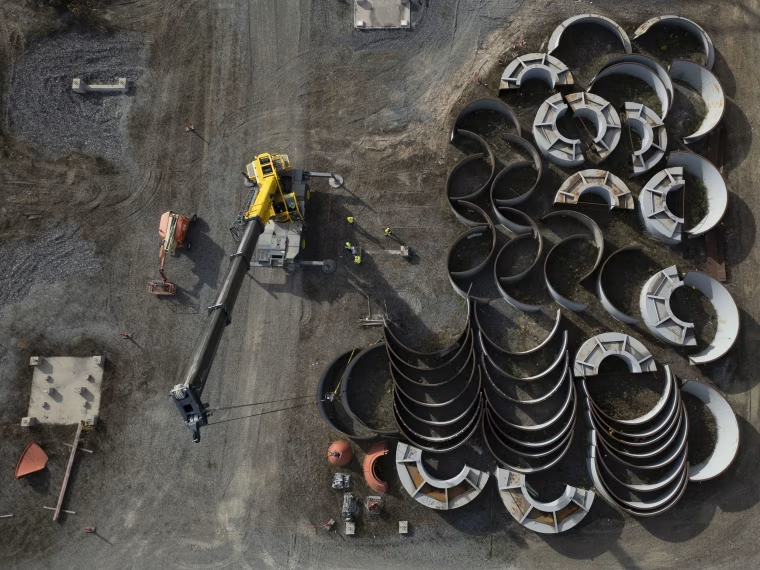 Components at the Mesabi Metallics pellet production plant in Nashwauk, Minn.Aaron Lavinsky / ZUMA Press via Shutterstock file
“It’s the first new iron ore mine in the United States in more than 50 years,” Trump said.
The Export-Import Bank, the federal government’s export credit agency, will issue up to $10 billion in financing for Mesabi Metallics’ expansion there, an agency release said.
Trump has prioritized the expansion of the U.S. manufacturing sector, including by taking aim at steel imports as part of a wide-ranging trade policy. Although the Supreme Court earlier this year struck down many of the tariffs he imposed, it did leave duties in place on imported steel and aluminum. The U.S. currently levies a 50% tariff on most steel imports.
Trump on Monday touted his efforts to try to reinvigorate the industry.
“Soon after my inauguration, I imposed powerful 50% tariffs on all foreign steel, and now our steel industry is roaring back to life,” he said. “Everyone’s building their plant here because they don’t want to pay tariffs.”
In a letter to Trump last week, steel industry groups urged the president to “stand firm against efforts to weaken the tariffs” as U.S. steelmakers invest in new mills domestically.
“Weakening the tariffs now would put that progress at risk, threatening American jobs and the economic and national security benefits the policy was designed to protect,” they warned.