
Israel is currently experiencing an unprecedented level of international isolation, illustrated by Netanyahu’s speech at the United Nations, but it is also losing the United States, without which it cannot survive.
Over the years, the United States and Israel developed a “special relationship” based on a combination of “hard” elements, such as strategic interests, and “soft” ones, including similar histories of nation-building through waves of immigration, a pioneering ethos and frontier settlement, shared values such as liberal-democratic government, support from the Jewish community and from both major U.S. parties — Democrats and Republicans — and favorable public opinion.
Although some of these foundations had begun to crack even before the war, they started to unravel during it.
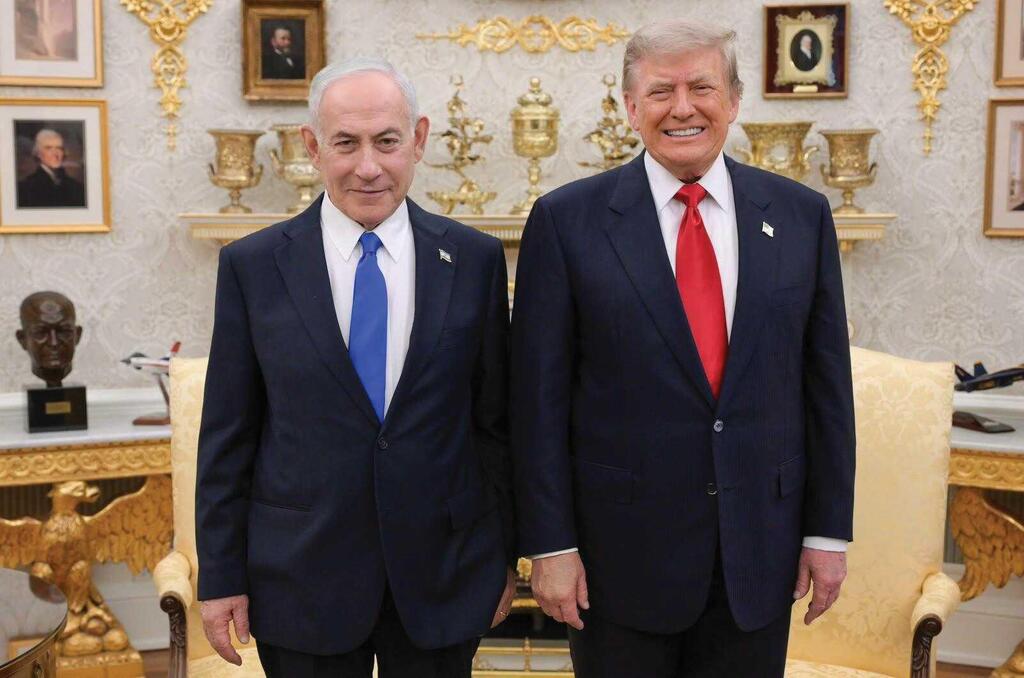
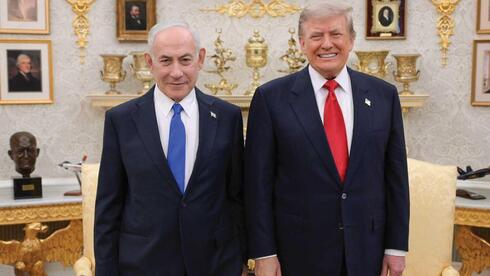
Donald Trump and Benjamin Netanyahu: Trump may become the last pro-Israel US president
(Photo: GPO)
Trump’s retreat from Western leadership and his focus on the Americas have reduced Israel’s importance as a strategic ally on the global level. His business interests in the Middle East also have diminished Israel’s importance in the region while increasing that of the wealthy Gulf states.
The fact that Israel is the region’s only democracy long played a major role in the “special relationship.” Yariv Levin’s judicial and constitutional overhaul severely damaged one of the two countries’ most important shared values.
Israel also has lost bipartisan support in Congress. Recognizing the importance of maintaining good relations with both Democrats and Republicans, Israeli leaders had traditionally avoided intervening in U.S. domestic politics.
Netanyahu broke with that practice when he openly sided with Republican presidential candidate Mitt Romney in the 2012 election, and again in 2015, when he addressed a joint session of Congress and attacked President Barack Obama over the nuclear agreement he was pursuing with Iran.
In every presidential election since then, Netanyahu has supported Trump, deepening the alienation of Democrats from both him and Israel.
At the same time, the progressive wing of the Democratic Party, which is highly hostile toward Israel, has grown stronger. A coalition of progressives, Muslims and Black voters has achieved political successes, including the election of Zohran Mamdani as mayor of New York City.Progressive candidates have won Democratic primaries ahead of the coming November midterm elections while attacking Israel with unprecedented intensity. Never before have progressive and young voters conditioned their support for candidates on demands that they denounce Israel and pledge to vote against the military aid it receives from the United States.
There are also influential far-right figures in the Republican Party, some of them antisemitic, who sharply criticize Israel and argue that it is a burden on the United States.
Loss of public support in America
During the Gaza war, American public support for Israel collapsed entirely. Before the war, roughly two-thirds of the public viewed Israel and its struggle with the Palestinians favorably. Today, the picture is reversed.
A large majority now views Israel negatively and supports the Palestinians. This trend is especially pronounced among Democrats, minorities and young people, who tend to oppose wars and place greater emphasis on liberal values and social justice.
The decline continued even after ceasefire agreements were signed. Israel’s negative image damages the “special relationship” because it is reflected in both Congress and the administration.
Alongside the political parties and public opinion, Israel also has lost much of the support of the American Jewish community, which stood by it for generations.
American Jews were horrified by the October 7 massacre and initially expressed solidarity with Israel, but the way the war in Gaza was conducted gradually led many to distance themselves.
At the same time, efforts by anti-Israel groups to associate American Jewry with the conduct of the Netanyahu government and the IDF have fueled waves of antisemitism on a scale never before seen in the United States.
The “special relationship” with the United States endured periods of crisis and war, but today there are doubts about whether the trend can be reversed.
 Eytan Gilboa
It is entirely possible that Biden and Trump will be remembered as the last pro-Israel presidents in the White House.
Without the United States, Israel cannot survive. Netanyahu and the current coalition are incapable of halting the erosion of the “special relationship”; through their words and actions, they have accelerated it.
Restoring relations with Washington will require repairing ties with moderate Democrats and rebuilding bipartisan support, confronting extremist and anti-Israel elements in both parties, working more effectively with Jews, young people and minority communities and preserving democracy and the separation of powers in Israel.
This is an abridged version of an article published in “The Arena,” a journal of Reichman University. Professor Eytan Gilboa is an expert on the United States and communications at Reichman and Bar-Ilan universities