
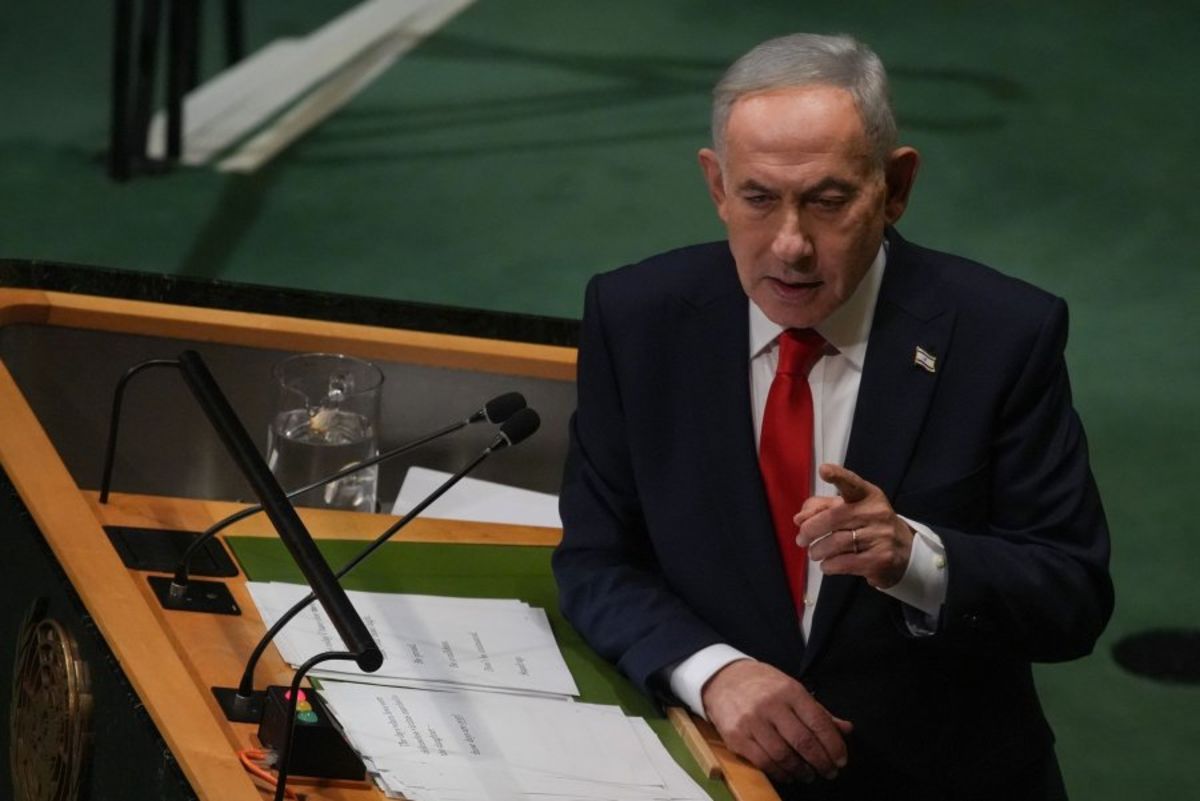
Sept. 28 (UPI) — Israeli Prime Minister Benjamin Netanyahu has urged Paraguayan President Santiago Peña to support a U.S.-backed initiative encouraging member countries to withdraw from the International Criminal Court, as Israel seeks to expand a new strategic alliance with Latin American governments.
Netanyahu raised the proposal Thursday during a meeting in New York last week with Peña, Panamanian President José Raúl Mulino and Bolivian President Rodrigo Paz on the sidelines of the U.N. General Assembly.
Netanyahu’s office said the Israeli leader welcomed Israel’s relations with Latin American countries and invited the three presidents to join the Isaac Accords and the U.S.-backed initiative calling on countries to withdraw from the International Criminal Court, according to Paraguayan newspaper Última Hora.
Peña’s government, however, did not mention the court proposal in its account of the meeting.
Paraguay’s presidency said the leaders discussed “mechanisms to consolidate lasting security” and efforts to advance a strategic alliance between Israel and Latin America, Última Hora reported Thursday. The government said the leaders also reaffirmed shared values and their commitment to fighting terrorism.
Paraguay has not publicly announced a decision about withdrawing from the court.
The proposal would represent a significant change in Paraguay’s relationship with the court. Paraguay is a party to the Rome Statute, the treaty that established the court, while the United States is not. Paraguay is listed among the court’s member states.
Panama’s EcoTV reported Netanyahu invited all three countries to join the Isaac Accords, as well as the U.S.-backed initiative involving the court.
Separately, TVN Panamá reported Mulino discussed cooperation with Israel on organized crime and drug trafficking, with Israel proposing expanded cooperation in security, trade and artificial intelligence.
In Bolivia, the meeting drew criticism from former President Eduardo Rodríguez Veltzé, who noted that Netanyahu is subject to an International Criminal Court arrest warrant.
Paz, meanwhile, publicly described the meeting as focused on irrigation technology, water management, agroindustrial development and strengthening production, according to Bolivian newspaper La Razón.
Bolivia’s inclusion is particularly notable because the country is a founding member of The Hague Group, established in 2025 in part to support enforcement of court’s arrest warrants and decisions related to the Israeli-Palestinian conflict.
Netanyahu and Argentine President Javier Milei launched the Isaac Accords in April to strengthen cooperation between Israel, Argentina and other governments in the Western Hemisphere.
The initiative calls for cooperation against terrorism, antisemitism and drug trafficking, as well as closer coordination on innovation, technology, trade and economic policy, according to a joint declaration by Israel and Argentina. The declaration says the initiative was inspired by President Donald Trump’s Abraham records.
The court proposal comes amid Israel’s continuing dispute with the Hague-based court. It issued an arrest warrant for Netanyahu in November 2024 after judges said there were reasonable grounds to believe he bore criminal responsibility for alleged war crimes and crimes against humanity connected to the war in Gaza.
The court lists Netanyahu as “at large.” Israel has challenged the court’s jurisdiction and proceedings.