
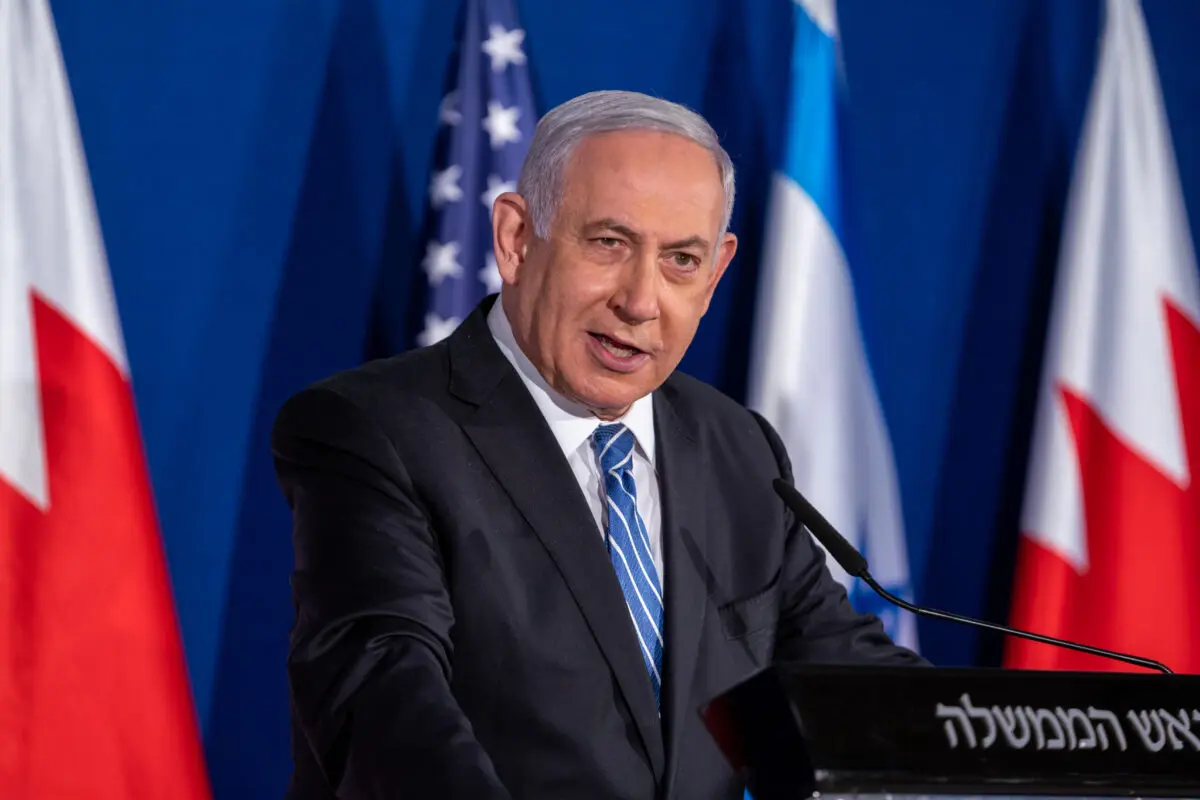
Israeli Prime Minister Benjamin Netanyahu’s speech at the U.N. General Assembly last Thursday was a direct response to international criticism and a forceful defense of Israel’s actions thus far. Despite the fact that many delegates walked out as he took the podium, Netanyahu continued to defend Israel’s actions in the Middle East, condemn antisemitism, and attack critics, such as New York City Mayor Zohran Mamdani and Turkish President Recep Tayyip Erdoğan.
In previous U.N. General Assembly speeches, Netanyahu attempted to use the U.N. platform to expose Iranian activities, such as in his presentation in 2018, where he expressed concern over a secret Iranian nuclear facility. However, according to The Times of Israel, he did not present comparable new intelligence about Iran’s military capabilities in this year’s speech. Instead, he declared in his speech that Israel had succeeded in preventing Iran from developing atomic bombs and predicted that the current Iranian government would soon fall.
The rest of Netanyahu’s speech focused on defending Israel’s conduct in Gaza and rebutting criticisms surrounding settler violence in the West Bank, as well as attacking those who accuse Israel of genocide.
Netanyahu attempted to defend Israel against criticism surrounding settler violence by portraying the perpetrators as “young juvenile delinquents,” and described the focus on settler violence as an “obsession.” He emphasized that Israel is a country governed by law, and downplayed the number of Palestinians killed by settler violence every year, describing it as “maybe one or two.” However, according to data gathered by the U.N.’s Office for Coordination of Humanitarian Affairs (O.C.H.A.), it is reported that 23 Palestinians had been killed and more than 1,100 injured as a result of settler violence since the beginning of 2026 alone.
He directly blamed Turkey for being a “super-spreader of antisemitic lies,” accusing President Erdoğan of tyranny and hosting Hamas terror chiefs. In addition to Erdoğan, Netanyahu also accused Mayor Zohran Mamdani of antisemitism and falsely accusing Israel of genocide. In response to Netanyahu, Mamdani described his speech as an attempt to sanitize Israel’s conduct toward Palestinians. These two opposing perspectives represent two fundamentally different interpretations of the conflict, and the disagreement paints a picture of the larger international diplomatic struggle surrounding Israel.
Overall, Netanyahu’s U.N. address speech reflects how divided the international community remains over Israel’s actions and the ongoing conflicts in the Middle East. However, rather than focusing on resolving the conflicts, most of the speech was dedicated to defending Israel’s actions and responding to critics. His limited discussion about long-term strategies calls into question how Israel intends to achieve lasting regional security, while the conflicting responses from Erdoğan, Mamdani, and other international leaders illustrate how difficult it is to establish a shared understanding of the same conflict. These extreme divisions in perspective continue to strain international relations and can make diplomatic solutions increasingly difficult to achieve in the future.
Ultimately, while Netanyahu’s speech was mainly focused on defending Israel, it also calls into question how the Middle East will go about finding a suitable and sustainable path towards peace and stability in the future when the region is so deeply distrusting amongst its own groups.