
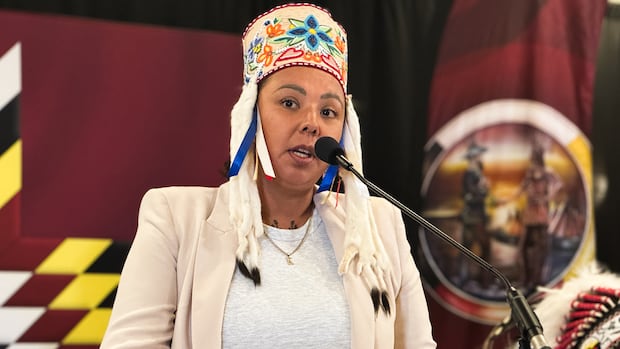
The Assembly of Manitoba Chiefs is “disappointed” by Premier Wab Kinew’s comments last week, when he asked Bloodvein First Nation not to prevent licensed hunters from accessing public lands and suggested the move could provoke a hateful reaction.
“We are definitely disappointed at the Assembly of Manitoba Chiefs that the premier would be more concerned about, you know, the actions of others against First Nations, when we’ve continually dealt with racism and discrimination,” Grand Chief Kyra Wilson of the Assembly of Manitoba Chiefs said in an interview with CBC.
“In this case, he basically is implying that Bloodvein needs to let non-Indigenous people into their territory to hunt wherever, whenever.”
Kinew responded to Wilson’s comments in a scrum with reporters at the Manitoba Legislative Building on Monday afternoon.
“I’m the premier of Manitoba, and we’re one united province,” he said. “I want to make sure that there’s fairness and people aren’t being harassed, and people have the right to hunt legally.”
“As the premier, everyone’s free to make your comments on the job that I do, but I’m elected to serve everybody, and that’s what I intend to keep doing.”
At a news conference in Selkirk last week, Kinew said the province issued a cease-and-desist letter to Bloodvein.
Turning licensed moose hunters away from public lands provokes a negative reaction toward Indigenous people, he said.
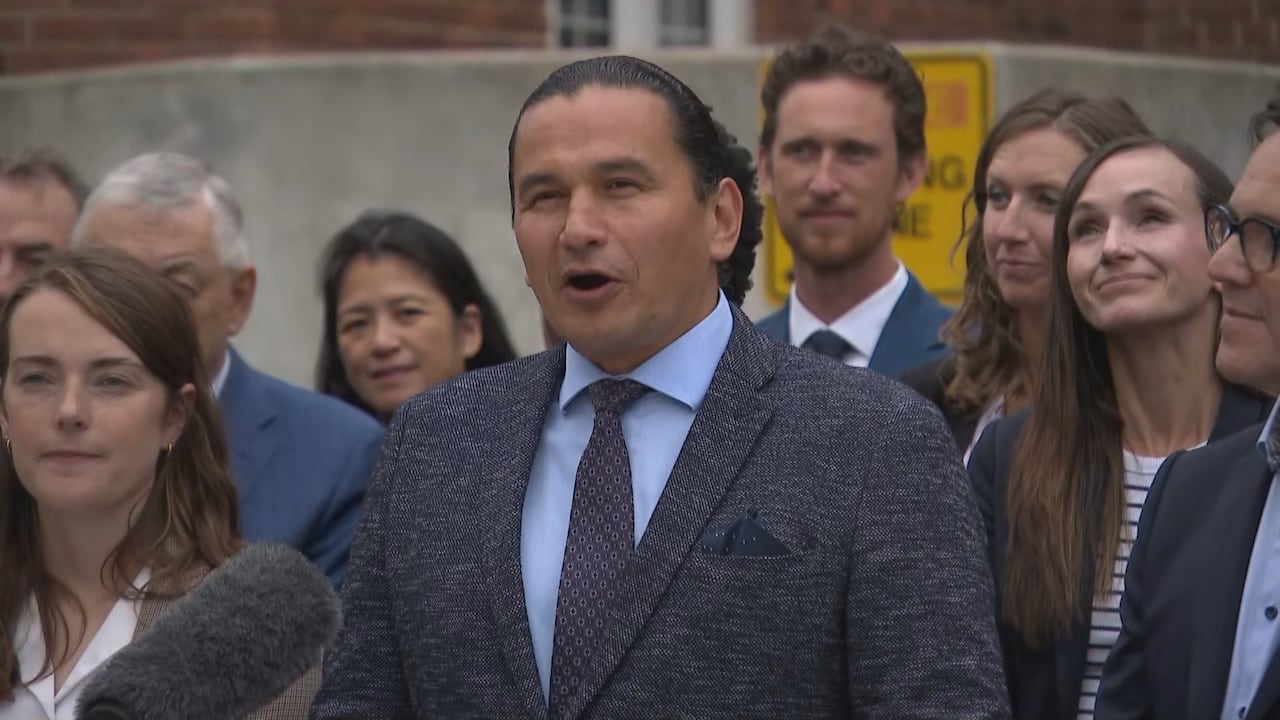 Manitoba Premier Wab Kinew says the province issued a cease-and-desist letter ordering Bloodvein First Nation to stop turning licensed hunters away from Crown lands within their traditional territory. (CBC)
“Let’s be honest, it’s going to be a hateful reaction in response, and all that’s going to do is escalate,” the premier said on Friday.
Bloodvein set up a checkstop last year to prevent drugs and alcohol from entering the community but later also used it to deter hunters from accessing the territory, citing a dwindling moose population.
In a statement issued Sunday afternoon, the Assembly of Manitoba Chiefs rejected the premier’s suggestion that these actions would provoke a hateful response.
If the premier is concerned about First Nations people facing hatred or violence, he should protect them, Wilson said in the statement.
First Nations people are not responsible for racist reactions to their communities’ decisions, she said.
CBC News has reached out to the province for comment.
In the statement, the Assembly of Manitoba Chiefs called on the premier to address the conservation and community safety concerns of Bloodvein First Nation.
Similar to both Pimicikamak Cree Nation and Misipawistik Cree Nation, Bloodvein is concerned about a declining moose population, saying it threatens their food security.
“The real issue that we’re dealing with right now is First Nations communities are — specifically Bloodvein in this instance — are wanting to protect, you know, the wildlife within their territory,” Wilson said to CBC News.
The Southern Chiefs Organization said in a statement Monday morning that it stands with the actions Bloodvein, Misipawistik Cree Nation and Pimicikamak Cree Nation are taking to protect their moose populations and their territories.
It is calling on the province to engage directly and respectfully with the First Nations and work toward a solution that respects treaty rights, First Nations jurisdiction and traditional knowledge.
Pimicikamak and Misipawistik First Nations have both asked licensed hunters to not hunt this year on their traditional territories.
The Manitoba Wildlife Federation said it’s been receiving reports of licensed hunters being turned away from Bloodvein for the second year in a row.
Assembly of First Nations National Chief Cindy Woodhouse Nepinak issued a statement on social media on Sunday in support of Bloodvein’s leadership and citizens acting to conserve and protect their traditional territories and resources, saying it’s within their rights and responsibilities.
Nepinak called on the Manitoba government to immediately meet with Bloodvein leadership and to establish decision-making processes “respecting free, prior and informed consent.”
In a statement on Friday, Bloodvein First Nation said nobody, regardless of membership in the First Nation, can hunt moose in their traditional territory without a permit from their council.
They also have had discussions with hunters who have come to their checkstop about seeking permission, avoiding certain areas and sharing with the community if they have a successful hunt, their statement said.
The premier said Friday that the cease-and-desist letter ordering the First Nation to stop turning away licensed hunters at a checkpoint near its territory was sent after the province tried to find an “amicable solution” with the First Nation.
Wilson said in the AMC statement that she found the premier’s approach particularly disappointing given the expectations accompanying his leadership as a First Nations premier, and given his knowledge and understanding of the history of governments using police to impose decisions on First Nations people.
“What we have continually seen is that whenever, you know, government, any level of government doesn’t agree with the decisions of First Nations, what we see is a very aggressive approach,” she said.
“Hopefully it doesn’t come to the case where RCMP get involved.”
Kinew said the cease and desist letter was sent to RCMP on Sept. 21. However, it appears police have yet to take any enforcement action — which the Manitoba Wildlife Federation has been calling for.
In Wilson’s statement, she questioned whose safety and whose laws receive attention, and why First Nations struggle to get police to protect them but face demands for enforcement when they try to protect themselves and their resources.
On Friday, Kinew said there are ongoing discussions with the First Nation.
Responsibilities under treaty agreements work both ways, he said, but “if you’re causing division between Indigenous and non-Indigenous and not letting non-Indigenous people participate in the sharing of the land, that’s not right either.”
Wilson said sharing land resources is what First Nations across the province and beyond have been doing.
“And whatever little that we have left now, we are wanting to protect that,” Wilson said.
“It’s not up to government to decide what is best for us as First Nations.… We have the ability to make those decisions and we are making those decisions, and government needs to respect that.”