
Nicknames for crops can be highly complimentary. Cotton, for example, has basked in its “White Gold” reputation since the 19th century, while wheat rules across many regions as the “King of Cereals.”
As monikers go, though, few can match the level of flattery bestowed upon “the tree against hunger,” the “banana on steroids” and the “wonder crop.” Yet if you live outside of Ethiopia, there is a good chance you have never even heard of the crop’s common name: enset.
Despite being a staple food for more than 20 million people across the East African country, in terms of global renown the plant — capable of growing 10 meters (33 feet) tall — is insignificant compared to “the big three” crops that supply more than half the world’s calories: rice, wheat and maize.
For scientists who closely study enset’s qualities, like UK-based conservation biologist James Borrell, it’s a case of underappreciation that is both bothersome and baffling.
“In terms of being generalist and adaptable, it’s amazing,” Borrell told CNN. “I sound like I’m the poster boy for just how cool enset is, and I sort of am.”
And yet Borrell had not heard of enset when in 2017, he began work at the Royal Botanic Gardens in Kew, West London, which boasts almost 17,000 species of plants at its 320-acre site.
It soon became apparent to Borrell why enset, which belongs to the banana family (Musaceae) of flowering plants, had not previously been on his radar. Though wild enset is native to a range of countries across Africa, from northerly Sudan down to Mozambique on the continent’s southeast coast, the crop is used almost exclusively in Ethiopia.
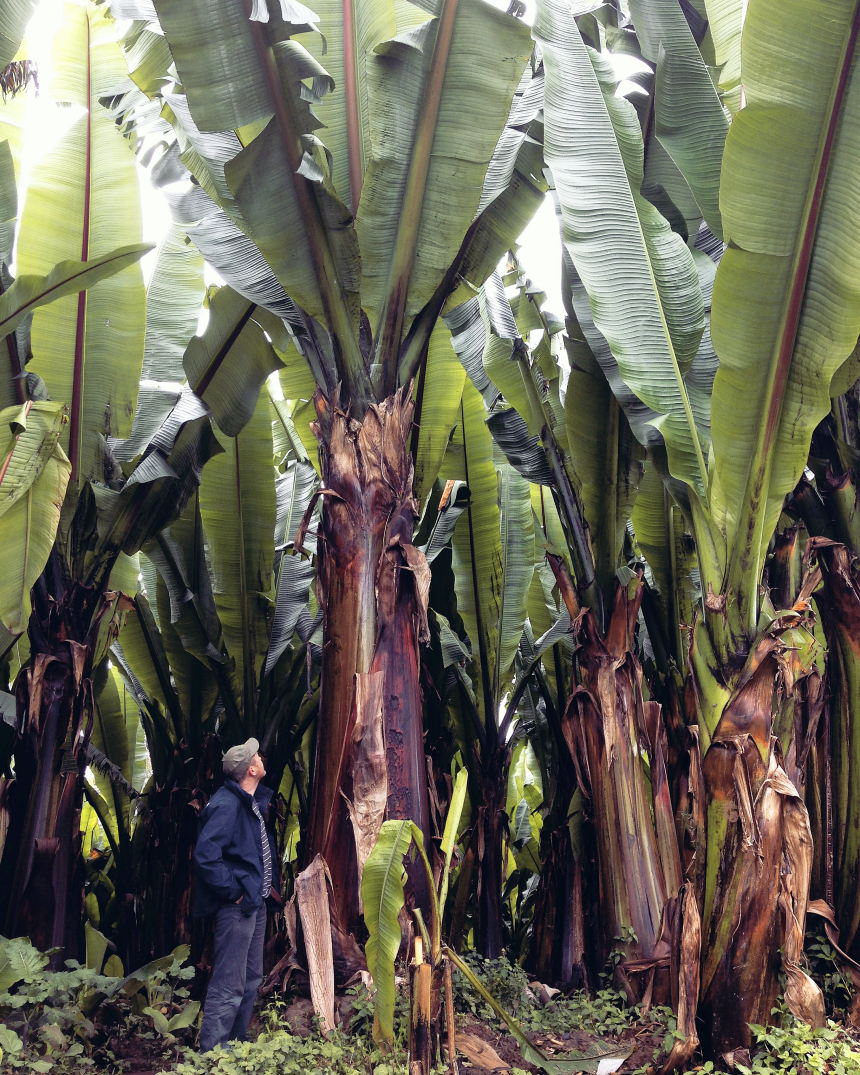
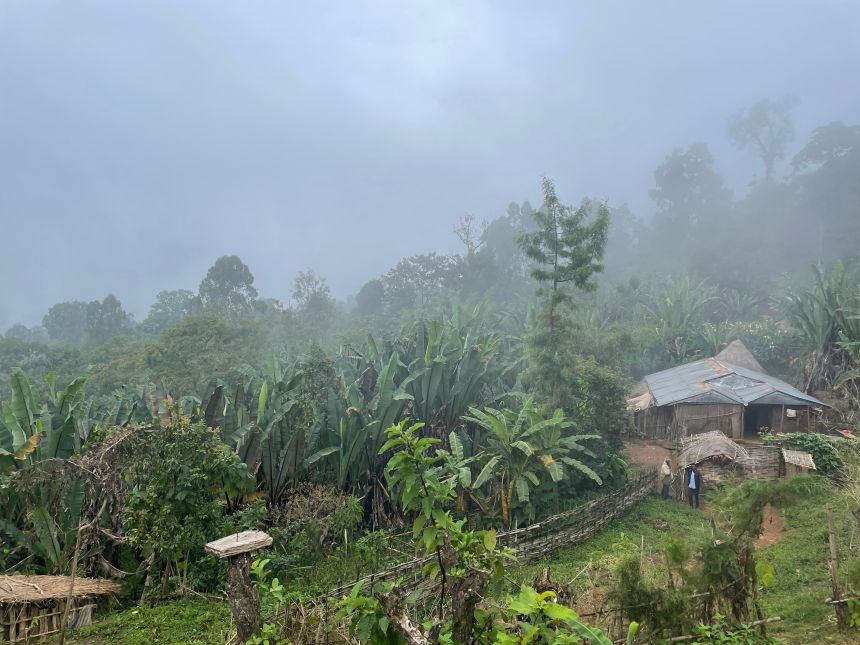
Its cultivation range is even narrower, limited to the country’s southwestern highland regions. There, anywhere between 1,500 and 3,000 meters (4,921 and 9,843 feet) above sea level, farmers tend rows of what could easily be mistaken for trees, with green leaves up to 5 meters (16 feet) long sprouting from a central spine.
Like bananas, though, enset is not a tree but a giant herb, devoid of wood. Its “trunk” is actually a pseudostem of overlapping leaf shafts packed tightly together, and it is this structure that, along with the corm — a fleshy underground root resembling a giant tuber — is pulverized, combined with yeast and fermented in large underground pits.
Between three months and two years later, the resulting mixture is used to create a bread-like Ethiopian staple known as kocho. A byproduct of the pulverization process is bulla, a liquid squeezed from the starchy pulp that can be concentrated into a white powder and then rehydrated to make dumplings and porridge.
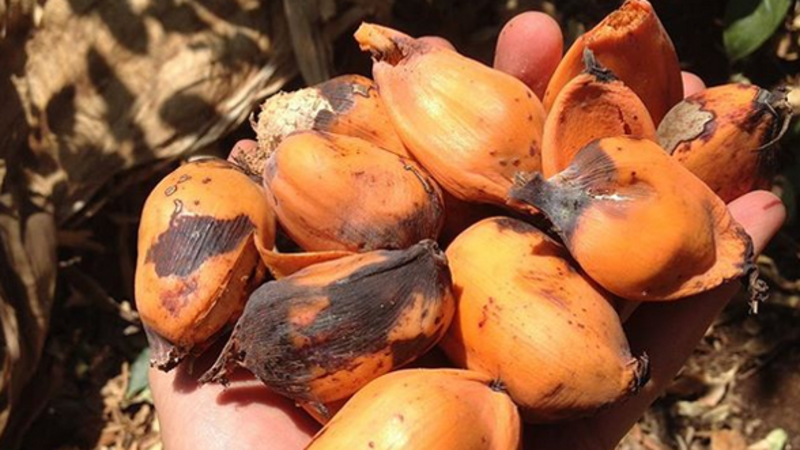
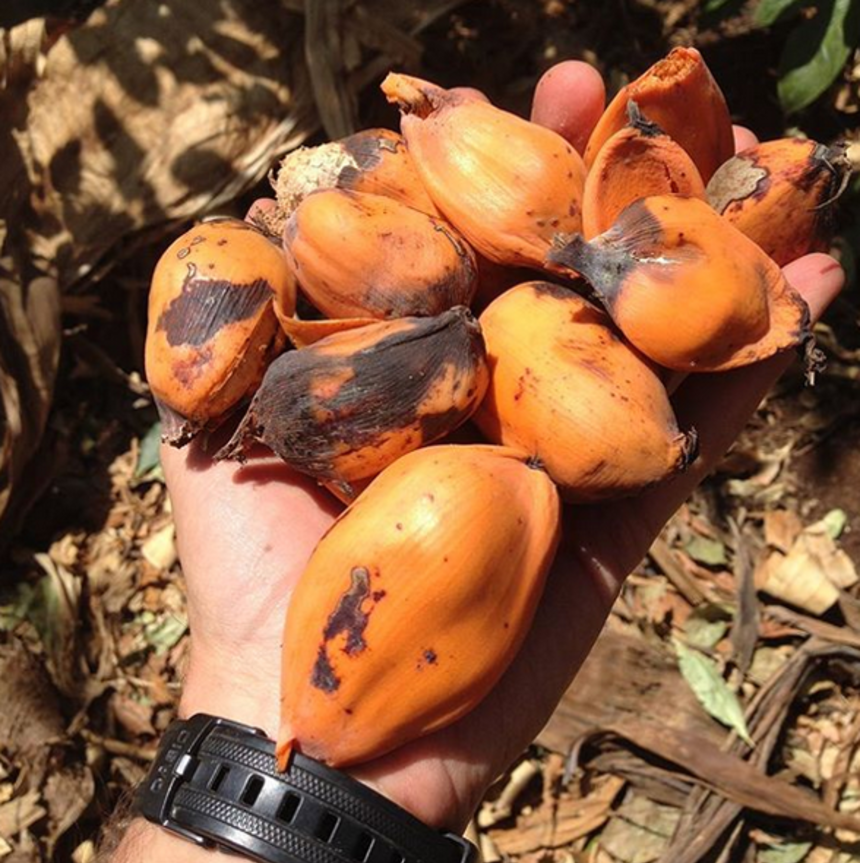
What you won’t find being served up, however, are the enset’s yellow or orange-colored fruits. While the plant’s towering size and resemblance to its more famous banana cousin has earned it the “steroids” nickname, its fruits — filled more by hard black seeds than tasty flesh — are inedible, which is why it’s also known as the “false banana.”
Yet enset is not short on real benefits. High in yield and tolerant to drought and disease, just 60 plants can sustain a family of five for a year. What’s more, it is a perennial crop capable of being cultivated and living longer than two years without the need to be replanted, whereas the life cycles of most major food and grain crops, including the aforementioned big three, are completed in a single growing season.
Enset is so adaptable and climatically versatile that it could be cultivated across large swaths of southern and eastern Africa, a 2021 range modelling study co-authored by Borrell found. Current cultivation areas could be expanded 12-fold to feed as many as 111.5 million more people across sub-Saharan Africa, a region where food and nutritional insecurity is rising despite global agricultural production growth, the study said.
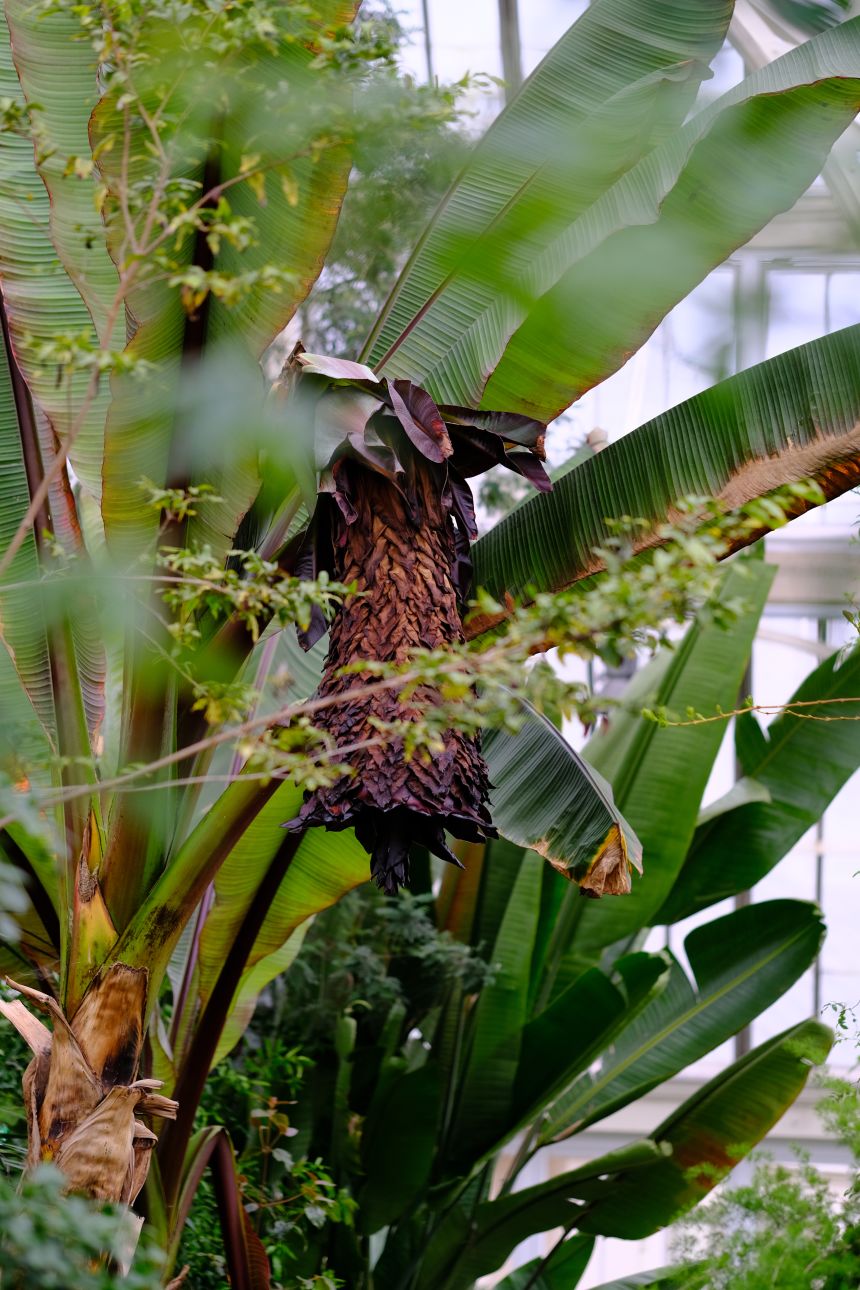
What’s more, it could feasibly be harvested in many more countries across the globe capable of meeting enset’s broad range of tolerated climates. Borrell and his colleagues proved as much in April 2023, when enset flowered for the first time inside Kew Gardens’ Temperate House, a 4,800-square-meter (5,741-square-yard) glass home for temperate-region flora, having arrived at the site as a 30-cm (1-foot) tall plant four years prior.
“There’s lots of examples in history of crops arriving in new places and being dominant,” explained Borrell. “So there’s absolutely no reason why it (enset) couldn’t be important somewhere else.”
Yet if enset has been such a hit in part of Ethiopia, why has it barely made a ripple anywhere else? It is a mystery that continues to puzzle even one of the plant’s biggest champions.
“When a crop is as successful as enset, in a small area, it spreads around the world — maize, rice, potatoes,” Borrell said.
“I can’t think of another crop that is so ubiquitous in the place it comes from, where every farmer grows it in this 300-kilometer (186-mile) region, but you go to Kenya, Tanzania or Uganda and say, ‘Did you know you can eat that?’ and people just look at you with a blank expression. It is really strange.”
That is not to say Borrell is short on theories. He believes cultural and historical barriers have conspired to block enset’s route out of Africa’s second-most populous nation.
For starters, Ethiopia strictly regulates the international transfer of plant materials in a bid to guard against biopiracy. A high-profile legal dispute in 2019 over Dutch patents of “superfood” teff — a grain native to the African country that has been used for millennia to make its staple dish, a pancake-like flatbread known as injera — raised the hackles of citizens and officials alike who who viewed the case as a custody battle over a national asset.
Other countries wishing to cultivate enset could import it from East and Southern Africa, but these wild varieties would be “quite useless” for food, compared to Ethiopia’s domesticated crop, according to Borrell.
While Kew was permitted to import two enset plants in 2019 on the condition that any material was destroyed after work was completed, the gardens benefited from a 40-year relationship with Ethiopian researchers. Extending that same level of trust to others may take time.
“Ethiopia’s got plant diversity, and so they’re very protective of it,” explained Borrell.
“We tried to say, ‘Look, this is the potential,’ but of course, it’s basically up to Ethiopia, and they would need to derive some benefit from sharing it.”
CNN reached out to the Ethiopian Biodiversity Institute for comment.
Another obstacle is that enset is currently “backbreaking” to harvest, which is mostly done by female farmers, said Borrell. Mechanized solutions are in development at several Ethiopian universities but are yet to be rolled out at scale.
Cultivation also involves an elaborate methodology developed over centuries by local communities, and turning enset into food requires specialist knowledge. The plant is also something of an acquired taste. While Borrell has relished enset when baked into flatbread and couscous-like dishes, kocho, he admits, can be “hit and miss.”
With so many factors at play in determining a crop’s success, even plain old good fortune is a consideration.
“Rice, wheat, maize, potato and sweet potato are awesome, (but) there is nothing inherently different about them compared to loads of other species. If you ran history again, it could be something else that becomes a billion-pound crop,” said Borrell.
“Once you realize that it’s kind of luck why some crops have become as dominant as they are, then you start thinking, ‘Wow, there really are probably some untapped opportunities.’”
Promoting such underutilized crops more widely may prove critical amid the spiraling impacts of climate change.
“We want to make more food, with less impact, under a less predictable climate than has ever been. That’s three things that are hard, all together,” Borell said.
Reliance on a narrow set of crops leaves agriculture far more vulnerable to pests, diseases and changes in environmental conditions.
Enset’s broad climatic range makes it better suited to environmental changes than other major crops, but there are concerns that Ethiopian farmers — feeling the twin pressures of rising urbanization and globalization — are turning away from the false banana in favor of more profitable commercial crops like wheat, maize and potato.
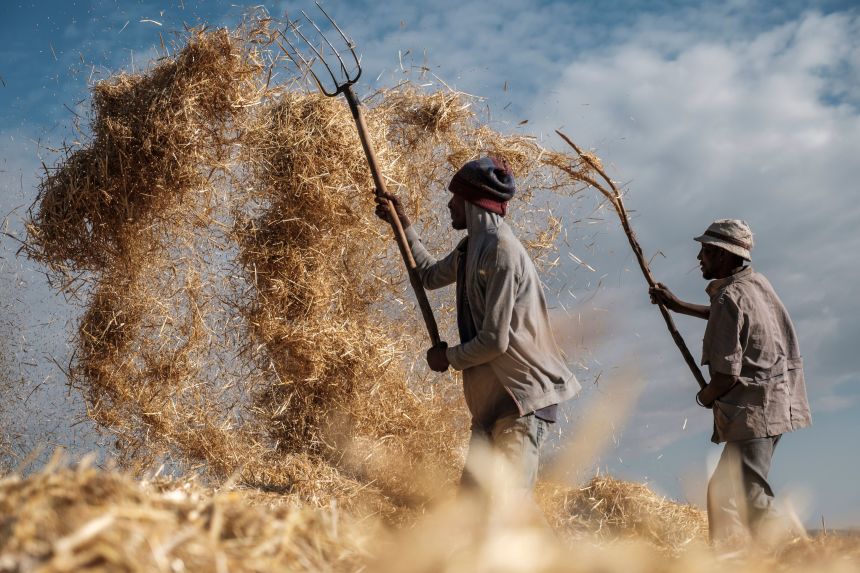
Roughly 60% of more than 400 southwestern farmers interviewed as part of a 2025 study by Kew and partners at Ethiopia’s Addis Ababa University said that the area of farmland they dedicated to enset had decreased in recent decades, with many also revealing a pronounced decline in household enset consumption.
Public promotion of lesser-known crops like enset encourages farmers to resist focusing solely on major commercial crops, said Borrell. At the local level, Kew has run projects that incentivize Ethiopian farmers to maintain crop diversity by compensating them for growing endangered enset varieties.
“Before our work, people didn’t want to grow enset … That’s a loss for the world, not just for Ethiopia,” said Borrell.
“If you say, ‘Hey, we’re interested in enset, we think it’s awesome, we want to try and help you guys farm better on less land and have a better income,’ you’re speaking people’s language,” he added.
“It’s about saying ‘This is really cool, and you guys are the only people in the world that have it. Let’s celebrate it.’”