
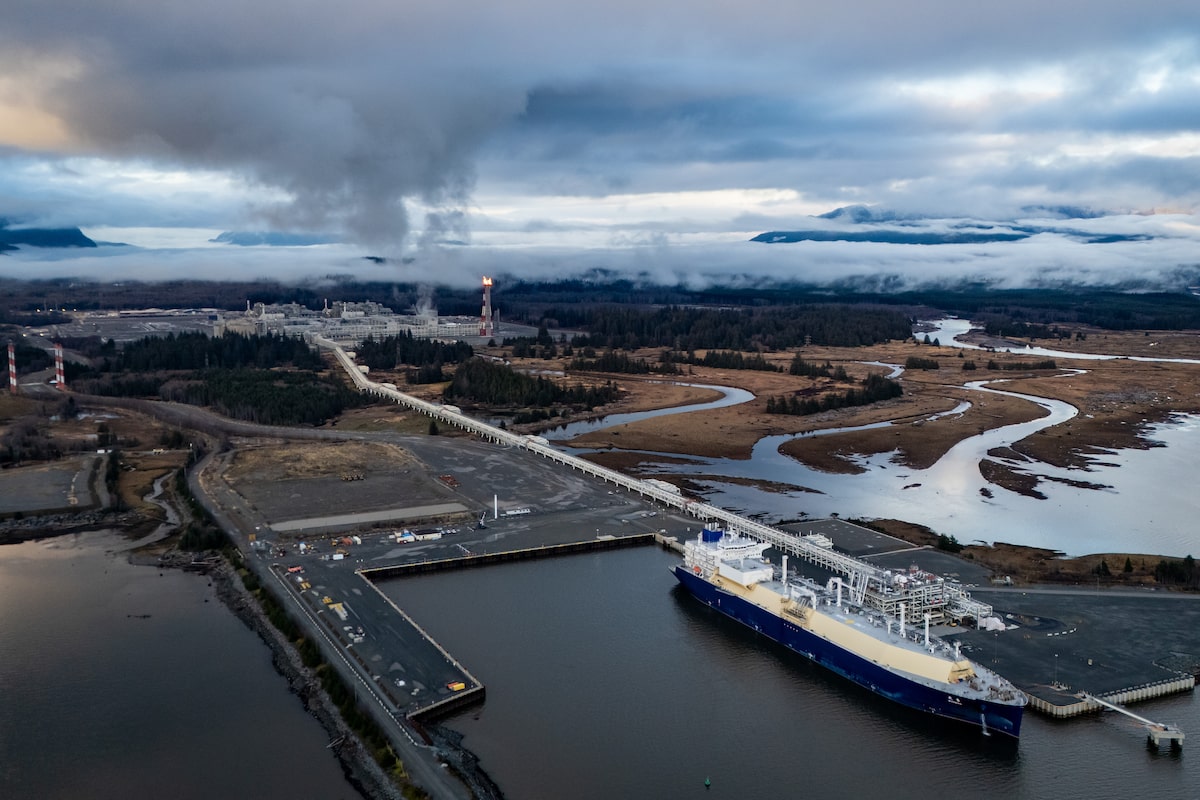
A liquefied natural gas tanker fills up at the LNG Canada facility in Kitimat, B.C., last year. Partners in LNG Canada will spend at least $30-billion to double production at the facility.ETHAN CAIRNS/The Canadian Press
Shell PLC SHEL-N and its partners in the LNG Canada project on the B.C. coast have agreed to proceed with a $30-billion-plus expansion of the facility that will double its output of liquefied natural gas as global demand surges.
The investment in the facility will increase production to 28 million tonnes of LNG per year, making it one of the largest such export facilities in the world, the partners said on Tuesday.
The Phase 2 expansion includes adding two LNG processing trains at the facility in Kitimat, B.C., along with new storage and condensate tanks, loading berth and expanded utility and process systems.
The 670-kilometre pipeline from northeastern B.C. that feeds the plant, known as Coastal GasLink, will also be expanded by adding five new compressor stations, according to a statement.
When construction is at its peak, the project is expected to employ as many as 4,000 new construction workers in Kitimat, and create 2,100 jobs to build the new compressor stations along the pipeline.
Prime Minister Mark Carney and Natural Resources Minister Tim Hodgson will be in Vancouver for the project’s launch on Tuesday, according to their schedules. The LNG Canada expansion was early among the projects referred to the Major Projects Office (MPO) to be considered for fast-track approval.
Shell owns the largest stake in LNG Canada at 40 per cent, followed by Malaysia’s state-owned Petronas (25 per cent), Japan-based Mitsubishi (15 per cent), PetroChina (15 per cent) and South Korea’s Kogas (5 per cent).
Last September, U.S.-based MidOcean Energy acquired a 20-per-cent interest in key Petronas assets in Canada, including natural gas operations in northeast B.C. and the Petronas stake in LNG Canada.
The first phase of the project started exports to Asia last year.
The Prime Minister has championed increasing energy shipments to diversified global markets to reduce the country’s reliance on the United States, which buys the lion’s share of Canada’s oil and gas exports. Projects such as LNG Canada Phase 2 and Alberta’s West Coast oil pipeline proposal are both aimed at bolstering the Canadian economy against U.S. President Donald Trump’s trade war.
Meanwhile, the U.S. war in Iran, with the resultant virtual closing of the Strait of Hormuz, has driven up prices for seaborne natural gas.
Shell said LNG Canada Phase 2 is one of numerous plants that will be required in the comming decades. The company said it expects global demand for LNG is expected to increase 65 per cent to nearly 700 million tonnes per year by 2050.
However, environmental activists say such investments run counter to what they predict will be a worldwide transition to fossil-fuel-free energy, and that the LNG Canada expansion will double greenhouse gas emissions from the facility and from increased drilling activity in northeast B.C. to supply the plant.
“As the rest of the world rapidly scales up clean energy infrastructure, global gas demand destruction is under way. It’s happening regardless of the desires of the Carney government or foreign gas giants,” Richard Brooks, climate finance director of Stand.earth said in a statement.