
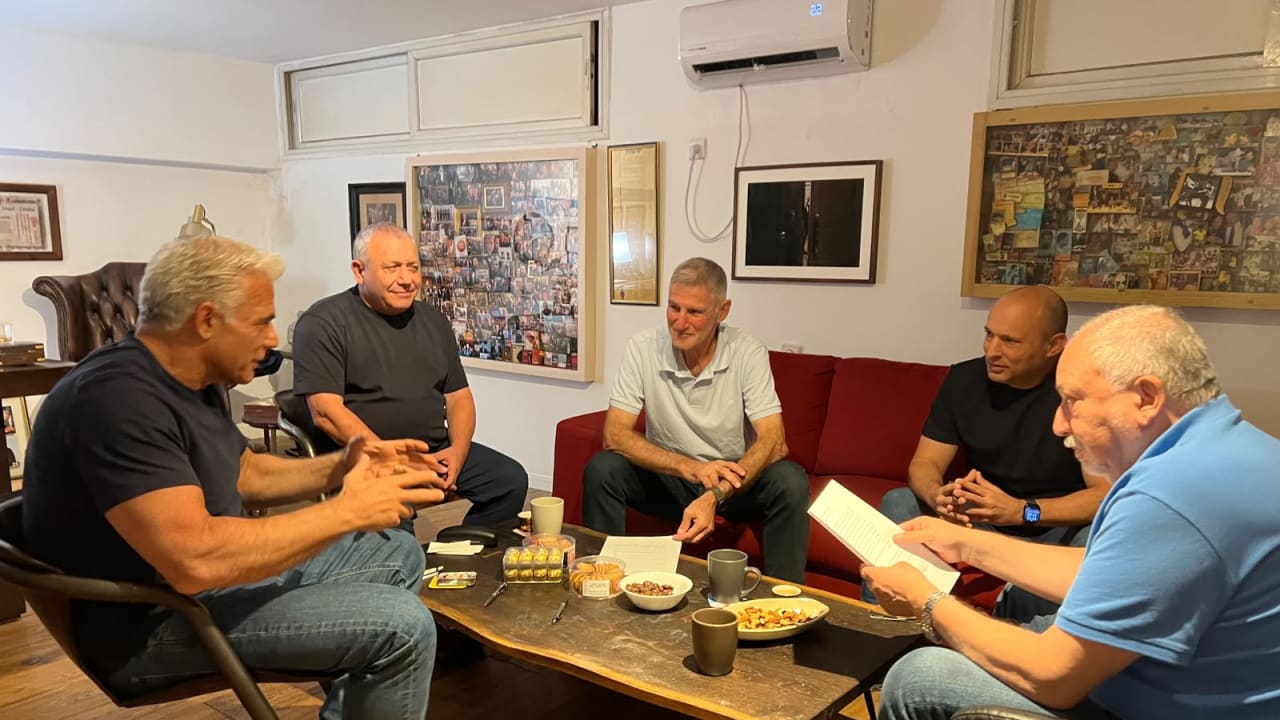
The decision to form the teams came after a meeting took place on Saturday evening between the party leaders in the bloc, in which they signed a document agreeing on shared principles and pledging to work together ahead of the elections.
The meeting took place between the four main party leaders in the bloc: Gadi Eisenkot (Yashar), Naftali Bennett (B’Yachad), Avigdor Liberman (Yisrael Beytenu), and Yair Golan (The Democrats).
Each working team consists of candidates from the four parties.
The party leaders stated that the teams would help “win the elections,” and that the first team would be focused on increasing voter turnout, preparing for Election Day, and “safeguarding the integrity of the elections.”
The second team would be focused on formulating the guiding principles of the next government and an action plan for its first 100 days.
The team would focus on issues including universal military service, as well as establishing a state commission of inquiry into the government’s failures surrounding October 7.
It would also advance measures such as limiting the prime minister’s term in office and promoting a constitution for Israel.
The third team would be in charge of media coordination and combating false information and smear campaigns.
“After years of internal polarization, lies, failures, and a loss of trust, we have a responsibility to establish a Zionist, statesmanlike government that will put Israel back on track, unite it and restore security, prosperity, and hope to Israelis,” the party leaders said in a joint statement.
The party leaders added that the teams had already begun “working immediately” and will focus on “joint efforts on winning the elections, building the next government, and advancing the necessary steps from its first days in office.”
During their meeting on Saturday evening, the party leaders signed a joint document committing to work together to increase voter turnout and refrain from attacking one another, while also agreeing to formulate principles for the next government.
The document did not address how the leader of the opposition bloc, who would serve as its candidate for prime minister, would be determined.