
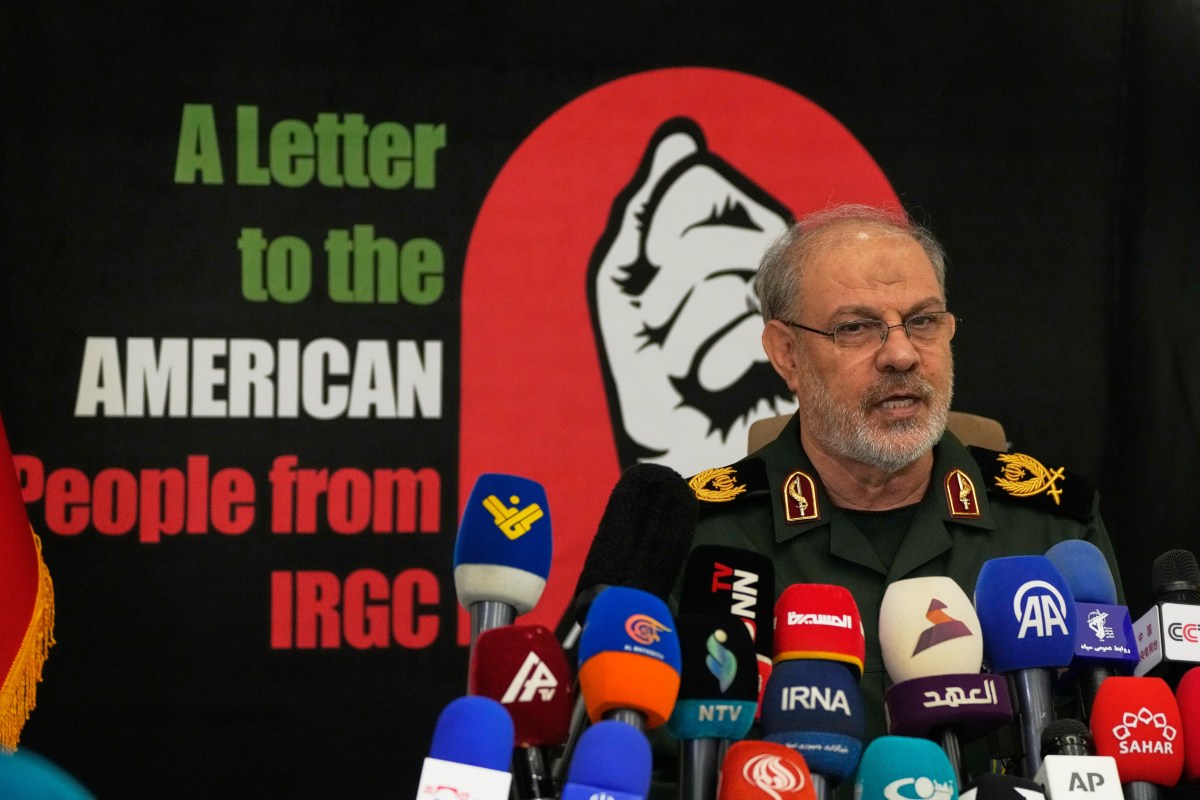
Iran’s Islamic Revolutionary Guard Corps (IRGC) has issued an open letter to the people of the United States in which Tehran declares victory in its confrontation with Washington, lodges sweeping allegations against President Donald Trump and warns of more dire consequences should the current U.S. government remain in power.
The 25-page message comes at a sensitive time for the White House, with midterm elections soon approaching and diminishing domestic support for the war launched against the Islamic Republic in February.
The IRGC frequently channeled U.S. voter frustrations in the letter, going so far as to urge U.S. citizens to rise up against their government. The call to action marks one of several points in which the elite Iranian military branch appears to use language mirroring Trump’s own rhetoric against the Islamic Republic.
Read More on World
While the degree to which U.S. citizens or officials may be moved by the lengthy dispatch is uncertain, the unprecedented decision by the IRGC to speak past government channels indicates a serious attempt to seize the narrative over the war and its global ramifications.
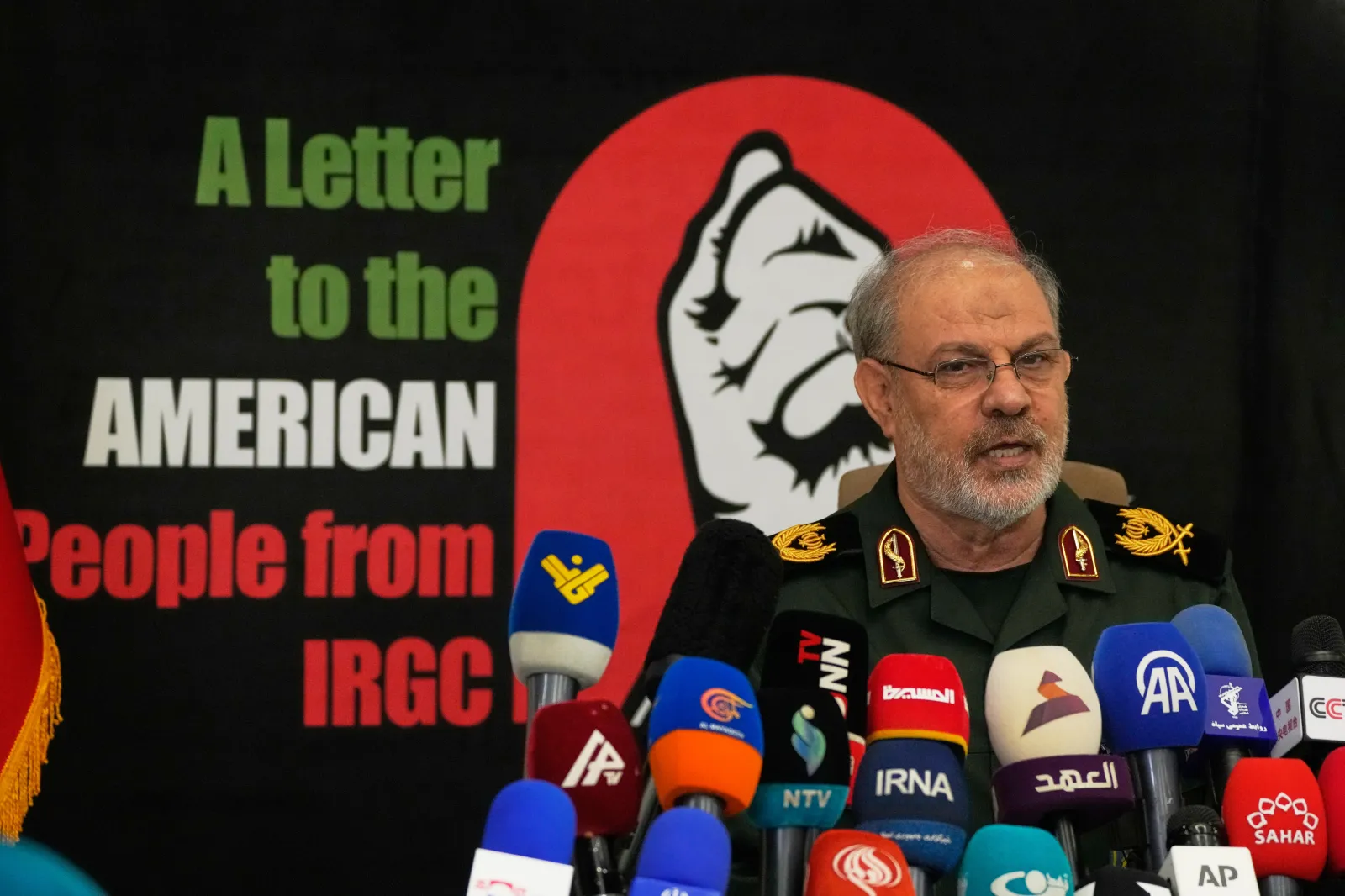
“We wrote a benevolent and compassionate letter to the American people,” IRGC spokesperson Brigadier General Hossein Mohebbi was cited as saying Tuesday by official outlets.
“Our goal in sending the letter to the American people goes beyond media publicity and fostering familiarity with Iran’s logic,” Mohebbi said. “This action is not a promotional and short-term move.”
Newsweek has reached out to the U.S. State Department for comment.
 Iran Provides ‘Concrete Evidence’ of Victory
Trump may have declared the U.S. the winner of the conflict with Iran on many past occasions, but the IRGC sees itself as the true victor.
That’s due to the U.S. and Israel, which jointly entered the conflict with the Trump administration, “failing to achieve” their objectives, including the initial alleged goals of “regime change and partition of Iran” and a subsequent list of 13 other identified aims, including the invasion and seizure of Iranian territories, the total destruction of military and civilian energy infrastructure
“The United States and Israel expended thousands of bombs and missiles, striking government and residential buildings, dozens of less advanced and lower-tier weapons-manufacturing facilities, and a number of decommissioned military installations,” the IRGC said. “Yet, aside from damaging several buildings tied to Iran’s nuclear industry and a limited number of air-defense sites, they failed to achieve any of their declared objectives.”
“Now, nearly seven months into this unjust war, the U.S. military—the largest and costliest military in the history of the world—has scored no wins, and that is all the more humiliating when we consider that it fought the war in collaboration with the Israeli military, which claims to be the world’s fourth-largest military power,” the IRGC added.
The IRGC’s “concrete evidence” for its win was not limited to denying enemy objectives, however.
The letter also counted the extensive damage dealt by Iranian missile and drone attacks to U.S. bases and military equipment across the Middle East as well as a swell of support at home and abroad for the Islamic Republic, among other reasons, as proof of Iranian victory and a resounding U.S. defeat.
“Arguably, however, the greatest consequence of this war has been the damage it has done to America’s reputation as the world’s sole superpower and the irreparable and gaping cracks it has created in the edifice of U.S. global hegemony,” the IRGC said. “The U.S. can no longer boast of its status as the world’s hegemon.”
Iran Touts a ‘Superior’ System
Another factor cited by the IRGC as contributing to Washington’s declared loss in the conflict was the Islamic Republic’s religious zeal.
The IRGC may be a military institution, operating alongside the Iran’s conventional armed forces, known as the Artesh, but it occupies a dual role in safeguarding the tenets of the 1979 Islamic Revolution that established the unique wilayat al-faqih (or velayat-e faqih) system of governance.
This interpretation of Twelver Shiite Islam affords absolute power to a “guardian jurist” to preside over the state as supreme leader, a role held by Ayatollah Mojtaba Khamenei since shortly after his father’s killing on the first day of U.S.-Israeli strikes that began the conflict.
“Though painful, the martyrdom of Iran’s Supreme Leader did not lead, as American and Israeli politicians had hoped, to the disintegration of the Islamic Republic, and this was a testament to the resilience of a political system rooted in the will of the people,” the IRGC said.
And while “the United States and Israel possess more powerful and more advanced missiles and drones, plus a variety of other forms of weaponry that Iran lacks,” the IRGC asserted that Iran’s victory was rooted in the “Quran’s superior doctrine and worldview,” “the competent and righteous leadership of a man of God and “the Iranian nation’s faith in and unity around the tenets of the Quran.”
On the other hand, the IRGC argued that U.S. military is “comprised of forces suffer from low morale and lack a strong sense of purpose and is led by arrogant commanders who are blinded by a complacent sense of self-assurance stemming from their confidence in their vast arsenal and abundant resources.”
“The main problem afflicting the U.S. military is that its forces have no clear idea why they are asked over and over to fight for causes that are utterly meaningless and irrelevant to them,” the IRGC said. “American service members cannot fathom why their leaders deploy them to far-flung regions throughout the world to participate in confrontations that have not produced a favorable or beneficial outcome.”
 Iran Takes Direct Aim at ‘Liar’ Trump
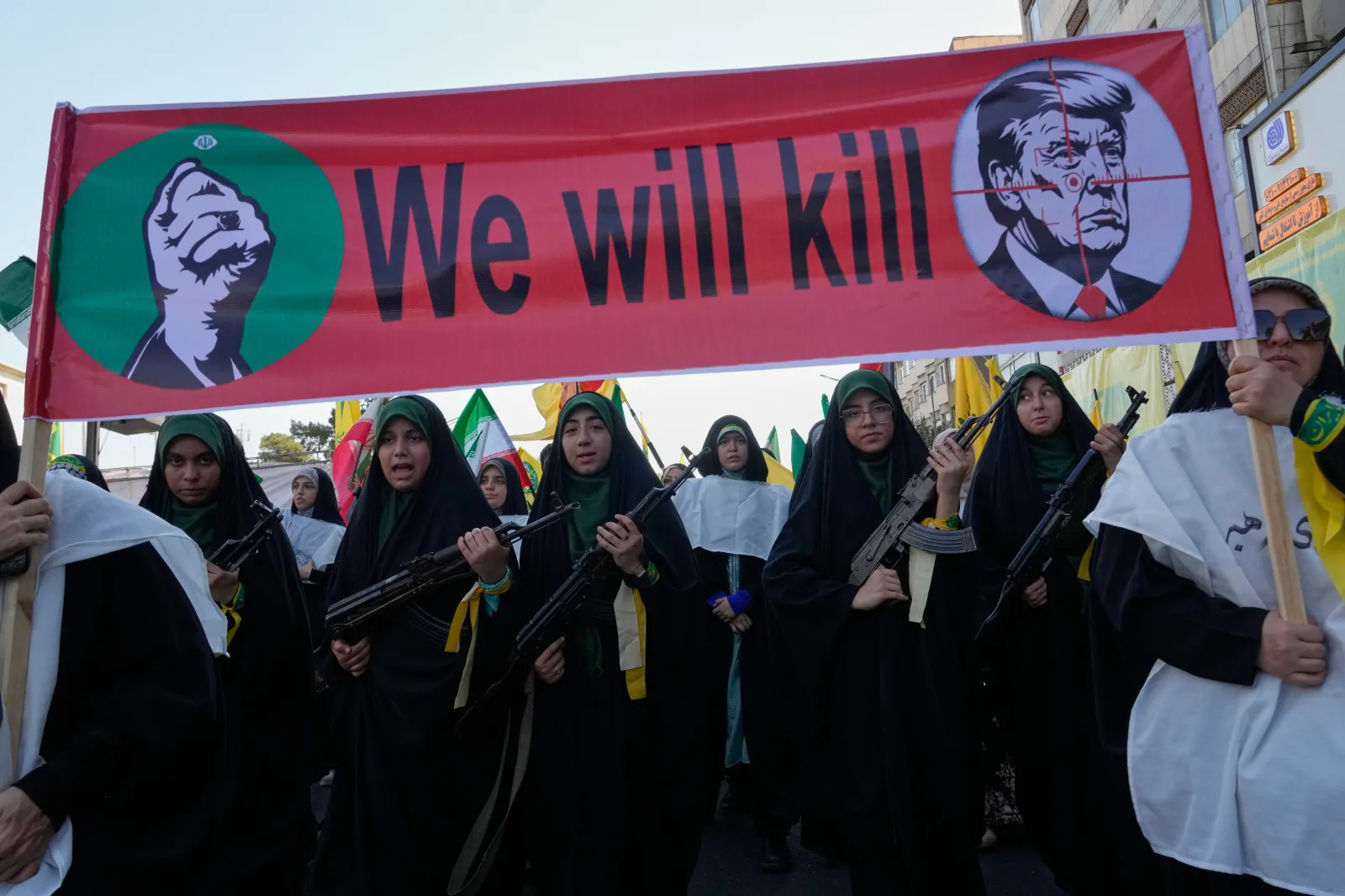
As the IRGC blamed U.S. military woes on “a deficiency in competent leadership,” the letter took particular aim at Trump.
Tehran’s feud with the U.S. leader dates back to his first administration, when he withdrew from a nuclear deal, doubled down on sanctions and ordered the killing of IRGC Quds Force Major General Qassem Soleimani. U.S. officials have since alleged a number of Iran-linked assassination plots against Trump.
Since the outbreak of the war, Iranian officials have only intensified their criticism of Trump, often pointing to his unpredictable statesmanship, personal business dealings and past ties to Jeffrey Epstein, the late financier and child sex offender.
Tehran has also repeatedly accused Trump of directly profiting from the war.
“America’s national security and the lives of its servicemembers are entrusted to someone who is not only an inveterate liar but is also an insanely avaricious man whose only motivation in life is the accumulation of greater wealth,” the IRGC said. “He conducts American foreign policy in accordance with his personal interests, flaunting the bribes he takes from the heads of wealthy nations.”
The IRGC further slammed Trump for appointing “members of his family and his business partners” to lead foreign policy outside of conventional diplomatic channels and institutions.
“He calibrates the pace of war not on the basis of American national interests but in line with factors conducive to compounding his personal wealth, making announcements and publishing social media posts pertaining to the war that are intended solely to make his purchase and sale of stocks more lucrative,” the IRGC said.
As such, the IRGC asserted, “it is perfectly clear which of the two leaders God supports.”
And when Iranians chant “Death to America,” the IRGC sought to clarify, it’s not an expression of “ill will toward the American people,” but rather “a prayer for the eradication of the diabolical ruling elite whose seat of power is the White House.”
Iran Accuses US and Israel of Terrorism
One of the most frequent accusations lodged by Trump and other U.S. officials against Iran has been its designation as “the world’s leading sponsor of terrorism.”
The IRGC itself was listed by the U.S. as a terrorist organization in 2019 in a first for an active foreign military branch.
But the Islamic Republic reserves the title of top terrorism sponsor for the U.S., with the IRGC listing an extensive history of alleged U.S. wrongdoings.
These ranged from generally acknowledged episodes such as the CIA’s involvement in the 1953 against Iran to more controversial topics such as the degree to which U.S. actions in the Middle East contributed to the rise of the Islamic State militant group (ISIS).
The letter also directly implicated Israeli involvement in both overt and covert actions targeting Iran, including the 12-Day War of June 2025 that Trump later joined and the mass protests earlier this year that the IRGC claimed were infiltrated by CIA and Mossad agents, turning “them into violent clashes, resulting in the martyrdom of more than 2,300 innocent Iranians.”
Foreign human rights monitors have counted death tolls beyond 30,000 throughout the unrest in late December and early January, most of them civilian deaths, while Trump has recently cited figured ranging between 60,000 and 65,000 killed.
Referring to the U.S. and Israel as the only two nations whose governments are referred in many parts of the world as “child-killers,” the IRGC called on the people of the U.S. to reject their leaders’ enabling of Israeli military campaigns in Gaza and other parts of the region and to cut ties with the longtime U.S. ally altogether.
“You need to force your government to distance itself from Israel, as the occupiers of Palestine will, sooner or later, have to leave the land they occupy and return to their countries of origin,” the IRGC said.
 Iran Calls for Regime Change in Washington
Ending the decadeslong alliance with Israel was not all the IRGC asked from the U.S. people. Much as Trump urged Iranians to “take over your government” in his address of the opening hours of the conflict, the IRGC appealed for a popular insurrection against the U.S. administration.
“People all around the world are looking to Americans to stop their government. Now is the time,” the IRGC said. “Americans need to rise up and put an end to this miserable situation that their country, and the world at large, is facing.”
Otherwise, the IRGC warned of an “explosion of popular anger” that “will, without a doubt, set fire to all of America’s interests and assets throughout the world.” And the result would be that “the U.S. economy will be hit by a massive economic earthquake that will affect the lives of all Americans,” the IRGC warned.
Such a “painful fate” can only be avoided if the U.S. people “remove from power the evil, deceitful, and violent politicians who are responsible for America’s current state,” the letter stated.
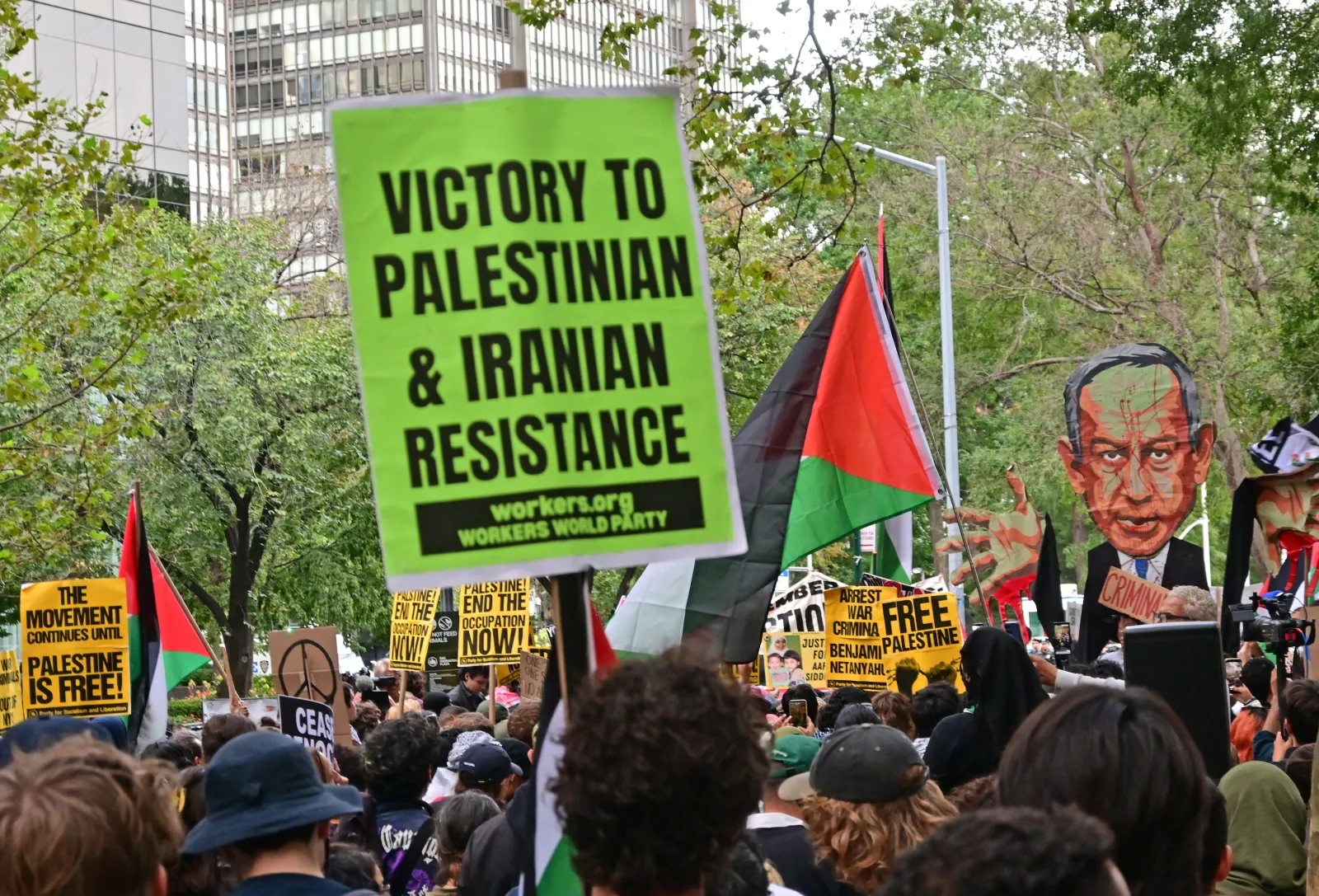
The IRGC also applauded apparent expressions of opposition to the war effort, including recent poll figures and the emergence of protests against both the conflict and the president himself.
“Mahdi and Christ will stand with the oppressed seekers of justice and against the oppressors,” the IRGC said. “We, the people of Iran, would like to see you, the people of America, standing by our side as we are led by Mahdi and Christ toward final victory.”
“We pray for an imminent end to oppression and aggression, for the liberation of all nations from the grip of tyrants, for a life of loving fellowship and universal peace,” the letter concluded.
What’s the Point?
Alan Eyre, distinguished diplomatic fellow at the Middle East Institute and a former U.S. State Department official, was among those who doubted that the letter would “move the needle that much in terms of the way President Trump and his people see this,” nor did he believe he even Iranian officials truly “think that the average American would read 25 pages” of the text.
At the same time, he argued that at least some of the message may ultimately resound with U.S. readers who bear similar grievances with the current state of U.S. politics and the impact of the conflict.
“By pointing out the same thing that many American commentators point out about President Trump’s putative inadequacies, I think that’s to be expected because that underlines their point, which is, it’s an oligarchy,” Eyre told Newsweek, “the people running America aren’t looking out for average Americans, and the average Americans should put pressure on their government, much like the U.S. with its sanctions.”
And central to Iran’s underlying motivation, he argued, was that “the clock is ticking and they want to strike a deal before the election, because they think they have more leverage than and they’re concerned that after the deal.”
But he also pointed out a jarring juxtaposition in the way “the relatively nuanced and detailed view of America” outlined by the Iranian authors versus the “fancy” depictions of their own country.
“I would say that their take on America, if it were coming from someone other than Iran, it would have a lot of bite,” Eyre said. “But their take on themselves is the usual nonsense that they always say.”
Contact Newsweek editors on this story: Edward T. Cummins