
Boarding the public bus that follows the coast of Ireland’s Dingle Peninsula, I pointed to Coumeenoole Beach on the map and asked the driver to let me off there.
“Certainly,” he smiled, “but only if you can pronounce it.”
I got a laugh for attempting COO-men-oohl, before disembarking near a pocket strand hugged by cliffs and bashed by waves. It was a setting in David Lean’s 1970 film “Ryan’s Daughter,” but nowadays a nearby sign reads “Star Wars Beach,” presumably because parts of “Star Wars: The Last Jedi” were filmed in the area.
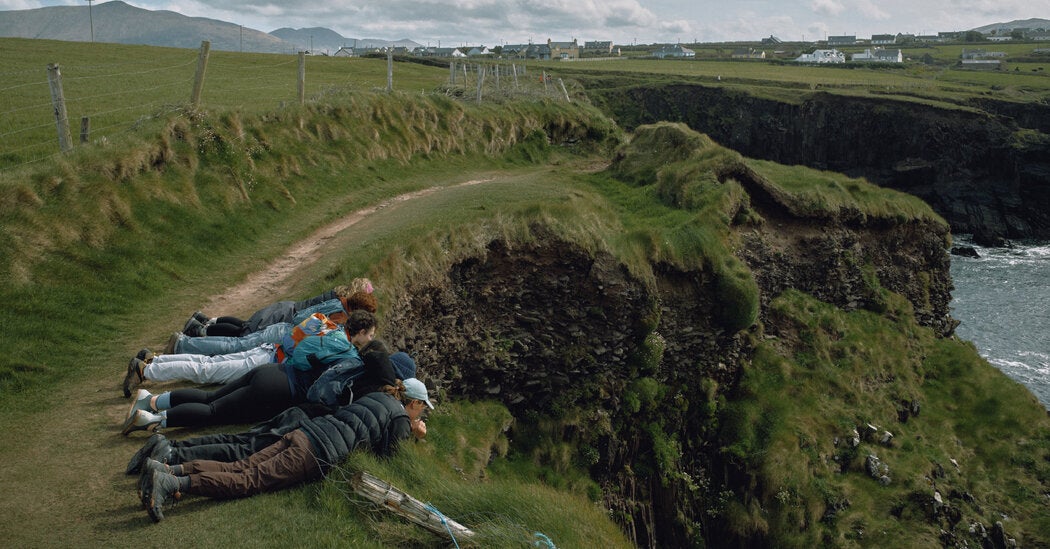
The wind blew strongly, as it does here. A light rain fell, not uncommon in the fall. And the bus, as rural buses are known to do, wouldn’t return for hours, forcing my sister and me, after chasing waves on the deserted beach, to walk for miles to reach shelter.
A waterproof jacket should be on your packing list during most seasons in oft-soggy Ireland, but especially when you’re traveling car free.
In addition to being a more sustainable and social mode of travel, public transportation in Ireland means you don’t have to attempt to drive your car on the left. Roads can be narrow, lined with hedges and, in my experience, occasionally full of sheep.
Trains in Ireland regularly connect major cities like Dublin and Galway as well as popular towns like Killarney. Tourism Ireland promotes travel by train, bus and bike, offering car-free itineraries on its website.
But there are notable gaps in the transit system — for example, there are no trains to Donegal in the northwest — and connecting to smaller towns by bus lengthens the trip.
“My great-great grandmother’s Ireland had double the amount of rail coverage than Ireland has today,” said Keith O’Hara, the founder of the Irish Road Trip website, which covers routes for drivers and riders. But, he added, “Train travel does give you the sense of being on holiday.”
In that spirit, my sister and I spent a week traveling around Ireland by public transportation and on foot, following a slow, scenic route, occasionally hastened by rain.
Speeding to Cork, Slowing to Kinsale
Taking the train from Dublin, the capital, to most of the country’s major cities is swift and easy. To Cork, the second largest city in Ireland, Irish Rail also has frequent daily departures from Dublin’s central Heuston Station.
Having made seat reservations (free), we found our names above our assigned seats in a second-class car for the two-and-a-half-hour ride (21.49 euros, or about $24.50; Irish Rail sells passes good for five days of travel out of 15 consecutive days, for €128, but we came out ahead going à la carte).
We had in-seat electrical plugs and free Wi-Fi, and a steward pushed a refreshment cart up and down the aisles as we rode through the verdant countryside, grazed over by cows and sheep.
After a handful of stops, we arrived at the train station beside the River Lee. It was a 10-minute walk to our hotel, the Hotel Isaacs (we paid €156 a night).
Like the hotel, most attractions we set our sights on were within walking distance, including the English Market, a food hall, and the Franciscan Well Brewpub, a craft beer producer in a 13th-century monastery.
From Cork, we aimed to visit the seaside village of Kinsale, known for its brightly painted buildings, seafood restaurants and coastal walks. By car, it’s about 35 minutes. Bus Eireann’s 226 bus, which runs throughout the day, takes about 50 minutes (€12 round trip; visitors with a TFI Leap Card, available at train stations and other vendors, can get discounts of up to 30 percent on public transit in most major cities).
We were dropped off at the Kinsale harbor and immediately began shopping its pop-up farmers market filled with craft booths and food stalls.
Exploring on foot, we photographed facades painted orange and purple and learned about the 1915 offshore sinking of the ocean liner Lusitania in its tiny museum.
The 30-minute Scilly Walk took us from Kinsale along the craggy coast to the 17th-century, star-shaped Charles Fort, set on hilly, waterfront grounds, with the ruins of the old barracks open to explorers.
On the way back, we stopped in the village of Summercove at the Bulman, a nautically influenced restaurant serving local crabmeat and smoked salmon on homemade brown bread (€20).
The bus’s return timetable rushed our hike back, but we easily made the 2:30 p.m. departure, sharing the bus with high school students and a few fellow tourists.
‘Snookered’ in Killarney
From Cork, it’s 80 minutes by train to Killarney (from €11.99), the gateway to Killarney National Park, which encompasses Ireland’s highest mountain range and a series of moody lakes.
The town center, filled with pubs and gift shops, is easily walkable. But Killarney, Ireland’s first national park, covers nearly 25,000 acres. Even with hiking trails that start from town, seeing much of it is hard without wheels.
In season, several tour operators offer itineraries in the park and beyond. “But if you only use public transport,” Mr. O’Hara said, “you’d be snookered.”
Off season, we found most bike rental shops closed. The tourism office directed us to the all-day, hop-on/hop-off Red Bus (€16), which makes a loop connecting park attractions, including the Torc Waterfall, the 15th-century Ross Castle ruin and the 19th-century manor Muckross House and Gardens.
Bound to a schedule that dictated an hour between drop-off and pickup, we wound up walking much of the route. From its farthest stop at the Torc Waterfall, a roughly 65-foot cascade on the Owengarriff River, we followed well-marked trails along nearby Muckross Lake back to Muckross House and nearby Muckross Abbey.
The roofless church dates to 1448 and once housed Franciscan friars. Now it offers hidden stairways, dark chambers and a cloister surrounding what is considered Ireland’s oldest yew tree, estimated to be about 400 years old.
We had walked eight miles by the time we caught the bus a few miles back to town, grateful to find food in the pub one flight below our cozy room at Murphy’s of Killarney (from €100, including breakfast).
Damp in Dingle
From Killarney, many visitors day trip to Dingle and the Dingle Peninsula on Ireland’s southwest coast. But Stephanie Bowers, a travel adviser who runs the agency Singular Sojourns, in Arlington, Va., recommended we stay over.
“Dingle is famous for nightlife and music, which you would miss on a day trip,” she said.
Not to mention hikes on the wave-bashed peninsula. To spend the weekend in Dingle, we took a 37-minute train ride north from Killarney to Tralee (€7.55). Opposite the Tralee train station, we found the bus station and our Bus Eireann number 275, which took the hourlong drive west to Dingle (from €17.50 round trip).
After a rinsing rain, the sun broke through the clouds on a ride that edged the beachy coast filled with shorebirds, and crossed the peninsula within view of the heath-covered Slieve Mish Mountains. Despite the sunshine, it showered as we approached tidy seaside Dingle — “Typical Dingle weather,” shrugged the man behind us — and walked to our nearby, no-frills hotel, Dingle Harbour Nights (we paid €120 a night).
We spent the rest of the day hiking from town along the seaside bluffs to Hussey’s Folly, a brooding stone tower commissioned by English landowners during the Great Famine of the 19th century. Back in town, we squeezed into the tiny front room at Dick Mack’s Pub, which doubles as a working leather shop, for a pint and several songs from a banjo player.
With rain in the forecast the next day, we canceled our nearly 30-mile, e-bike trip around the coastal Slea Head Drive. Opting for the public bus (€5 round trip), we felt the loss of our freedom as we flashed by the peninsula’s famed beehive huts, ancient stone dwellings built by monks.
The bus driver let us off at the sign for “Star Wars Beach,” where frothy waves attempted to swallow our boots. Then we walked a path through green pastures stretching to the sea for nearly an hour to reach Kruger’s Bar, which bills itself as Ireland’s westernmost bar, for tea.
Continuing on foot, we soon reached the Blasket Center museum, devoted to life on the mostly treeless Blasket Islands offshore.