
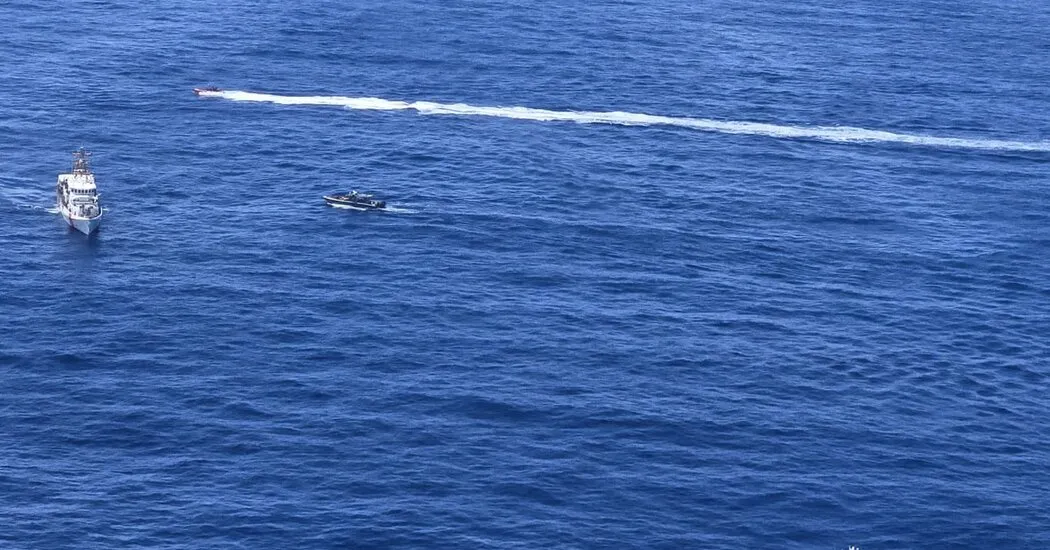
Coast Guard crews were searching Tuesday for missing passengers from a makeshift boat that capsized late Sunday in the waters between Puerto Rico and the Dominican Republic.
At least three people died and 49 were rescued near Mona Island, about 40 miles west of Puerto Rico, according to the Coast Guard. They were in waters that have long been a dangerous route for migrants attempting to reach the United States.
Some people on the boat hurled themselves into the water Sunday night without life vests after a fight broke out onboard and several were injured by a machete, the Coast Guard said. Images released by the agency showed people clinging to the overturned craft.
Survivors reported that 62 people had been on the boat, according to a news release from the Coast Guard on Tuesday. Ten people remained missing as of Tuesday afternoon, the agency said.
It was unclear where the boat had begun its journey, but most of the rescued passengers are from the Dominican Republic, said Jeffrey Quiñones, a spokesman for Customs and Border Protection. At least two others are Haitian, he said, noting that the nationalities of those who died are not yet known.
A passing vessel rescued four people and reported the accident to the Coast Guard around noon Monday, more than 12 hours after the boat had capsized. Rescuers from Customs and Border Protection, the Puerto Rico Police and the Dominican Air Force have also been involved in rescue efforts.
It was the latest maritime disaster in the dangerous waters of the Mona Passage between Puerto Rico and Hispaniola, the island that encompasses the Dominican Republic and Haiti.
Migrants fleeing economic hardship or violence have long attempted to cross the passage to get to Puerto Rico and other destinations.
At least 11 people died in 2022 after an overloaded boat capsized north of another uninhabited island west of Puerto Rico; most of the passengers were from Haiti.
Decades ago, Cuban migrants often set sail from the Dominican Republic for Mona Island, a rugged, uninhabited nature preserve. The island is considered part of Puerto Rico, a U.S. territory, and Cuban migrants were allowed to stay in the country under immigration policy at the time.