
September 29, 2026 3:29 PM, EDT
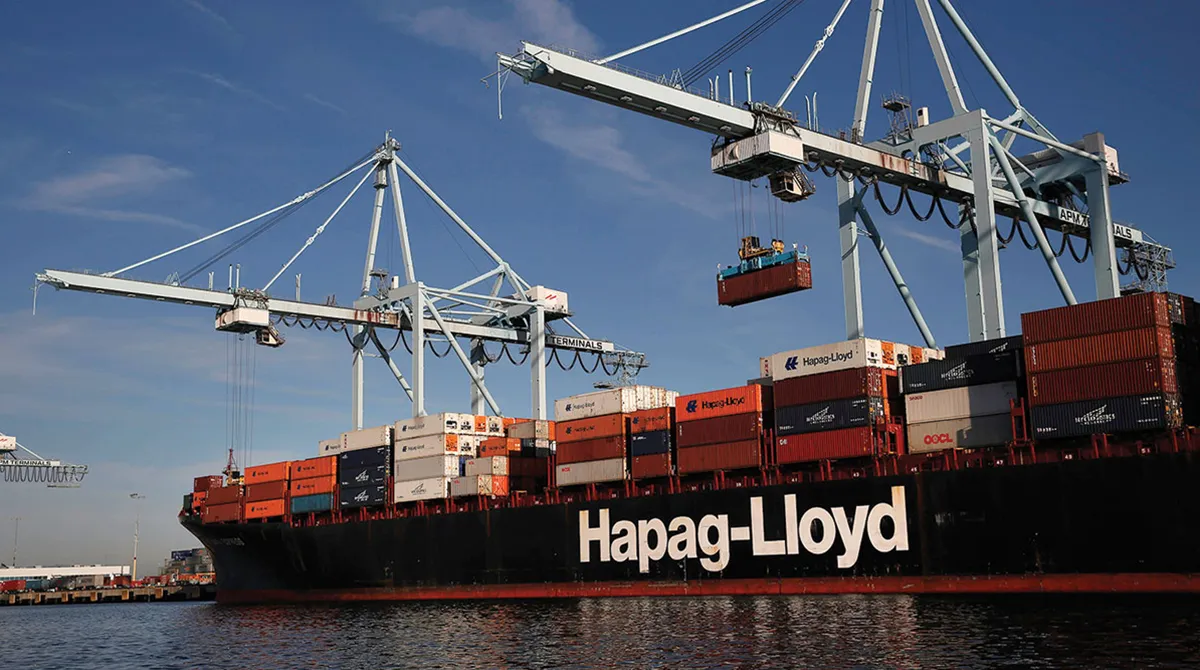
A Hapag-Lloyd containership is unloaded at the Port of Los Angeles. (Patrick T. Fallon/Bloomberg News)
Key Takeaways:
Israel’s Finance Ministry opposed Hapag-Lloyd’s proposed $4.2 billion acquisition of Zim, citing security concerns including Saudi and Qatari shareholdings in Hapag.The ministry said foreign influence could threaten Israeli operations during political crises, while multiple government ministries reportedly oppose the transaction on security grounds.Hapag and FIMI plan to submit a complete revised proposal within 45 days, while Israeli authorities said any new structure requires a fresh review.
Israel’s finance ministry said it objected to the $4.2 billion sale of local firm ZIim Integrated Shipping Services to Hapag-Lloyd AG, partly because of Saudi Arabian and Qatari holdings in the German company.
The Israeli Government Companies Authority, which is handling state approval of the deal, said late Sept. 29 that it has concluded its vetting process of the takeover — without disclosing its position — and that any revised merger proposal would need to be submitted afresh pursuant to its approval by “Zim’s competent corporate bodies and by all parties to the transaction.”
Multiple government ministries are opposed to the deal, on what they describe as security concerns.
The Israeli finance ministry noted the “involvement of hostile shareholders” as one of several factors, adding that “the governments of Qatar and Saudi Arabia hold shares in Hapag.” It didn’t mention any other Hapag shareholders.
“In our view, the risks involved in the current deal outweigh its benefits, as well as the risks associated with rejecting it,” the ministry said in a 33-page statement late on Sept. 28. “There is a tangible concern that this foreign influence could be exploited during political or diplomatic crises to harm Israel operations or to exert foreign pressure.”
Saudi Arabia’s wealth fund owns just over 10% of Hapag, while Qatar’s holds roughly 12%.
Hapag, one of the world’s biggest container shipping companies, is trying to buy Zim along with Israeli investment fund FIMI Opportunity. The Hamburg-based company announced talks with Zim over a cash deal in February.
In a statement to Bloomberg, Hapag said on Sept. 28 it was confident the transaction would eventually go ahead. The Israeli finance ministry’s statement, the firm said, addressed the first takeover proposal and did not “consider the significant improvements that have since been made to the transaction.”
“Hapag-Lloyd and FIMI listened carefully to the concerns raised by the State of Israel, and it was precisely in response to those concerns that a substantially improved proposal was developed and submitted,” Hapag said.
FIMI also said it was optimistic the deal would go ahead, adding it “represents an extraordinary opportunity for the State of Israel.”
Hapag and FIMI said they had submitted the key terms of their revised proposal to Israeli authorities and that they will hand over a complete proposal within 45 days. They noted changes like a direct route to the Far East to be operated by ZIM Israel as well as a strengthened mechanism to preserve Israel’s control over ownership changes, while preventing foreign interference.
The Government Companies Authority said, however, that while Zim raised in a Sept. 24 letter the possibility that an updated or new transaction structure may be submitted, it “does not in any event constitute a new transaction structure or an updated request that would enable review by the relevant State authorities”
“If you seek to have the State examine a different transaction structure, whether in the form proposed in your letter or in any other form, you must submit a new, complete and detailed application.” wrote authority head Roi Kahlon.
The governments and wealth funds of both Qatar and Saudi Arabia either declined to comment or didn’t immediately respond to requests for comment.
The finance ministry’s move comes weeks ahead of Israel’s national elections. Israel doesn’t have formal relations with either Qatar or Saudi Arabia. While Israeli politicians regularly criticize Qatar for hosting Hamas politicians, the country’s government has tried to normalize ties with Saudi Arabia.
Hapag intends to split Zim into two entities. A global arm would be held by Hapag and comprise a chartered fleet and international trade routes that do not call at Israeli ports. Those form the majority of ZIM’s operations.
The Israeli arm and routes would be held by FIMI and have a fleet of at least 16 vessels.
The Israeli finance ministry said any newly-proposed deal could be considered.

Arpan Podduturi of Samsara examines how AI, telematics and onboard cameras are converging to protect drivers and reduce risk. Tune in above or by going to RoadSigns.ttnews.com.
Israel’s defense minister, Israel Katz said in July that he opposes the acquisition. “Defense Ministry officials say the transaction in its proposed format does not adequately protect Israel’s security interests,” he said.
The vetting of the deal is handled by the Israeli Government Companies Authority, which integrates the opinions of multiple government ministries ahead of submitting a government reply to the involved parties. The deal’s rejection by finance and defense officials signals a strong objection in ministries that are key decision-makers on the deal.
Hapag-Lloyd ranks No. 17 on the Transport Topics Top 50 Global Freight carriers list. Zim ranks No. 37.