
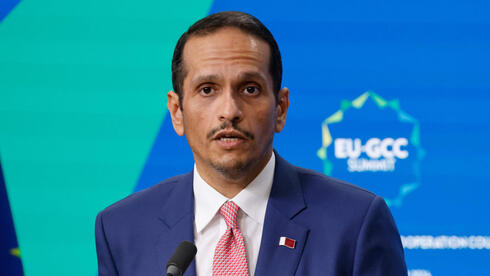
Responding to Netanyahu’s speech at the United Nations, in which he accused Qatar of funding universities and media organizations, the prime minister said Netanyahu trying to “gaslight the public” and projecting his own actions onto Qatar in an effort to influence the U.S. administration.
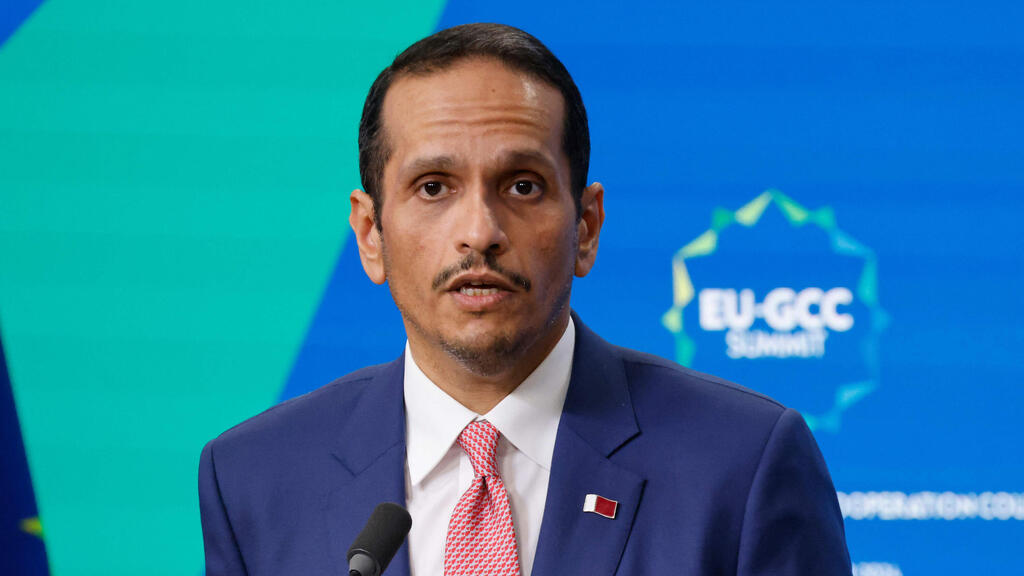
Qatari Prime Minister Mohammed bin Abdulrahman Al Thani
(Photo: Ludovic MARIN / AFP)
Asked about October 7, Al Thani said, “There is no question that October 7th was a massacre and should be condemned. And whoever is responsible for this should be held accountable.” However, he sharply criticized Israel’s response.
He said 70,000 people had been killed, including children, and accused Israel of striking schools and hospitals, arguing that nothing could justify such actions. Al Thani also said Israel was undermining efforts to reach long-term understandings, claiming that 1,400 people had been killed since the ceasefire, 70% of the Gaza Strip had been occupied and Israel was failing to uphold the agreements.
‘Coordinated with the US — and approved by Israel’
Asked about money Qatar transferred to Hamas, Al Thani said everything had been done at Israel’s request and in coordination with the United States.
He said $30 million was transferred each month to purchase gas and assist poor families, adding that the transfers were approved by Israel, which he said handled the money itself. Al Thani also said Qatar had ensured that every dollar reached its intended destination.
However, an investigation by Ronen Bergman and Yuval Rubovitch published by ynet and Yedioth Ahronoth found that, contrary to Al Thani’s claims, Qatari funds ostensibly earmarked for humanitarian aid were diverted to Hamas. The investigation also found that a secret, direct Qatari funding channel to Hamas was operating and that, taken together, the funds — with Netanyahu’s knowledge — financed roughly half the budget of Hamas’ entire military wing.
Al Thani strongly rejected claims by former Prime Minister Naftali Bennett, who described Qatar as an “enemy state” because of the funding and support it provided to Hamas. Al Thani later said Qatar’s lobbying activities in the United States and elsewhere were intended solely for defensive purposes and not to fund students, contrary to Israeli claims and numerous investigations on the issue.
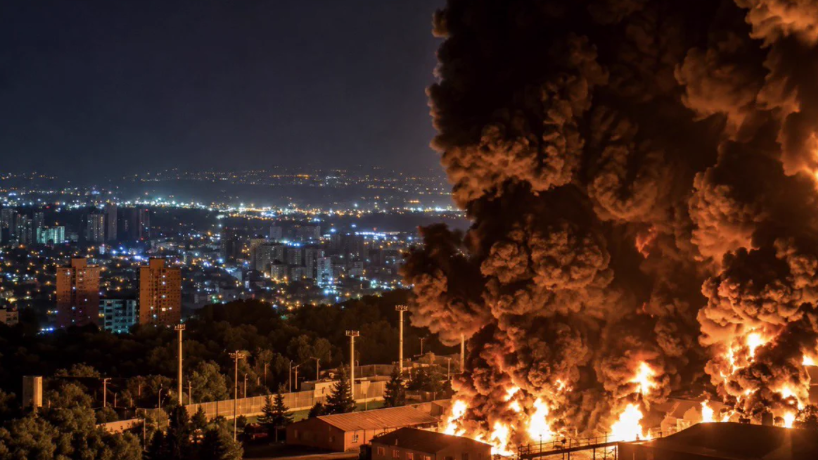
The US notified Al Thani half an hour in advance; a US strike in Iran
Al Thani described the latest U.S.-Israeli war against Iran as an “earthquake” that was reshaping global warfare and the world economy. He revealed that he was asleep at his home in Doha when he received a call from the White House only about half an hour before the start of the U.S. military campaign and that Qatar itself came under attack less than an hour after the strikes began.
He expressed deep disappointment over the short warning, which he said eliminated any possibility of a diplomatic solution, and condemned the Iranian attack on his country despite Qatar’s efforts to prevent the war on Iran’s behalf.
$24 billion in losses
Despite the direct confrontation, the prime minister stressed that Iran would always remain Qatar’s neighbor and that relations between the two countries were based on mutual respect, even though they have significant disagreements, including over Syria, where Tehran backed Assad while Qatar opposed him.
Al Thani acknowledged that neither he nor any other foreign government had direct contact with Iran’s new supreme leader and that he did not know for certain whether the leader was alive. He said, however, that contacts were being conducted effectively through official channels with the president, foreign minister and Supreme National Security Council, which he said represented the broader establishment in Tehran.
The war has exacted an unprecedented economic toll on Qatar, and Al Thani confirmed the stark figures: an 8% contraction in the economy, an 80% plunge in tourism, hotels with 60% of their rooms empty and about $24 billion in lost revenue.
He confirmed that liquefied natural gas exports had been severely curtailed because of the closure of the Strait of Hormuz and were continuing only because some buyers were willing to assume responsibility for shipping through the strait.
Al Thani appeared unfazed, calling for a diplomatic or legal solution to guarantee freedom of navigation. He recalled that in 1996 and 1997, Qatar was on the verge of bankruptcy and was forced to sell assets and borrow money to pay salaries.
He said the sovereign wealth funds and institutional resilience Qatar has built since then would allow the country to weather the current crisis, which he described as temporary.
‘A terrorist in a suit’
Former Prime Minister Naftali Bennett, chairman of the Beyachad party, responded to Al Thani’s remarks by calling him “a terrorist in a suit.”
“Very soon, your party will be over,” Bennett said. “The era in which you can finance the massacre of Jews and work toward the destruction of the Jewish state is over. We will recognize you as an enemy state, clear the Prime Minister’s Office of Qatari agents and drive you out of Israel and Gaza.”