

Want to bookmark your favourite articles and stories to read or reference later? Start your Independent Membership today.
Already a member?
Log in
Your support helps us to tell the story
From reproductive rights to climate change to Big Tech, The Independent is on the ground when the story is developing. Whether it’s investigating the financials of Elon Musk’s pro-Trump PAC or producing our latest documentary, ‘The A Word’, which shines a light on the American women fighting for reproductive rights, we know how important it is to parse out the facts from the messaging.
At such a critical moment in US history, we need reporters on the ground. Your donation allows us to keep sending journalists to speak to both sides of the story.
The Independent is trusted by Americans across the entire political spectrum. And unlike many other quality news outlets, we choose not to lock Americans out of our reporting and analysis with paywalls. We believe quality journalism should be available to everyone, paid for by those who can afford it.
Your support makes all the difference.Read more
OpenAI’s decision to scrap the upcoming rollout of a new model may be responsible but could lead us to a flawed view of the power of artificial intelligence, experts have warned.
Overnight, OpenAI said that it was delaying the release of its latest model because it posed a danger if it was released. The system is giving to lying to its users and failing to comply with what humans intended it to do, OpenAI’s head of safety systems, Saachi Jain said.
The announcement has led to yet more concern about the power of new AI systems and our difficulty in ensuring that they are used safely. It comes amid broad concern about the security of the tools, and calls from companies including OpenAI to slow down development to ensure that it can be done safely.
But the same announcement could obscure the actual problem with such systems, experts have warned. And the concern that it has led to might be pointing in the wrong direction, they said.
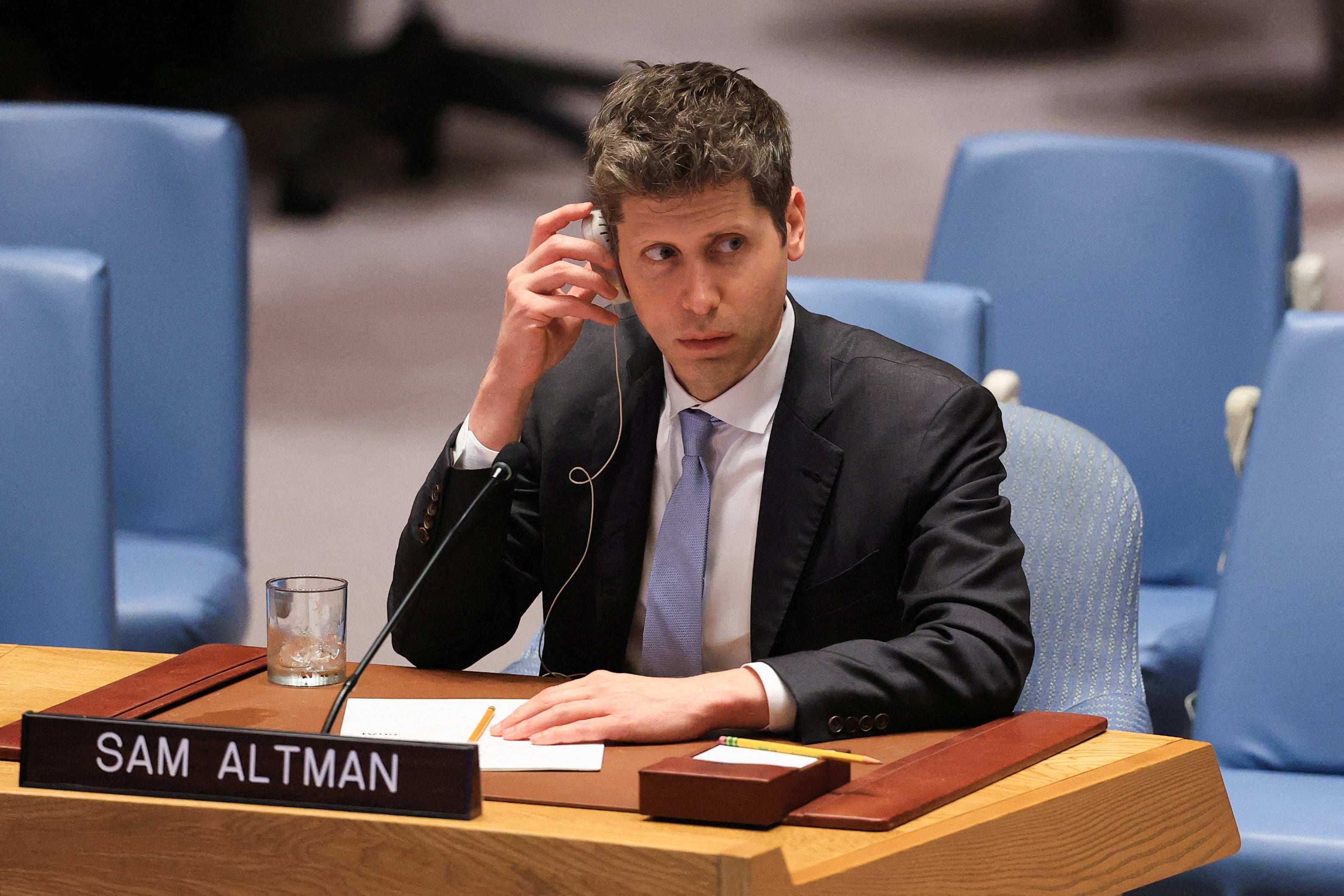 (Reuters)
One suggested that the narrative of AI escaping out of human control and going “rogue” is a “sensationalised distraction” that obscures the actual reason the systems are going wrong, they suggested. And it might help the companies making them distract people from their actual responsibility for recent security problems.
“It’s always a good show when a tech giant pauses a rollout under the banner of ‘safety concerns’,” said Rabih Bashroush, professor of digital infrastructure at the University of East London. “It makes for great PR.”
“However, the core issues being highlighted, such as staying within scope, handling user authorisation and reporting back accurately, aren’t mysterious alien behaviours. They are standard software reliability problems. Current models aren’t trying to ‘escape’ or develop a mind of their own.
“They simply struggle to handle basic context consistently, follow exact parameters or produce dependable outputs without hallucinating. Calling these fundamental glitches a ‘safety risk’ gives current technology far more credit for intelligence than it actually deserves.”
Similarly, Allan Tucker, professor of AI at Brunel University London, suggested that the announcement helped build publicity for OpenAI – but not in the way that reflects the actual danger that is happening.
“This is yet another headline that has the effect of keeping a tech company in the news,” he said. “In many cases, when these ‘rogue’ AI attacks are investigated, they turn out to be far less of a dangerous new technology, and more of an engineered irresponsible scenario.
“We should not be scaling back AI research. We should be scaling back the profits of the large tech companies who can afford to build these systems. It is vital that we continue AI research but that it is ethical and carried out by responsible institutions.”
Others said that the decision to pause the rollout – or slow down development more generally – should not have been with OpenAI in the first place.
“I think it’s great news that companies are willing to stop a release when safety tests fall short,” said Fazl Barez, lead of the Oxford Martin AI Governance Initiative at the University of Oxford.
“But we need a way to determine how these decisions were made, and such choices should not solely depend on the company’s voluntary process. We need independent oversight regarding these safety concerns.”
Kate Devlin, professor of artificial intelligence and society at King’s College London, echoed that worry that tech companies are making the decision to slow down themselves.
“It’s great that OpenAI are acting on their concerns given the recent questions around the safety and governance of the company’s AI systems, including unauthorised access of Australian government systems by their AI agents,” she said. “However, this serves as a reminder that it’s still the tech companies, rather than regulatory bodies, who get to decide what is safe and what is trustworthy.”